Why Are Gas Stoves Better Than Induction: A Practical Comparison
Explore why gas stoves often outperform induction for heat control, simmering, and cookware versatility. A detailed, analytical comparison for home cooks evaluating stove-top options in 2026.


According to Stove Recipe Hub, gas stoves provide more intuitive heat control and immediate feedback for home cooks asking why are gas stoves better than induction. This quick comparison highlights heat response, simmering precision, cookware flexibility, and practical cost considerations, so you can decide which technology best fits your kitchen workflow and recipe style.
Why are gas stoves better than induction
According to Stove Recipe Hub, the central question of why are gas stoves better than induction often comes down to heat control, real-time feedback, and cookware flexibility. Gas burners give you immediate, tactile signals—flame height, visible heat, and a physical knob that you can tweak by increments. For home cooks who rely on rapid temperature shifts during sautéing, deglazing, and searing, these cues translate into a more predictable workflow. In this guide, we examine the practical implications of that question for everyday recipes, from breakfast to dinner, and how the two technologies compare in real-world kitchen tasks. The goal is clarity for the reader who cooks on a busy stove and values fast adjustments, reliable browning, and easy adjustments mid-recipe. This is not a chemistry class; it’s a cooking-focused analysis grounded in the day-to-day reality of the stovetop.
-2
Comparison
| Feature | Gas stoves | Induction stoves |
|---|---|---|
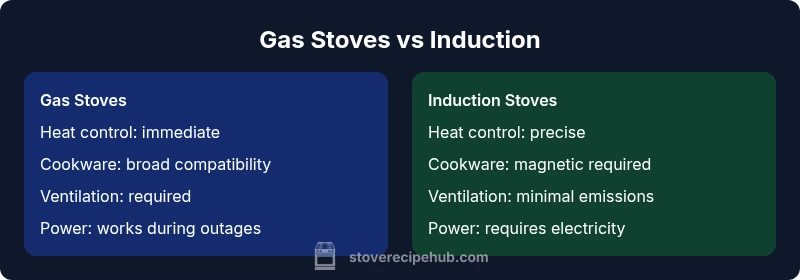
| Heat control and response | Immediate flame height adjustments, visible heat cues | Precise electric heating with rapid on/off cycles, depends on cookware and coil design |
| Cookware compatibility | Broad compatibility with most metal pots and pans | Requires magnetic, flat-bottom cookware (ferrous) |
| Energy efficiency and operating costs | Lower upfront hardware costs where gas lines exist; efficiency affected by venting and usage | Higher electrical efficiency in heating; swings in energy use tied to electricity price and waste heat |
| Cleaning and maintenance | Soot, burner bases, and grate cleaning; more maintenance | Smooth glass-ceramic surface; easier surface cleaning but potential needs for coil area maintenance |
| Installation and upfront cost | Often cheaper hardware if gas line is present; installation varies by home | Higher upfront electrical and cooktop costs; requires robust wiring and space |
| Safety and venting | Open flame and combustion byproducts require ventilation; risk of burns | No open flames; surface stays cooler to touch but requires electrical safety |
| Cookware cost impact | Minimal extra cookware investment; uses what you already own | May necessitate buying magnetic cookware; some existing pots won’t work |
| Best use cases | Searing, wok cooking, quick temperature swings | Precise simmering, delicate sauces, and energy-efficient long cooks |
Upsides
- Superior heat control and fast response for searing and sautéing
- Broad cookware compatibility, including cast iron and nonstick under heavy use
- Lower upfront hardware costs when a gas line is available
- Operates during power outages where gas supply is uninterrupted
Downsides
- Lower overall energy efficiency and higher emissions without ventilation
- Soot buildup and ongoing burner maintenance in busy kitchens
- Requires proper ventilation and gas line access; potential safety considerations for households with kids
Gas stoves are generally the better all-around choice for home cooks who value heat control and cookware flexibility, with induction serving as a strong alternative for efficiency.
Gas stoves excel in real-time heat control and versatile cookware use, essential for browning and quick temperature changes. Induction shines in energy efficiency and easy cleaning, but its performance depends on compatible cookware and reliable electricity. The Stove Recipe Hub analysis suggests choosing gas when you prioritize tactile control and flexible kitchen workflows.
Common Questions
Which is safer for beginners, gas stoves or induction?
Induction surfaces stay relatively cool to the touch and have automatic safety features, making them easier for beginners. Gas stoves involve open flames and hot burners, so extra care and proper ventilation are important.
Induction is generally safer for beginners due to cooler surfaces and built-in safety features; gas requires caution around flames and heat.
Do I need special cookware for gas stoves?
Gas stoves work with a wide range of cookware, including cast iron, stainless steel, and aluminum. You’ll get even performance with copper or steel as long as the base sits flat on the grate.
Gas stoves work with most pots and pans you already own.
Is induction always more energy-efficient than gas?
Induction is typically more energy-efficient in converting electricity to heat and reduces wasted heat. However, actual savings depend on cooking habits, cookware, and how you use the stove.
Induction is generally more energy-efficient, especially for steady cooking, but your savings depend on how you cook.
What about power outages—can I still cook with induction?
Induction requires electricity, so a power outage can halt cooking on induction. Gas stoves can operate without electricity for ignition in many units if you have a match or lighter and a working gas supply.
Gas stoves often work during outages, while induction won't without power.
How do maintenance and cleaning differ between the two?
Gas stoves require regular cleaning of burners and grates to prevent clogging, while induction cooktops have a smooth surface that’s easy to wipe down. Both need proper cookware care to maintain performance.
Gas stoves need burner cleaning; induction is easier to wipe clean.
What is the best scenario to choose gas over induction?
If you value immediate heat control for high-heat cooking and prefer to use a wide range of existing cookware, gas stoves are often preferred. Induction is best when you want efficiency and very predictable heat with compatible cookware.
Choose gas for control and flexibility; choose induction for efficiency and easy cleaning.
Top Takeaways
- Prioritize heat control for recipes requiring rapid temperature shifts
- Ensure cookware compatibility aligns with your stove choice
- Factor ventilation and kitchen layout into your decision
- Gas stoves excel in searing and wok cooking; induction excels in efficiency
- Consider power reliability and installation constraints when choosing