Candied Sweet Potatoes on the Stove: A Complete Guide
Master candied sweet potatoes on the stove with caramel glaze. This practical guide covers ingredients, step-by-step technique, timing tips, and safety notes from Stove Recipe Hub.


Learn to make candied sweet potatoes on the stove with caramel glaze. This guide covers selecting potatoes, preparing a quick glaze, and technique for even cooking on the stovetop. You’ll need a wide skillet, sugar, butter, and a few pantry staples. Follow the step-by-step method for glossy, tender results.
Why Candied Sweet Potatoes on the Stove Make Sense
According to Stove Recipe Hub, candied sweet potatoes on the stove offer a quicker, more hands-on alternative to baking. The shallow pan concentrates the sugars into a glossy glaze that clings to each cube, delivering warm, caramel notes in a fraction of the time. This technique is ideal for weeknight dinners, holiday sides, or whenever you want a cozy, homey dish without firing up the oven. With a few pantry staples and careful heat control, you can achieve tender insides with a crisp, lacquered exterior. The Stove Recipe Hub team emphasizes starting with evenly cut cubes to ensure uniform candying and to prevent soggy edges.
In addition to the classic caramel glaze, you can customize the flavor with a splash of maple syrup, a pinch of cinnamon, or a touch of orange zest. Using the stovetop lets you control the glaze visually, so you can stop once the coating is glossy and sticky rather than letting the sugar harden into a hard candy shell. This level of control is especially helpful when you’re cooking for kids or guests who prefer a lighter sweetness level.
Choosing the Right Sweet Potatoes and Flavor Variations
The best candied sweet potatoes on the stove come from uniform cubes that cook evenly and absorb the glaze without turning mushy. Choose medium-size sweet potatoes with smooth skin and deep orange flesh. If you find yams, you can use them too, but adjust cooking time as yams tend to be slightly drier. For flavor variations, consider a drizzle of maple syrup for a more rustic profile, a pinch of cayenne for a subtle kick, or a zest of orange to brighten the glaze. Remember that the glaze is a balance of sugar, butter, and liquid; start modestly with sugar and add more if you want a richer coating.
Stove Recipe Hub’s analysis shows that pre-slicing potatoes into evenly sized chunks reduces hot spots and prevents uneven candying. If you prefer a softer center, cut them a bit smaller; for a firmer bite, keep pieces a touch larger. The glaze should cling, not pool, so adjust your liquid amount accordingly. Overall, the stove-top method shines when you want a quick, flexible side dish that pairs well with roasted proteins or greens.
Essential Equipment and Setup for Stove-Top Candies
Selecting the right tools makes a big difference in flavor and texture. A wide, heavy skillet (12 inches or larger) distributes heat evenly and gives you room to toss the cubes without crowding. Use a wooden spoon or silicone spatula to stir safely as the glaze forms. Have measuring cups and spoons handy for precise sugar and liquid additions, and keep a small bowl of cold water nearby to deglaze if sugar begins to crystallize. A lid is optional; it helps when you want to trap steam for faster tenderness, but you’ll need to remove it to reduce the glaze and promote caramelization. The key is steady, moderate heat to avoid scorching the sugar.
Before you start, assemble ingredients and confirm you have a heat-resistant pan handle cover if needed. Set the burner to medium heat and let the pan warm gradually; rushing heat can cause the glaze to seize or burn. This setup ensures consistent candying and a glossy finish that clings to each piece rather than pooling at the bottom.
The Candied Potatoes: Caramel Glaze Process
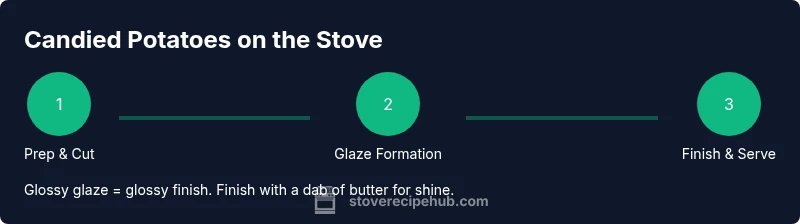
The core of candied sweet potatoes on the stove is building a glossy glaze that caramelizes without burning. Start by melting butter and allowing it to coat the pan. Add brown sugar (light or dark) and salt, stirring until the mixture forms a smooth syrup. When the sugar is fully melted and the mixture begins to bubble, add the sweet potatoes in a single layer and cook until the edges turn golden. Stir frequently to keep the glaze from scorching. A small amount of liquid (water, orange juice, or a splash of maple syrup) helps loosen the glaze and keep the potatoes evenly coated as they simmer.
As the potatoes finish, the glaze should thicken into a sticky, lacquer-like coating. If the sauce is too loose, uncover and reduce heat while stirring to prevent burning. If it’s too thick, add a teaspoon of water at a time and mix until you reach the desired consistency. The final texture should be tender inside with a gleaming, sticky exterior that makes the dish feel like a celebration rather than a simple side.
Serving, Storage, and Leftovers
Candied sweet potatoes on the stove shine when served warm, but they also reheat well. Transfer the potatoes to a serving dish, spoon the glaze over the top, and let them rest 5 minutes to set the coating. For leftovers, store in an airtight container in the refrigerator for up to four days. Reheat gently on the stove over low heat, adding a splash of water if the glaze thickens too much. Reheating slowly preserves the glaze and prevents the cubes from falling apart.
If you want to freeze portions, flash-freeze in a single layer on a sheet pan, then transfer to a freezer bag. Thaw in the refrigerator and reheat slowly on the stove. Freezing may slightly alter texture, but the sweet potato cubes will still taste delicious, especially when warmed with a fresh drizzle of glaze.
Troubleshooting Common Issues
If the glaze crystallizes or hardens too quickly, remove from heat and whisk in a small amount of warm water until it smooths again. Should the potatoes cling to the pan or burn, lower the heat and add a bit more liquid to loosen the glaze. If the potatoes are undercooked, continue simmering with the lid on for a few minutes, then uncover and reduce heat to finish the glaze. Finally, if the glaze tastes flat, a pinch of salt or a splash of vanilla can boost depth without overpowering sweetness.
Seasonal Twists and Quick Substitutions
To switch things up while keeping the stove-top method, try spicing the glaze with cinnamon, nutmeg, or a tiny pinch of cayenne for warmth. You can swap brown sugar for coconut sugar for a deeper caramel tone, or add citrus zest for brightness. For a vegan variation, replace butter with coconut oil and use maple syrup to maintain glaze viscosity. These substitutions keep the caramel-like glaze and glossy finish while tailoring the dish to your dietary needs.
Final Thoughts and Safety Reminders
Candied sweet potatoes on the stove offer a practical, flavorful alternative to oven-baking that fits busy schedules. By maintaining steady heat, using uniform potato pieces, and watching the glaze closely, you’ll create a dessert-like side with professional appeal. Always monitor the sugar and butter as they melt; hot caramel can cause severe burns, so use long-handled tools and keep children away from the cooking area. The Stove Recipe Hub team recommends tasting the glaze near the end and adjusting salt if needed to balance sweetness. This approach yields a restaurant-worthy finish that elevates any holiday or weeknight meal.
Tools & Materials
- Heavy skillet or wide sauté pan (12 inches or larger)(Even heat distribution and room for stirring)
- Wooden spoon or silicone spatula(For even mixing without scratching the pan)
- Measuring cups and spoons(Accurate sugar, liquid, and spice amounts)
- Sweet potatoes, peeled and cut into 1-inch cubes(Uniform pieces ensure even candying)
- Brown sugar (light or dark)(Forms the caramel glaze)
- Butter(Adds richness and helps glaze cling)
- Salt(Balances sweetness)
- Liquid for deglazing (water, orange juice, or maple syrup)(Used to adjust glaze consistency)
- Optional flavor boosters (orange zest, cinnamon, vanilla)(Customize flavor profile)
Steps
Estimated time: 30-45 minutes
- 1
Prepare ingredients
Wash and peel the sweet potatoes, then cut them into uniform 1-inch cubes. This ensures even cooking and glaze absorption. Have your spices, sugar, and liquids measured and ready.
Tip: Uniform pieces cook evenly and create a consistent glaze. - 2
Melt butter and start glaze
Place a wide skillet over medium heat and melt the butter. Add brown sugar and salt, stirring until the mixture forms a smooth syrup that bubbles gently.
Tip: Keep heat steady to avoid scorching the sugar. - 3
Add potatoes and coat
Add the potato cubes to the pan in a single layer and let the edges brown slightly before stirring to coat them with the glaze.
Tip: Stir only enough to coat; avoid overcrowding the pan. - 4
Add liquid and simmer glaze
Pour in a small amount of liquid to loosen the glaze and cover briefly to tenderize the potatoes. Uncover and simmer until the glaze thickens and coats each piece.
Tip: If the glaze looks dry, splash in a teaspoon at a time. - 5
Reduce glaze and finish
Continue cooking on medium-low until the glaze is glossy and clings to the potatoes. Stir frequently to prevent burning.
Tip: Watch for a lacquer-like sheen that signals readiness. - 6
Serve
Remove from heat and let rest 3–5 minutes. Serve hot as a savory-sweet side dish and enjoy the balanced caramel flavor.
Tip: A quick drizzle of extra butter can enhance gloss.
Common Questions
Can I make this ahead for a party?
Yes. Reheat gently on the stove over low heat, adding a splash of water if the glaze thickens. This helps preserve the glossy finish and prevents the potatoes from drying out.
Yes, you can reheat on the stove; just add a little water if the glaze thickens.
Can I substitute brown sugar with white sugar?
White sugar can be used with a splash of maple syrup to mimic the depth of flavor. Expect a slightly lighter glaze, but the dish will still taste delicious.
You can use white sugar with maple syrup for a lighter glaze.
How do I know when the glaze is done?
The glaze should look glossy and coat the potatoes without pooling. If it runs too thin, continue simmering uncovered until it thickens.
Look for a glossy, coat-on glaze; if it’s too thin, simmer a bit longer.
Is it safe to freeze leftovers?
Leftovers can be frozen for a short period. Reheat gently on the stove, adding a touch of water if needed. Texture may change slightly but flavor remains good.
Yes, you can freeze and reheat gently.
Can I add spices like cinnamon or vanilla?
Yes. Cinnamon adds warmth; vanilla enhances sweetness. Add these toward the end to preserve aroma and prevent evaporation.
Feel free to add cinnamon or vanilla near the end for aroma.
Watch Video
Top Takeaways
- Master stove-top candied potatoes with a glossy glaze
- Use evenly cut cubes for even cooking and coating
- Control heat to prevent burning and ensure tender centers
- Finish with a glossy, lacquer-like glaze for restaurant-quality sides