How long to boil corn on the stove: A practical guide
Master stove-top corn with precise boiling times for fresh or frozen ears. This guide covers timing, prep, salt, flavor, and serving tips from Stove Recipe Hub.


You can boil corn on the stove in under 10 minutes, with 4–6 minutes being typical for fresh ears and 7–9 minutes for larger or older corn. Start with a large pot of cold water, bring to a rolling boil, then add ears and cook until kernels are tender. Drain and serve immediately.
Why timing matters
Timing is the single most important variable when boiling corn on the stove. The moment kernels become tender is when sweetness reaches its peak, and overcooking can cause chewy textures and a loss of bright flavors. According to Stove Recipe Hub, the ideal window depends on corn variety, freshness, and ear size. Small, freshly picked ears will reach tenderness faster than older or larger ears. Understanding this helps home cooks tailor the boil to each batch, ensuring consistent results rather than relying on a single, fixed minute count for all corn.
Fresh vs. frozen corn: how timing changes
Fresh corn on the cob tends to cook quickly because the kernels are full of water and have less time to lose sweetness. Frozen corn might appear pre-formed and ready, but its texture can be slightly altered after thawing, often requiring a minute or two longer to reach tenderness. If you are boiling both types side by side, start with the fresh ears and test them first, then adjust the timer for the frozen ears. This approach minimizes guesswork and preserves the natural sweetness of each batch.
Selecting and prepping ears
Prep starts with removing husks and silk, then rinsing to remove any silks left behind. For best results, choose ears that are uniform in size so they cook evenly. If ears vary greatly in size, you can trim the longer ears or remove a portion of the thinner ends to help synchronize cooking times. Cutting a small notch near the tip of the cob can help you gauge doneness visually as you test kernels.
Water volume and pot sizing
Use a pot large enough to comfortably fit all ears in a single layer with water covering them by at least 1 inch. A crowded pot can lead to uneven heat distribution and undercooked spots. If you don’t have a pot large enough, boil in two batches rather than crowding a smaller pot. A rolling boil that maintains heat throughout the cooking process yields more consistent results.
The salt question: flavor without toughness
Salt is optional for flavor; many cooks add it after the water has returned to a boil to avoid potential kernel toughening. If you prefer seasoned water, keep salt light (about 1–2 teaspoons for a large pot) and taste after boiling, not during. If you’re cooking for a crowd with mixed salt preferences, you can salt individual servings at the table. This keeps options open without compromising texture.
Step-by-step boiling method (overview)
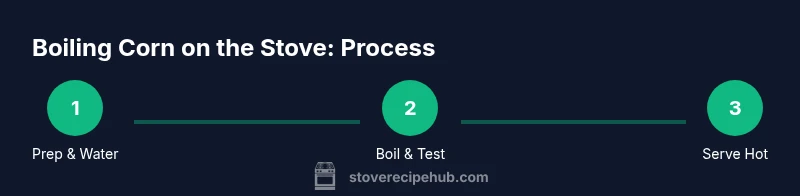
A practical approach is to start with a vigorous boil, carefully add the corn, and watch for a fresh, rapid return to boil. Once boiling resumes, time the ears based on their size and sweetness level. If your ears are uniform in size, you can aim for a single, clean doneness window; otherwise, test multiple ears for doneness and pull them when they reach the desired tenderness.
Variations: covering vs. uncovering while boiling
Covering the pot can speed up the return to a boil and reduce energy use, but it may lead to slightly faster overcooking if you aren’t vigilant. Leaving the lid off lets you monitor doneness more precisely and pull ears the moment they reach tenderness. In practice, start with uncovered for the first few minutes, then cover if the boil becomes sluggish and you’re confident with timing.
Troubleshooting doneness: signs kernels tell you
Tender kernels offer slight resistance when pierced with a fork, and the milk-like sweetness should be evident when bitten. If kernels are firm or chalky, they likely need more time, but re-check in small increments to avoid overcooking. Overcooked corn can become mushy and lose aroma, so it's better to err on the slightly underdone side and taste as you go.
Serving and timing with other dishes
Corn cooks quickly, so plan similarly timed sides or mains so that all components are hot together. If you’re entertaining, you can pre-woil ears briefly in warm water to refresh texture and taste just before serving. For a butter-rich finish, toss hot kernels with a little melted butter and salt at the table to preserve peak flavor.
Flavor boosters you can add after boiling
A pat of butter, a pinch of flaky sea salt, and a sprinkle of fresh herbs (like chives or parsley) instantly elevate boiled corn. If you want a brighter profile, squeeze a small amount of lime juice over the finished corn or dust with smoked paprika for a subtle kick. These finishing touches should be added after cooking to maintain the corn’s natural sweetness.
Common mistakes to avoid
Avoid boiling with too little water, overcrowding the pot, or leaving corn in water after it becomes tender. Salt too early can risk tougher kernels; add salt after the water returns to a boil if you choose to salt. Finally, don’t assume longer cooking equals better flavor—shorter times often yield brighter sweetness and a crisper bite.
Quick reference: times by ear size and method
For fresh ears, plan roughly 4–6 minutes of boil time after reboiling. Larger or older ears may need 7–9 minutes. Frozen corn can require a minute or two longer, compared with fresh. Always start testing at the lower end of the range and adjust with each batch to maintain consistent results across servings.
Tools & Materials
- Large pot (6-8 quart) with lid(Ensure ears can be submerged and water covers by at least 1 inch)
- Tongs(Safely handle hot ears during and after boiling)
- Salt (optional)(Add after boil if using; about 1–2 tsp for a large pot)
- Kitchen timer(Track exact minutes for doneness)
- Corn on the cob, husked and silk-free(Fresh or frozen; if frozen, no need to thaw)
- Butter or herbs for serving(Optional finishing touches for flavor)
Steps
Estimated time: Total time estimate: 6-9 minutes
- 1
Fill pot with water and heat
Place the pot on the stove and fill with water large enough to cover the ears by at least 1 inch. Bring to a full rolling boil over high heat. This initial boil ensures an even cooking environment once the corn is added.
Tip: Starting with cold water helps prevent shocking the corn as it heats. - 2
Prepare the corn
While the water heats, remove the husks and silk from the ears and rinse quickly under cold water. Having uniformly prepared ears ensures even cooking once they’re in the pot.
Tip: If ears differ in size, consider trimming longer ears slightly for even timing. - 3
Add corn to boiling water
Gently lower the ears into the boiling water using tongs. Return the water to a rolling boil before proceeding. Keeping a steady boil helps kernels cook evenly.
Tip: Work in batches if your pot is not large enough to hold all ears in a single layer. - 4
Monitor doneness
After the water re-boils, start timing. Fresh ears typically need 4–6 minutes; larger ears may need up to 9 minutes. Begin testing early to avoid overcooking.
Tip: Test a kernel by piercing with a fork; should be tender but still crisp. - 5
Salt and flavor (optional)
If using salt, add it after the water returns to a boil to minimize kernel toughening. You can also salt at the table to accommodate different preferences.
Tip: Salt-free versions retain pure sweetness; consider finishing with butter and herbs instead. - 6
Drain and rest briefly
Carefully drain the pot and shake off excess water. Let the corn rest for 30–60 seconds to reabsorb its surface moisture for improved juiciness.
Tip: Holding briefly helps preserve warmth without steaming the kernels. - 7
Serve immediately
Transfer corn to a warm plate, add butter if desired, and serve while hot. The steam will keep the kernels tender and flavorful.
Tip: A quick drizzle of citrus or a pinch of finishing salt can brighten flavor.
Common Questions
Should I salt the water when boiling corn on the stove?
Salt is optional. If used, add after the water returns to a boil to minimize potential toughness. You can also salt to taste at the table.
Salt is optional. If you use it, add it after the water boils again to avoid tough kernels.
How can I tell when corn is perfectly tender?
Tender kernels yield to light pressure near the tip and are sweet-smelling when bitten. Test with a fork or thumbnail and compare to your preferred crispness.
Look for kernels that give slightly to pressure and smell sweet when bitten.
Can I cook different sizes of ears together?
Yes, but expect different finish times. Sort ears by size and test a few from each group to determine the right pull time.
Yes, but you may need to test multiple ears to find the right time.
What’s the best way to keep corn warm after boiling?
Wrap ears in foil or place in a low oven (around 200°F/93°C) for short holds. Avoid long holding times to prevent drying.
Wrap or keep warm in a low oven for a short time to maintain heat.
What if I don’t have a large pot?
Boil in batches using a smaller pot. Avoid crowding, which can lead to uneven cooking. Preheat and shift batches as needed.
Boil in batches if you don’t have a large pot; crowding can ruin even cooking.
Watch Video
Top Takeaways
- Test doneness early to avoid overcooking.
- Use a large pot and ample water for even cooking.
- Salt after boiling to maintain kernel tenderness.
- Serve immediately for peak sweetness.
- Fresh corn is faster than frozen; adjust times accordingly.