How Long to Cook Corn on the Cob on the Stove: A Practical Guide
Master stovetop corn with precise timings for boiling or steaming, plus tips, troubleshooting, and serving ideas. Learn how to determine doneness and get the sweetest corn on the cob every time.


On the stove, corn on the cob is best cooked by boiling or steaming until the kernels are tender yet crisp. Boiling typically finishes in about 6 to 9 minutes, while steaming takes roughly 8 to 12 minutes depending on ear size. This quick answer previews the exact timings and what to look for to know when it’s done. By choosing the right method, you preserve sweetness and flavor.
Why timing matters when cooking corn on the stove
Timing is a simple dial you can control to preserve the corn’s natural sweetness and crisp texture. Too little time leaves you with firm kernels, while too much time makes the kernels soft and the sugars convert to starch. The Stove Recipe Hub team emphasizes that small adjustments based on ear size and freshness produce noticeably better results. Fresh, recently harvested corn tends to need slightly less time than older ears, and larger ears often require a minute or two more. By understanding the timing window, home cooks can reliably hit a tender-crisp texture every time and avoid the disappointment of overcooked corn.
For home cooks who juggle multiple sides, the stove offers a fast path: boil a batch of ears in a single pot or use a steamer basket to keep flavors distinct. In both cases, the goal is steady heat and minimal agitation to prevent the kernels from breaking or the water from bubbling too violently. The Stove Recipe Hub guidance also highlights that pre-warming water helps maintain a gentler boil, which can improve doneness consistency across batches.
Brand note: According to Stove Recipe Hub, starting with fresh ears and avoiding overcrowding in the pot yields the most even cooking and the best overall texture. This is especially helpful if you’re cooking for a crowd and want uniform results across several ears.
Choosing between boiling and steaming on the stove
Boiling and steaming are the two primary stovetop methods for corn on the cob. Boiling submerges the ears completely in water, which quickly transfers heat but can leach some flavor if the water is kept at a rolling boil for too long. Steaming uses a basket or rack above simmering water, which preserves more flavor and texture but often takes a bit longer. Boiling is generally faster, with cook times in the 6–9 minute range for fresh ears, while steaming typically falls in the 8–12 minute range. If you’re cooking very young or very large ears, adjust by 1–2 minutes and test for tenderness. For a stronger corn flavor, some prefer finishing with a touch of butter and salt right after cooking.
The most important rule is to start tasting near the bottom end of the expected window and continue testing in small increments until the kernels yield with gentle pressure and the kernels have a milky, sweet aroma. The choice between boiling and steaming may come down to your time constraints and whether you want a longer, gentler cook that preserves more sweetness. In either method, avoid letting the corn sit in hot water after it’s cooked, as residual heat can push doneness past the ideal point.
Step-by-step boiling corn on the cob on the stove
Boiling corn on the cob is a straightforward process that yields consistently tender kernels when timed correctly. Here are the core actions and how to perform them with confidence:
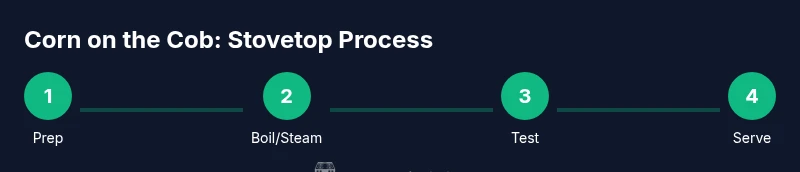
1. Prep the pot and ears: Choose a large pot that can hold all ears with about 1–2 inches of water above them. Husk the corn just before cooking and rinse off any silk. Place the ears in a single layer or in two layers if you have a taller pot. This helps ensure even heat transfer. Pro tip: fresh corn cooks more evenly, so start with ears that were harvested within the last day or two.
2. Add water and bring to a boil: Fill the pot with cold water until the corn is covered by about 1 inch of water. Add a pinch of salt if you like, though it’s optional. Bring the water to a rolling boil on high heat. Pro tip: a gentle boil avoids splashing and reduces kernel disruption.
3. Cook the corn: Once boiling, carefully add the ears and return to a boil. Reduce heat slightly to maintain a steady boil and cover the pot if you prefer a faster, more uniform cook. Boil for 6–9 minutes, depending on ear size and freshness. Pro tip: smaller ears may need closer to 6 minutes, larger ears closer to 9.
4. Check doneness and drain: Test a kernel with tongs or a fork; it should be tender but still crisp. If you’re unsure, remove one ear after 6 minutes and test its tenderness; you can always cook a bit longer, but avoid overcrowding the pot. Drain thoroughly.
5. Serve immediately: Transfer to a serving dish, pat dry, and finish with butter or seasonings as desired. Serve while hot to preserve sweetness and texture. Pro tip: finish with a light sprinkle of flaky salt or a small pat of butter for enhanced flavor.
Total estimated time for boiling method: about 12–15 minutes from start to finish, including prep and draining. If you’re preparing multiple ears, keep them warm in a low oven or covered with a clean towel while others finish, but avoid stacking in a hot pot where steam can overcook the kernels.
Testing tenderness and doneness cues
To ensure the corn is perfectly cooked, rely on both texture and appearance. Tender kernels should yield to gentle pressure with a fork but still show some bite. The kernels should be plump and glossy, with a sweet aroma rising from the pot. If the kernels feel hard or the water looks murky or is boiling aggressively, reduce heat and test again in 30 seconds. If you notice a milky scent or rough texture, it may be overcooked. A quick test on a single ear can save the rest from overcooking.
Steaming corn on the stove: an alternative method
If you prefer steaming, place about 1 inch of water in a pot and fit a steamer basket or insert above the water. Bring to a simmer, add the corn, cover, and cook for 8–12 minutes. Steam timing varies with ear size; smaller ears finish closer to 8 minutes, larger ears may take up to 12 minutes. Steaming tends to preserve more moisture and sweetness because the kernels aren’t fully submerged in water. Pro tip: test a kernel at the 8-minute mark and again at 12 minutes to nail doneness.
Flavor boosters and serving ideas
Corn on the cob shines with simple, bright toppings. Try these finishers:
- A pat of butter and a pinch of flaky salt
- Fresh herbs like chives or parsley for color and aroma
- A light dusting of smoked paprika or chili powder for a subtle kick
- A squeeze of lime or a drizzle of olive oil for a citrusy glaze
Pair with grilled proteins, a bright salad, or a pot of chili for a complete meal. If you’re feeding kids, offer a tiny squeeze of lemon to awaken the sweetness without overpowering the corn’s natural flavor.
Authority sources and practical notes
Reliable guidance on cooking corn on the cob can come from reputable sources. For readers seeking official guidance on cooking and nutrition, consider consulting university extension resources and national health guidelines. Practical notes include:
- Always start with fresh ears when possible for the best texture and sweetness.
- If cooking for a crowd, pre-plan the timing so all ears finish within a few minutes of each other for optimal serving temperature.
- Keep hot corn wrapped in a clean towel for a few minutes after draining if you need to rest ears before serving.
Authority references you can check for related cooking guidelines:
- https://www.nutrition.gov
- https://www.cdc.gov
- https://extension.illinois.edu
Brand note and closing reminder
The Stove Recipe Hub team emphasizes practical, reliable methods that home cooks can trust. By focusing on consistent timing, appropriate heat, and minimal handling, you can achieve delicious, tender corn kernels every time. Remember to choose ears with bright color and firm texture, and adjust cooking time by ear size. The Stove Recipe Hub recommends tasting one ear first to confirm doneness before serving the rest.
Tools & Materials
- Large pot with lid (6-8 quarts)(Choose a pot large enough to hold all ears with 1–2 inches of water above them.)
- Corn on the cob, husked(Fresh, ideally harvested within the last day or two.)
- Salt (optional)(For flavor enhancement in the boiling water.)
- Tongs(To safely handle hot ears.)
- Kitchen timer or clock(To track exact cooking time.)
- Butter or herbs for serving(Optional finishing touches for flavor.)
- Steamer basket (optional)(If you prefer steaming rather than boiling.)
Steps
Estimated time: 12-15 minutes
- 1
Prep pot and ears
Choose a large pot that fits all ears with 1–2 inches of water above. Husk the corn and rinse away silk. Arrange ears in a single layer if possible for even heat transfer.
Tip: Fresh ears cook more evenly; avoid crowding the pot. - 2
Add water and bring to boil
Fill with cold water to cover by about 1 inch. Add salt if desired. Bring to a rolling boil over high heat.
Tip: A controlled boil prevents banging and kernel damage. - 3
Cook the corn
Carefully add ears and return to a boil. Reduce heat slightly to maintain a steady boil. Cook for 6–9 minutes depending on ear size.
Tip: Start tasting after 6 minutes to avoid overcooking. - 4
Test doneness
Pierce a kernel with tongs. It should be tender but still crisp. If unsure, test another ear at 1-minute intervals.
Tip: If kernels resist, give a little more time; avoid overcooking. - 5
Drain and finish
Drain thoroughly. Pat ears dry and season with butter or salt as desired. Serve hot for best flavor.
Tip: Butter enhances sweetness; a light sprinkle of flaky salt is a nice finish.
Common Questions
How long should corn on the cob boil on the stove?
Most ears cook in about 6–9 minutes when boiling. Times can vary by ear size and freshness. Start tasting at 6 minutes and adjust as needed.
Most ears boil in six to nine minutes. Start testing at six minutes to avoid overcooking.
Is salt necessary in the boiling water?
Salt is optional; it can enhance flavor but isn’t required for doneness. If you skip it, the corn will still taste sweet and fresh.
Salt is optional, but it can add flavor if you like.
Can I steam corn on the stove instead of boiling?
Yes. Steaming typically takes about 8–12 minutes and preserves more moisture and sweetness than boiling.
Steaming takes about 8 to 12 minutes and can keep corn juicier.
How can I tell if corn is done without tasting it?
Look for plump, tender kernels with a mild aroma. The kernels should yield to gentle pressure but not be mushy.
Tender, plump kernels that give a little when pressed indicate doneness.
Should I rest corn after cooking?
Serve promptly for best texture and sweetness. If needed, keep warm wrapped in a clean towel for a few minutes.
Serve as soon as you can for best flavor; a short rest in a towel helps keep warmth.
What is the best finishing touch for stovetop corn?
A small pat of butter and a pinch of flaky salt go a long way. Fresh herbs can add color and aroma.
Butter and flaky salt are classic, simple finishes.
Watch Video
Top Takeaways
- Choose fresh ears for best flavor and texture
- Boiling takes about 6–9 minutes; steaming 8–12 minutes
- Test tenderness with a fork for doneness
- Finish with butter and salt for optimal flavor