How to Know If Potatoes Are Cooked on the Stove
Learn how to know if potatoes are cooked on stove with reliable tests, timing tips, and kitchen tricks for perfect doneness every time.


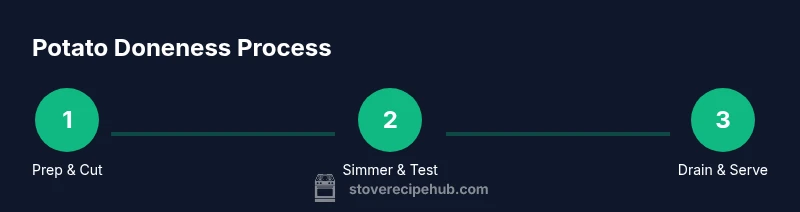
To know if potatoes are cooked on the stove, test for fork-tender texture from the center outward. Start by cutting potatoes into uniform pieces, then simmer in salted water or steam until a fork slides in easily with little resistance. Finish by checking several pieces to ensure even doneness throughout.
How Potatoes Cook on the Stove
Potatoes cook on the stove through heat transfer from boiling water or steam. The type of potato matters: russets, which are starchy, tend to fall apart a bit more quickly when overcooked, while waxy varieties like red or Yukon Gold hold shape longer. The first key is to cut potatoes into uniform pieces so heat penetrates evenly. According to Stove Recipe Hub, mastering stove-top potato cooking starts with uniform cuts and a simple doneness test that works for most varieties. Wash the potatoes, trim any dark spots, and choose a size that fits your dish. If you’re boiling, use enough salted water to cover; if you’re steaming, ensure your steamer basket sits above the water line. Gentle simmering is preferable to a rolling boil, which can break apart delicate pieces and make doneness harder to judge. As heat continues to penetrate, check texture from the center outward rather than relying on the outer ring alone, which can mislead you about the core.
The Fork Test: Primary Doneness Indicator
The fork test is the most reliable single method for checking potato doneness on the stove. After about 10-15 minutes of simmering (depending on chunk size), insert a fork into several center pieces. The fork should meet little resistance and slide in with ease. If you feel any stiffness or chalkiness in the middle, keep cooking in short, 2- to 3-minute increments and retest. Doneness should be even across multiple pieces, not just the ones near the edge. The fork test becomes more dependable when you start with uniform cuts and maintain a steady, gentle simmer. The Stove Recipe Hub Team emphasizes consistency across chunks to avoid undercooked centers.
The Knife Test and Texture Cues
In addition to the fork test, use a small chef’s knife to probe the center of a few pieces. A perfectly cooked potato should yield to the knife easily, with a smooth, tender center and no hard core. If the knife meets resistance or you notice a powdery texture near the center, keep cooking in short intervals and re-check. Texture cues tell you not only if the potato is cooked but also if it’s evenly cooked throughout. Always compare several pieces to avoid a misread from one overcooked outer edge. A good rule is to test at least two pieces from different parts of the pot.
Size Matters: Cutting Potatoes for Even Cooking
Uniform size is the backbone of predictable stove-top cooking. When you cut potatoes into evenly sized chunks, heat distributes evenly, and the center reaches doneness at roughly the same time. For most stove-top recipes, aim for 1 to 2-inch chunks. Smaller pieces cook faster; larger pieces require longer simmer times. If you’re preparing for a side dish, you can compromise by choosing 1.5-inch pieces for a balance between speed and texture. Pre-cut pieces also cool more quickly if you’re working with leftovers, allowing you to reheat without overcooking.
Boiling vs Steaming: Which Method Yields Perfect Doneness?
Boiling submerges potatoes in salted water, which can speed heat transfer and help seasonings disperse evenly. Steaming relies on vapor to gently cook without direct contact with water, which can yield firmer edges and a creamier center. For tenderness without shedding structure, many cooks prefer a gentle boil followed by a short steam finish for certain varieties. If you’re aiming for classic mashed potatoes, boiling in well-salted water is typically preferred; for salads or roasted-style results, steaming can preserve texture better. Time differences depend on chunk size, but expect roughly 10-18 minutes for small cubes and 15-25 minutes for larger pieces when boiling; steaming may take slightly longer to reach the same internal tenderness. Adjust heat to maintain a steady simmer rather than a full boil to avoid breaking pieces.
Timelines and Variability: Factors That Affect Doneness
Doneness times vary with several factors: potato type, chunk size, water temperature, and altitude. Russets may take longer to reach center tenderness than waxy varieties; larger chunks require more cooking time than small ones. If you live at higher altitude, water boils at a lower temperature, which can extend cooking time by several minutes. Mineral content in your water and the salt level can also subtly influence texture. Practically, use doneness tests as your guide rather than a fixed clock. Start checking at the lower end of the range, and continue in short bursts until the center pieces yield to your test.
Quick Pointers When You’re in a Hurry
When you’re pressed for time, cut potatoes into even smaller pieces (about 1/2 to 1 inch) and use a higher heat for a fast simmer, then reduce to a gentle simmer once boiling resumes. Preheating the water to a gentle boil before adding potatoes can shave minutes off the total time. If you’re reheating leftovers, consider par-cooking at a lower temperature to avoid overcooking the exterior while the center finishes. Lid-on cooking traps steam and speeds don’t-like doneness but can also cause softer edges, so it’s a trade-off you can adjust depending on your end dish.
Troubleshooting: Common Pitfalls and Fixes
Common problems include undercooked centers, overcooked mushy edges, and uneven doneness. If centers are undercooked after 12 minutes, check a few more pieces and extend by 2-3 minutes, then retest. If edges are mushy, reduce heat and test more frequently to stop cooking exactly when centers are done. When you notice chalky centers, lower heat and cook longer with a gentle simmer, then retest. Food science helps explain why uniform cuts and controlled heat yield predictable results, which is why the fork/knife tests are so valuable.
Serving and Flavoring Tips
Once potatoes reach the desired tenderness, drain promptly and let excess moisture steam away for a moment to avoid a soggy texture. Toss with melted butter or a light olive oil, and season with salt, pepper, and fresh herbs to taste. If you’re prepping for a mash, return the potatoes to the hot pot for a minute to dry out excess moisture before mashing. For potato salads, cool the pieces quickly after cooking to preserve texture and color. A quick bloom of flavor can come from a splash of lemon juice, minced garlic, or finely chopped chives added right after cooking.
Tools & Materials
- Medium-to-large pot with lid(Capacity for potatoes and water; lid helps control simmer)
- Sharp chef’s knife and cutting board(Uniform chunks are essential for even doneness)
- Colander or strainer(For draining hot water safely)
- Slotted spoon or tongs(For moving potatoes and testing doneness)
- Measuring spoon (salt)(Salt to flavor water; adjust to taste)
- Fork or small taste spoon(To test tenderness and texture)
- Timer(To monitor cooking intervals and avoid overcooking)
- Cold water bath (for rapid cooling, optional)(Useful when making potato salads or if you’re not serving immediately)
Steps
Estimated time: 20-30 minutes (depending on chunk size and stove heat)
- 1
Prepare potatoes
Rinse and scrub potatoes clean. Cut into uniform 1–2 inch chunks to promote even cooking. If desired, soak briefly to remove surface starch, then drain well before cooking.
Tip: Uniform pieces ensure consistent heat distribution; size consistency is the single most important factor. - 2
Set up the pot
Place potatoes in a pot and add enough water to cover by about an inch. Add 1–2 teaspoons of salt per quart of water. Bring to a gentle boil over high heat, then reduce to a steady simmer.
Tip: Starting with hot water minimizes the time to reach doneness and helps maintain even cooking. - 3
Simmer to tenderness
Maintain a gentle simmer and cook until the center tests tender with a fork. Check every 3–4 minutes after the initial 10 minutes for variability due to chunk size.
Tip: Avoid a vigorous boil; vigorous agitation can break potatoes apart and skew doneness tests. - 4
Test for doneness
Use a fork to probe the center of several pieces. They should slide in with minimal resistance and exit cleanly. If not, continue cooking and re-test in 2–3 minute increments.
Tip: Test multiple pieces from different parts of the pot to ensure even cooking. - 5
Drain and rest
Drain potatoes immediately and let them steam dry in the colander for a minute or two. Resting briefly helps finish any residual internal moisture and improves texture.
Tip: Do not leave in the hot water; this can overcook the centers. - 6
Finish and serve
Toss with butter, salt, and your favorite seasonings. Serve hot for mashed or salads, or cool for potato-based dishes.
Tip: A quick drizzle of olive oil can brighten flavor without overpowering the potato’s natural taste.
Common Questions
Can I tell if potatoes are cooked just by their color?
Color is not a reliable indicator of doneness. Potatoes can look pale on the outside while still being firm in the center. Use texture tests (fork/knife) for certainty.
Color alone isn’t reliable. Use the fork or knife to verify tenderness.
Is it okay to finish cooking on low heat after the fork test passes?
Yes. If the center feels tender but some edges are still firm, reduce heat and test again in short intervals. Avoid overcooking by staying attentive after the initial doneness check.
You can finish on low heat if needed, testing in short bursts.
Should I soak potatoes before cooking on the stove?
Soaking can remove surface starch and reduce sticking in some dishes, but it’s not required for basic stove-top cooking. Rinse and cut evenly for best results.
Soaking isn’t required, but it can help with certain textures.
What should I do if the centers are undercooked after typical time ranges?
Return the pot to a simmer and cook in 2- to 3-minute bursts, testing frequently. Uniform chunk size will help ensure the centers catch up.
If centers are underdone, cook in small bursts and retest.
Can I reuse the same water for different potato varieties?
It’s best to start fresh when cooking different varieties, as starch and salt levels can affect texture and flavor in subsequent batches.
Better to start fresh water when changing potato varieties.
What internal temperature qualifies as ‘done’ for potatoes?
Potatoes don’t have a fixed internal temperature like meat; the standard cue is a fork or knife sliding through centers with near-total tenderness.
Potatoes are done when a fork slides in easily and centers are tender.
Watch Video
Top Takeaways
- Cut potatoes evenly to ensure uniform doneness.
- Use fork and knife tests for center tenderness, not color alone.
- Maintain a gentle simmer for consistent texture across pieces.
- Drain promptly and rest to avoid overcooking edges.
- Flavor with salt and butter for best served results.