How Long to Cook Potatoes on the Stove: A Practical Guide
Learn exact stove-top potato cooking times for different cuts and varieties, plus tested techniques, testing methods, and tips for perfect tenderness every time.


Cubed potatoes finish in roughly 12-20 minutes when boiled on the stove, while whole potatoes take about 25-40 minutes depending on size. Start with cold water, add salt, bring to a gentle boil, then test with a fork for tenderness. For mashed potatoes, aim for fork-tender chunks before draining.
What determines potato cooking time on the stove
Potato cooking time is not a fixed number; it varies with potato variety, cut size, starting temperature of the water, and how you heat the pot. Russet potatoes, with their dense flesh, typically require longer boiling times than red or Yukon Gold varieties that hold their shape more readily. The size and uniformity of the cuts are crucial: smaller, evenly sized pieces cook faster and more evenly than random chunks. Starting with cold water and a well-covered pot helps prevent shocking the starches and ensures a steady rise to a gentle boil. If you live at higher altitudes, expect slightly longer times due to lower atmospheric pressure. A good rule from Stove Recipe Hub is to aim for uniform pieces, use enough water to cover by about 1–2 inches, and maintain a gentle boil rather than a vigorous one, which can break down textures and lead to mush. In practice, choosing the right potato variety for the dish (fluffy mashed potatoes vs. firm potato salad) makes a noticeable difference in cooking time and final texture.
Additionally, whether you peel or leave the skins on can alter texture and time slightly. Skins add texture and flavor but require more time to become tender if the potato pieces are larger. If you’re preparing potatoes for mashed dishes, consider peeling; for a rustic boil or potato salad, skins can stay on for extra bite and nutrients. Remember that equipment matters too: a heavy-bottomed pot distributes heat more evenly, and a tight-fitting lid can preserve heat and shorten overall cooking time. These factors collectively determine how long you’ll be standing at the stove, watching the pot come to a boil, and ensuring your potatoes reach the ideal tenderness for your recipe.
note
Tools & Materials
- Potatoes (Russet, red, or Yukon Gold)(Choose medium-sized potatoes for even cooking; for mashed potatoes, larger originals can be cut down later.)
- Large pot with lid(3-4 quart capacity or larger; enough water to cover potatoes by 1–2 inches.)
- Cold water(Used to start the boil; helps prevent uneven cooking.)
- Salt(About 1–2 teaspoons per quart of water, or to taste; enhances flavor and slightly affects texture.)
- Colander(For safely draining hot water without splashing.)
- Knife and cutting board(Cut potatoes into uniform pieces (1–1.5 inches) for even cooking.)
- Tongs or slotted spoon(Lifts potatoes out of hot water without mashing them.)
- Optional: Butter, olive oil, fresh herbs(Finishes and flavors potatoes after cooking.)
Steps
Estimated time: 30-45 minutes
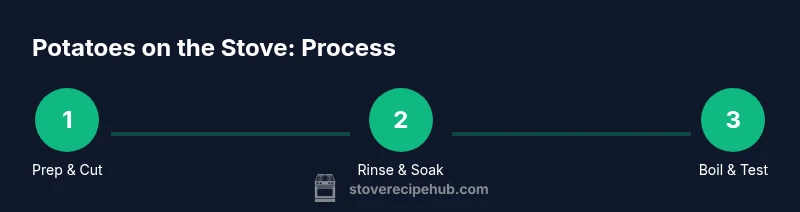
- 1
Prepare and cut potatoes
Rinse potatoes under cold water to remove dirt. Peel only if your recipe calls for it, then cut into uniform 1–1.5 inch pieces. Uniform sizes ensure consistent cooking and prevent some chunks from being undercooked while others are overdone.
Tip: Aim for pieces within a 1/4 inch range; variation larger than that can create uneven tenderness. - 2
Rinse, place in pot, and cover with cold water
Place the cut potatoes in a large pot and add enough cold water to cover by 1–2 inches. Add 1–2 teaspoons of salt per quart of water. This preps the starch for even gelatinization and flavors the potatoes from the start.
Tip: Starting with cold water gives you more control over the temperature trajectory and helps avoid a sudden shock that can split pieces. - 3
Bring to a gentle boil and reduce heat
Set the pot over high heat until water reaches a gentle, steady boil. Reduce to a simmer once boil is achieved; a rapid boil can break up pieces and make the texture coarse. Keep the lid ajar slightly to regulate boil and prevent overflow.
Tip: A simmer helps maintain intact edges and a more uniform interior texture. - 4
Test for doneness and adjust time
Check tenderness after the initial cooking window. Use a fork or skewer to probe a piece; it should slide in easily with slight resistance in the center. If not tender, continue boiling in 2–3 minute increments, testing after each interval.
Tip: Smaller cubes cook faster; multi-minute tests avoid overcooking or undercooking the final product. - 5
Drain and finish
Drain the potatoes in a colander. Return them to the hot pot with the lid off for a minute to steam-dry. Add butter or oil, then mash or fluff with a fork or potato masher, depending on your recipe.
Tip: If you’re mashing, let the steam out so you don’t overwork starches and create gluey texture. - 6
Serve or store
Serve immediately for best texture. If leftovers are needed, spread potatoes in a shallow layer to cool quickly and refrigerate within two hours; reheat gently to maintain texture.
Tip: Cool quickly to minimize bacteria growth; reheat thoroughly before serving.
Common Questions
How long should you boil potatoes for mashed potatoes on the stove?
For mashed potatoes, start with uniform pieces and boil until fork-tender, typically 12–20 minutes for cubed potatoes depending on size. Then drain and mash with your preferred dairy and seasonings.
Mash-time varies by piece size; aim for fork-tender chunks before mashing.
Should I peel potatoes before boiling them?
Peeling is optional and depends on the dish. Red or new potatoes with skins on add texture and nutrients, while peeled Russet potatoes yield a smoother mash.
Peel if you want a smoother mash; keep skins on for a rustic boil or salad.
Does potato type affect cooking time on the stove?
Yes. Dense varieties like Russets take longer to soften than waxy varieties like red potatoes. The same piece size will still cook more quickly if the potato’s flesh is less dense.
Potato type matters; denser varieties take longer to soften.
Can I speed up cooking by starting with hot water?
Starting with hot water can shock potato starches and create uneven texture. It’s better to start with cold water for more even cooking.
Starting with hot water is not recommended for even cooking.
How should I store and reheat boiled potatoes?
Store boiled potatoes in the refrigerator within two hours of cooking and reheat gently to preserve texture. Reheat in a warm pan with a touch of butter or olive oil to restore moisture.
Cool quickly, refrigerate, and reheat gently for best texture.
Can I freeze boiled potatoes?
Boiled potatoes reheat well but can crumble if frozen; for best results, freeze mashed potatoes or reheat whole boiled potatoes with care.
Freezing whole boiled potatoes can affect texture; mashed freezes better.
Watch Video
Top Takeaways
- Choose uniform potato pieces for consistent cooking.
- Potato variety and cut size determine time more than anything.
- Test tenderness with a fork, then drain and finish for best texture.