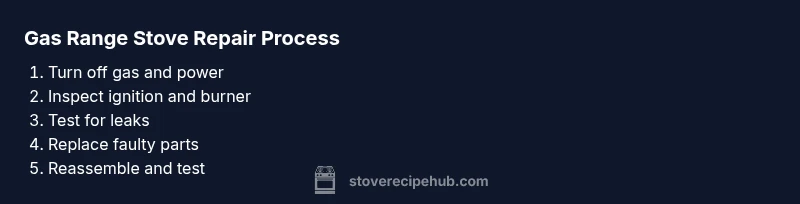
Gas Range Stove Repair: A Practical Home Guide
Learn practical, safe gas range stove repair techniques for common stove problems. Step-by-step guidance, safety tips, and when to call a pro for leaks, ignition, and burner issues.


Mastering gas range stove repair starts with safety and a clear diagnostic plan. This guide walks you through common symptoms, required tools, and a step-by-step repair workflow to restore burners, ignition, and gas flow—empowering confident DIY work or guidance on when to call a pro. From safety checks to testing final results, this plan helps you avoid leaks and ensure consistent flame control.
What gas range stove repair encompasses and when to tackle it at home
Gas range stove repair covers issues with burners, ignition systems, flame quality, gas flow, and sensitive seals or valves. Most home cooks can address minor ignition faults or clogged burner ports, provided they follow safety protocols and limits on what they attempt. This guide emphasizes learning core diagnostics, performing careful tests, and recognizing when a problem warrants a professional, especially if gas leaks or damaged lines are suspected. Remember that a stove is part appliance, part gas system—treat it with respect and plan your steps in a calm, methodical sequence. The Stove Recipe Hub team stresses safety as the foundation for any DIY repair, ensuring you protect yourself, your kitchen, and your home while diagnosing issues.
Safety-first foundations for DIY stove work
Safety is non-negotiable when working with gas. Always shut off the gas supply at the main line and disconnect power to the stove if it has an electric ignition. Work in a well-ventilated area and keep a working flame detector or soap-bubble test solution handy to check for leaks. Do not use open flames to test for leaks; instead apply soap solution to joints and connections and look for bubbles. Wear eye protection and gloves, and keep children and pets away during inspections. Having a clear escape plan and knowing emergency procedures are essential, especially if you detect a strong gas odor or hear hissing sounds from lines.
Diagnostic approach: symptoms and quick tests
Start with symptoms: irregular flame color, ignition clicking without lighting, uneven flames, or burner that won’t light at all. For ignition issues, inspect the electrode or igniter for cracks and dirt; clean gently with a soft brush if needed. For gas delivery problems, verify the shutoff valve is fully open and check connections for leaks using a soap solution. If you smell gas, leave the area immediately and call the gas company or emergency services. Properly identifying whether the issue is mechanical, electrical, or gas-flow related will guide your repair path.
Common repair scenarios and methods
Common DIY tasks include cleaning clogged burner ports, replacing a faulty igniter, or reseating the burner cap for proper gas distribution. If the flame is yellow or flickering, it often indicates incomplete combustion or dirty ports and may be resolved by thorough cleaning and air adjustment. A non-lighting burner may need a new igniter or electrode; install only manufacturer-approved parts and re-test after installation. Gas leaks or cracked hoses require immediate professional attention—do not attempt to seal leaks yourself. For stubborn issues, replacing worn gaskets or seals helps restore proper sealing and gas control.
Tools, parts, and installation considerations
A basic toolkit for gas range stove repair includes a screwdriver set, an adjustable wrench, a flashlight, and soapy water or a leak-detection spray. Keep the owner’s manual handy for part numbers and safety warnings. Replacement parts should be genuine or OEM equivalents to ensure fit and performance. When removing panels, label screws and take photos to aid reassembly. If you replace a valve or regulator, verify compatibility with your stove model and gas supply type (natural gas vs. propane).
DIY vs. professional: knowing when to escalate
If you detect a gas odor, hissing sounds, or a persistent leak after testing, stop and call a licensed technician immediately. Do not proceed with further disassembly if you’re unsure about gas connections or shutoff protocols. Complex ignition systems, regulator failures, or suspected gas-line damage are reasons to escalate. Even when DIY seems feasible, a professional can verify system integrity and ensure code-compliant repairs, protecting your home and safety long-term.
Maintenance and preventive checks to extend stove life
Regular cleaning of burner ports, grates, and ignition areas prevents buildup that impairs performance. Inspect flame color and height, and keep the area around the stove clear of combustibles. Schedule periodic checks of hoses, seals, and gaskets for signs of wear. Store spare parts and keep your manual accessible so you can quickly verify compatibility before replacements. Consistent maintenance reduces the odds of sudden failures and keeps your stove functioning efficiently.
Tools & Materials
- Gas shutoff wrench or adjustable wrench(Used to safely close the gas supply at the line)
- Screwdrivers (Phillips and flat-head)(For removing access panels and parts mounting screws)
- Soapy water test solution(Bubble test to detect gas leaks at connections)
- Non-contact gas leak detector (optional but recommended)(Quick screening tool for leaks without disassembly)
- Soft brush or cloth(Clean grime from burner ports and igniter without scratching)
- Replacement parts (igniter, burner caps, seals)(Only after diagnosing the faulty component)
- Owner’s manual(Model-specific guidance and parts lists)
- Gloves and safety glasses(Personal protection during disassembly and cleaning)
Steps
Estimated time: 60-120 minutes
- 1
Shut off gas and power
Close the main gas valve and unplug the stove or switch off the circuit. This prevents accidental ignition during inspection and protects you if there is a gas leak. Wait a few minutes to let any residual gas dissipate before touching components.
Tip: If you smell gas at any time, evacuate and call emergency services. - 2
Remove access panels
Use the appropriate screwdriver to remove the panel covering the burner area and ignition components. Keep screws organized, and note the mounting positions for correct reassembly. Do not force connectors or wires.
Tip: Take a photo before disconnecting any wires or removable parts. - 3
Inspect ignition and burner
Check the igniter for cracks or buildup and test ignition by briefly triggering it without gas flow. Inspect burner caps and ports for blockages or misalignment. Clean ports with a soft brush if needed.
Tip: Clean gently; harsh scrubbing can crack ceramic igniters. - 4
Test gas flow and leaks
With the panel removed, apply a soapy bubble test around joints and flexible connections. Look for continuous bubbles indicating a leak. Do not operate any gas flow if you suspect a leak; leave the area immediately and call a professional.
Tip: If your detector reads a leak, fix only if you are qualified; otherwise call a pro. - 5
Replace faulty parts
If you identify a defective igniter, worn seal, or damaged burner, install an appropriate replacement part per the model’s instructions. Reassemble the burner and ensure proper alignment before testing.
Tip: Use OEM or manufacturer-approved parts to maintain safety and performance. - 6
Reassemble and initial test
Reconnect panels, restore power, and re-open the gas valve. Light the burner cautiously and observe the flame color and ignition speed. A blue, steady flame indicates good combustion; a yellow or flickering flame may signal air or cleanup needed.
Tip: If you see a malfunction, power down and re-check connections before retesting. - 7
Finalize safety checks
Perform a final leak test around all joints after reassembly. Confirm that all panel screws are secure and that no tools remain inside the cabinet. Document any parts replaced for warranty and future reference.
Tip: Keep a log of dates and parts for maintenance planning. - 8
Know when to escalate
If leakage persists, flames remain unstable, or you’re uncomfortable with any step, contact a licensed professional. Gas systems involve risk, and timely escalation protects your home and family.
Tip: Don’t hesitate to call for safety.
Common Questions
Can I repair a gas range stove igniter at home?
Yes for simple igniter issues that don’t involve gas leaks or exposed lines. If the igniter is cracked or you smell gas, stop and call a professional. Always follow the manufacturer’s instructions and safety precautions.
You can fix simple igniter issues if there’s no gas smell, but stop if you detect gas and call a pro.
How do I test for gas leaks safely?
Apply a soapy solution to joints and hose connections and look for bubbles. Do not use open flames. If bubbles persist, shut off gas and contact a licensed technician.
Use soapy water on joints and avoid flames; call a pro if leaks are detected.
Why is the flame yellow or flickering?
A yellow flame usually means incomplete combustion. Clean burner ports, check air-to-gas mix, and ensure burner caps seat correctly. If unresolved, replace worn parts or seek professional help.
Yellow flames often mean incomplete combustion; clean ports and verify seating, or contact a pro if not resolved.
Is it safe to replace a regulator myself?
Regulators affect gas pressure and safety. If you’re not trained, replace only with approved parts and consider a professional installation to avoid improper gas pressure.
Regulators are best handled by a trained technician to ensure correct pressure.
When should I replace a damaged burner or valve?
Replace when the component shows cracks, corrosion, or inconsistent performance. Always verify compatibility with your stove model and install per manufacturer guidance.
Replace damaged parts only with compatible components and follow the manual.
How long does gas range stove repair typically take?
A straightforward ignition or cleaning task may take about an hour, while more complex issues or part replacements can run longer. Plan for up to a couple of hours and have spare parts ready if needed.
Most fixes take from about an hour to a couple of hours depending on the issue.
Watch Video
Top Takeaways
- Always shut off gas and power before starting a repair.
- Differentiate mechanical from gas-line issues to choose the right fix.
- Use proper leak testing after any disassembly or replacement.
- Replace worn parts only with genuine or OEM components.
- Escalate to a pro for leaks or uncertain steps.