How Long to Preheat an Oven: A Practical Guide for Beginners
Learn how long to preheat an oven for reliable baking. This Stove Recipe Hub guide covers timing, signals, convection differences, and practical tips to get consistent results.


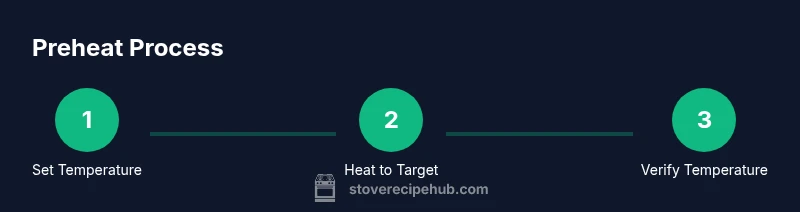
Preheating means bringing the oven to the recipe's target temperature before cooking begins. Most home ovens take roughly 10 to 15 minutes to reach a stable heat, though convection modes and oven age can affect timing. Always rely on the oven indicator, and cross-check with an oven thermometer for precise results. Avoid adding food until the temperature is verified.
Understanding how long oven preheat affects baking\n\
Factors that affect preheat time\n\
How to accurately determine when your oven is ready\n\
Preheating with convection vs conventional ovens\n\
Practical preheating tips for common dishes\n\
Common mistakes and how to fix them\n\
Quick notes on timing and cookware\n\
Tools & Materials
- Oven thermometer(Place in center rack for accurate readings)
- Timer (digital or phone)(Track preheat duration and signal when ready)
- Oven mitts(Protect hands when handling hot racks or pans)
- Optional: oven-safe thermometer(Good backup if you doubt built-in indicator)
- Notepad or kitchen journal(Record preheat experiences for your oven model)
Steps
Estimated time: 10-20 minutes
- 1
Set the target temperature and prep thermometer
Choose the recipe’s temperature and confirm the oven’s dial is set to that value. If you’re using a separate thermometer, place it in the center of the rack before you turn the oven on. This ensures you’re measuring the actual heat entering the cavity.
Tip: Double-check the target temperature against the recipe notes. - 2
Power on and wait for the indicator
Turn on the oven and let the preheat indicator begin cycling or glow. Do not rush to put food inside; stable heat is essential for even cooking.
Tip: Keep the door closed during preheat to maintain the temperature. - 3
Place thermometer and monitor rise
Position the thermometer in the center of the oven and monitor until the reading stabilizes within a 2–3 degree range of the target. This stabilizes the thermal baseline before cooking begins.
Tip: Avoid touching heating elements or walls with the thermometer probe. - 4
Validate with convection notes (if applicable)
If using convection, consult the recipe for any temperature adjustments. In many cases, you’ll lower the set temperature or shorten preheat time slightly.
Tip: If the recipe lacks convection guidance, follow the manufacturer’s convection note. - 5
Confirm readiness and begin cooking
When the thermometer holds steady at the target, turn off any extra signals and slide in your food promptly. This minimizes temperature drift and ensures a consistent bake.
Tip: Start timing your bake once you place the food inside. - 6
Record results for future reference
Note how long preheat took on this session and whether you observed any fluctuations. Use this data to predict preheat duration for future recipes and cookware.
Tip: Keep a simple log for your oven model.
Common Questions
Why does my oven take longer to preheat than the recipe indicates?
Oven performance varies by model, calibration, and age. Temperature readings on the dial may not match actual heat inside. Using an oven thermometer helps you verify and adjust time accordingly.
Ovens differ in how they reach temperature. Use an oven thermometer to verify and adjust preheat time.
Can I start baking as soon as the oven indicator shows hot?
If your oven has only an indicator light, rely on a separate thermometer for accuracy. Wait until the thermometer holds at the target temperature before placing food inside.
Yes, but verify with a thermometer before baking.
Does convection preheat faster than conventional ovens?
In many cases, convection reaches target temperature more quickly due to circulating air. Depending on the recipe, you may adjust temperature or preheat time accordingly.
Convection can heat up faster; adjust as advised by the recipe.
What should I do for preheating frozen foods?
Preheating still matters for even cooking. Follow the package directions and allow extra time for the oven to reach proper heat before baking.
Follow packaging; give extra preheat as needed.
What if my oven never reaches the target temperature?
Check door seals, thermostat calibration, and the heating elements. If persistent, consult a professional technician and consider a replacement if unreliable.
Check seals and thermostat; seek service if inconsistent.
Watch Video
Top Takeaways
- Preheat to target temperature before baking.
- Use a thermometer to confirm real temperature.
- Convection can change preheat duration; verify readings.
- Minimize door openings during preheat.
- Record preheat times for future reference.