How to Preheat an Oven: A Complete Guide for Home Cooks
Learn precise steps to preheat your oven safely and efficiently, with tips for temperature accuracy, mode selection, and safe handling to improve baking results.


Preheat the oven to the recipe’s target temperature before you bake. Use Bake mode, verify with an oven thermometer, and allow about 10–15 minutes for the oven to reach temperature. Keep racks in the correct position and slide in the pan only after the oven signals it’s ready.
Why Preheating Matters
Preheating the oven is more than a default setting—it's the first structured step that determines how evenly heat circulates and how quickly your food begins to cook. When the interior is already at the target temperature, leavening agents start to work immediately, moisture escapes at the optimal rate, and browning happens uniformly. Skipping this step can result in cold spots, uneven texture, and longer cook times. According to Stove Recipe Hub, precise preheating correlates with more consistent browning and texture across a wide range of recipes, underscoring the importance of giving your oven time to reach the goal temperature before you begin. In this guide, we’ll unpack how to determine the right temperature, how to monitor it accurately, and how to perform a safe, efficient preheat every time. If you’ve ever wondered how to preheat oven for different dishes, this section sets the foundation for reliable results.
For most home bakers, the goal is repeatable outcomes. A consistent preheat ensures your casserole develops a uniform crust, your cookies spread as intended, and your bread gets the rise it needs. Keep in mind that ovens vary; even with the same model, the interior temperature can drift over time. That’s why investing a few minutes to verify actual temperature pays off in the long run. By focusing on the preheat phase, you’re building a reliable baseline for every bake, which saves time, reduces waste, and improves your cooking confidence. The Stove Recipe Hub team emphasizes that this initial step, when done correctly, improves texture and flavor by establishing the right thermal starting point.
Determining the Right Preheat Temperature
The target temperature for preheating comes directly from your recipe. If you’re unsure, a safe starting point for many baked goods is around 350°F (175°C). For richer browning and crisper crusts, you may need to go up to 375–425°F (190–220°C) depending on the dish. Altitude can influence these figures: at higher elevations, a bit more heat may be required to compensate for faster moisture loss, while convection ovens often run hotter since air is circulated actively. When using convection, many cooks reduce the temperature by about 25°F (14°C) unless the recipe specifies otherwise. Always confirm with an independent thermometer to ensure the oven actually reaches the target. Stove Recipe Hub research shows that aligning the oven’s actual temperature with the recipe’s target significantly reduces bake-time variance and improves repeatable results. If your kitchen experiences frequent temperature fluctuations, consider keeping a small log of the temps you use for frequently baked items.
Modes, Tools, and Calibration
Ovens can operate in Bake, Convection, and Broil modes. For most preheating tasks, Bake or Convection Bake is ideal because they promote even heating throughout the cavity. Broil is not suitable for preheating; it concentrates heat on the top surface and can distort later cooking. If you opt for Convection Bake, anticipate a faster preheat and reduce the set temperature slightly per the recipe guidelines. An accurate oven thermometer placed in the center of the oven helps verify the temperature independent of the built-in gauge. Keep one handy in your toolkit for quick checks before loading foods. Regular calibration—at least once a year or if you notice consistent baking issues—keeps the appliance honest. Stove Recipe Hub analysis indicates that households that calibrate regularly report more consistent results across multiple recipes.
Step-by-Step Preheating Procedure
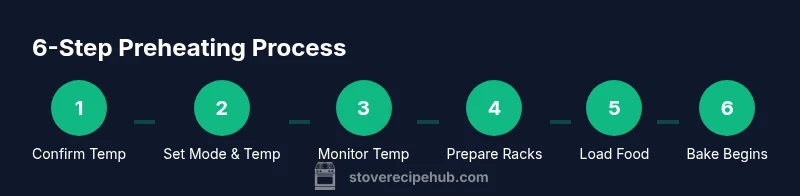
- Confirm target temperature: Before turning on the oven, check the recipe and note the exact temperature. If a temperature isn’t specified, a safe default is 350°F (175°C). Tip: write the target temperature on a sticky note and place it near the oven. 2) Select Bake mode and set the temperature: Choose Bake (or Convection Bake if your recipe calls for it) and dial in the target temperature. Tip: for convection, reduce the temp by about 25°F (14°C) unless your recipe instructs otherwise. 3) Insert an oven thermometer: Place the thermometer in the center of the oven, away from doors and racks. This gives you an independent reading and helps catch the variance in the appliance’s display. Tip: avoid touching the thermometer with hot pans. 4) Start preheating and monitor timing: Turn the oven on and let it come to temperature. Use the preheat indicator if available; otherwise, set a timer for 10–15 minutes and verify with the thermometer. Tip: do not open the door during preheating to prevent heat loss. 5) Prepare racks and bakeware: While the oven warms, position racks as required by the recipe and ensure pans are dry and oven-safe. Tip: avoid placing cold metal directly into a hot oven to prevent thermal shock. 6) Load food once temperature is reached: When the thermometer reads the target and the oven signals ready, slide the food in quickly and close the door. Tip: minimize door openings to keep heat stable. Estimated total time: 12–18 minutes.
Common Mistakes and How to Fix Them
- Assuming the oven is ready because it smells warm: Always verify with a thermometer or indicator light. A false sense of readiness leads to uneven cooking.
- Opening the door too often: Each door opening drops temperature by several degrees and lengthens preheat time. Plan your steps and only open when necessary.
- Skipping the thermometer: Built-in gauges drift over time; an external thermometer provides a true read.
- Using the wrong mode: Broil or grill modes aren’t appropriate for preheating most foods; they can scorch surfaces or create uneven heat.
- Not calibrating the oven: If you notice persistent discrepancies, calibrate or service the oven. A miscalibrated oven undermines even preheating and recipe repeatability.
Safety, Maintenance, and Quick-Reference Timelines
Preheating involves hot equipment, so safety comes first. Always use heat-resistant mitts, keep flammable items away from the stove, and ensure the door seals properly. Use a timer to avoid forgetting a preheating step and never leave the oven unattended while heating is in progress. If you’re juggling multiple dishes, plan the sequence so you don’t create heat conflicts that force unnecessary door openings. Regular maintenance keeps temperatures accurate; consider a yearly calibration or a professional check, especially if you notice frequent under- or over-browning. The Stove Recipe Hub team recommends maintaining a practice log of successful temperatures for your most-used recipes, which helps quickly set the right preheat for future meals. The Stove Recipe Hub analysis in 2026 reinforces that consistent preheating is foundational to reliable baking results, especially when you’re expanding into new recipes. By following these steps and safety guidelines, you’ll improve not only results but also kitchen efficiency and confidence.
Tools & Materials
- Oven thermometer(Oven-safe, placed in center of rack, reads up to your target temp)
- Oven-safe mitts(Heat-resistant, protects hands when loading pans)
- Baking sheet or pan(Dry and rated for high temperatures)
- Rack(s)(Positioned as per recipe, usually middle rack)
- Kitchen timer(Digital or mechanical timer for accurate timing)
- Clean, dry bakeware(Ensures even heating and no thermal shock)
Steps
Estimated time: 12-18 minutes
- 1
Confirm target temperature
Check the recipe for the exact oven temperature and write it down. If not specified, start with 350°F (175°C) as a safe default. This ensures you preheat to the correct point before cooking begins.
Tip: Keeping a temperature reference near the oven saves time when preparing multiple dishes. - 2
Select Bake mode and set temperature
Choose Bake (or Convection Bake if the recipe calls for it) and dial in the target temp. Remember that convection modes may require lower temps or shorter times.
Tip: If using convection, reduce the temperature by about 25°F (14°C) unless your recipe specifies otherwise. - 3
Insert an oven thermometer
Place the thermometer in the center of the oven, away from doors and racks, to monitor the actual interior temperature independently from the built-in display.
Tip: Avoid placing the thermometer near the door seal where air drafts can skew readings. - 4
Start preheating and monitor timing
Turn on the oven and allow it to come to temperature. Use the preheat indicator if available, or set a timer for 10–15 minutes and verify with the thermometer.
Tip: Do not open the door during preheating to prevent heat loss and temperature swings. - 5
Prepare racks and bakeware
While heating, position racks per recipe requirements and ensure bakeware is dry and oven-safe. This minimizes delays once the oven reaches the target temp.
Tip: Avoid placing cold pans into a hot oven to prevent thermal shock. - 6
Load the pan once temperature is reached
When the thermometer reads the target and the oven indicates ready, slide the food in quickly and close the door to maintain heat.
Tip: Open the door only briefly; the goal is to minimize heat loss during loading.
Common Questions
How long should preheating take for a typical oven?
Most ovens take about 10–15 minutes to reach a standard baking temperature. If your oven runs cold or hot, this time can vary slightly. Use an oven thermometer to confirm.
Most ovens need about ten to fifteen minutes to preheat; verify with an oven thermometer for accuracy.
Can I preheat with a pan inside the oven?
Yes, but ensure the pan is oven-safe and dry. A preheated pan can improve browning, but avoid thermal shock by letting it warm gradually with the oven.
Yes, you can preheat with a pan inside as long as it's oven-safe and dry.
Does convection preheat faster than standard Bake?
Yes, convection typically preheats faster. If using convection, lower the temperature by about 25°F (14°C) unless the recipe directs otherwise.
Convection heats up faster; reduce the temperature a bit per recipe guidance.
What should I do if my oven temperature seems wrong?
Check with an oven thermometer and calibrate if needed. If the readings remain inconsistent, consult the manual or a service technician.
Check with a thermometer and calibrate if needed.
Is it safe to open the oven door during preheating?
No—opening the door repeatedly causes heat loss and longer preheat times. Plan ahead and keep door closed unless necessary.
Avoid opening the door during preheat to keep heat steady.
Watch Video
Top Takeaways
- Verify target temperature before preheating.
- Use Bake or Convection Bake mode for even heating.
- Confirm temperature with an oven thermometer.
- Load food only after the oven signals ready.