How to Check a Stove Element: Step-by-Step Guide
Learn how to check a stove element for heat, continuity, and safety. This guide covers visual inspection, electrical testing, and replacement tips to keep your stove cooking evenly and safely.


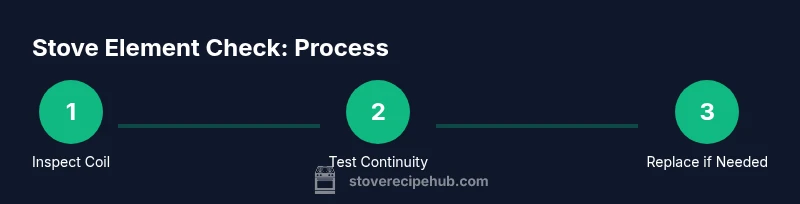
To check a stove element, you’ll verify heat reliability, inspect for visible damage, and confirm electrical integrity. Safety first: unplug the stove and, if possible, switch off the circuit. Remove the burner cap to expose terminals, test continuity with a digital multimeter, and perform a brief controlled heat test on low. Replace if readings are off or damage found.
Why check stove element matters
When you cook on a stove, the element is the heart of heat delivery. Checking it regularly helps ensure consistent cooking, keeps energy use in check, and prevents dangerous situations. According to Stove Recipe Hub, routine inspection can catch signs of wear before they lead to failure mid-recipe. A faulty element can cause uneven browning, cold spots, or sudden outages that disrupt weeknight meals. Understanding what to look for—cracks, burn marks, loose connections, and unusual smells—empowers home cooks to act quickly. A proactive approach also reduces the risk of accidental fires or electrical issues, especially if you notice flickering indicator lights, odd hums, or a burning odor near the coil. By learning a simple routine, you’ll save time and maintain consistent results in your everyday stove-top cooking.
This guide uses practical, do-it-yourself methods for common residential ranges. If your stove is gas-powered or uses a sealed induction element, consult the manufacturer’s safety notes before attempting any checks. Each stovetop model can differ in its access panels and wiring, so always refer to your model’s service instructions when in doubt.
Safety and preparation steps before testing
Safety is the foundation of any stove element check. Always unplug the appliance from the wall, or switch off the dedicated circuit at the breaker if you’re working on a range with hard-wired connections. Wait for the surface to cool completely before handling. Gather your tools and lay a non-slip mat on the counter to prevent accidents. If your stove has small caps or grates that cover the element, remove them carefully and set aside in a labeled container. Document what you remove so you can reassemble correctly. The goal is to minimize shock risk and avoid damaging delicate connectors. If you’re unsure about power-off procedures, consult the manual or a licensed technician. For added safety, wear eye protection and keep kids and pets away during the process. This initial step protects you and preserves the equipment while you diagnose—the simplest misstep can lead to a dangerous shock or a short.
Visual inspection: cracks, corrosion, and signs of damage
A careful visual check can reveal obvious problems without tools. Look for cracks in the ceramic insulator, melted plastic around terminals, scorch marks, or discoloration on the coil. Loose terminal connections, bent prongs, or corrosion around the contact points are red flags. If you see any damage, do not continue testing with power applied; set the stove aside and prepare for replacement or professional service. Also check for spills or residue on the element surface that could cause hotspots or arcing. When you finish the inspection, note what you observed and take clear photos for reference when you talk to a repair technician or order replacement parts. Keep in mind that some issues—like hairline cracks inside the coil—may not be obvious visually and require testing to confirm.
Visual cues matter because they directly influence safety and performance. If you find signs of wear, plan for a replacement and avoid using the affected burner until it’s resolved. The goal is to reduce risk while keeping cooking predictable.
Electrical testing: testing continuity and resistance
Electrical testing is the most diagnostic part of the check. With the stove unplugged and cool, remove the burner cap and access the element terminals. Use a digital multimeter set to the continuity or resistance mode. Place probes on the two terminals of the element and note the reading. A healthy coil typically shows low resistance, indicating good continuity; an open circuit (infinite resistance) means the element is broken; a very high resistance may indicate degraded material. If your model has a separate ground connection, you can test between each terminal and ground to rule out a grounding issue, but only if you’re trained to do so. Always test with care, and never touch exposed metal parts while the meter is connected. Document your readings and compare them to the manufacturer’s guidance if available. If the reading is inconclusive, repeat after fully cooling and rechecking the connections to ensure a solid reading.
Electrical testing helps distinguish between a damaged coil and a simple connectivity issue, guiding your next step.
Functional test and heat distribution: controlled evaluation
If the element passes the electrical test, you can perform a controlled, brief heat test to evaluate performance without risking a full cooking session. Reassemble the burner cap and any guards, reattach power, and place a compatible pan on the element. Set to a low or medium heat for one to two minutes and observe heat distribution, evenness, and any unusual noises or smells. If the coil glows evenly and heat spreads uniformly, the element is likely in good condition. If you notice hot spots, delayed response to settings, or uneven heating, the element may still be faulty or nearing the end of its life. After the test, unplug again and let the element cool before removing the pan. Keep the test short to minimize energy waste and avoid overtaxing an imperfect coil. For safety, never leave the stove unattended during this test. If the element fails to heat or behaves erratically, replacement is the safer path.
Documentation of test results helps you verify performance over time.
Replacing or repairing: selecting the right element
Replacing a stove element requires matching several key attributes: length, coil diameter, terminal type, mounting method, voltage, and wattage compatibility with your stove model. Use the model number from your appliance or the original part label to source a compatible replacement. If you’re unsure about the exact spec, take measurements or photos of the old element and bring them to a parts retailer or consult the manufacturer’s parts catalog. Installation typically involves disconnecting the power, removing the old element by unscrewing mounting hardware, and wiring the new element in the same configuration. Some elements snap in or slide into a dedicated socket; others require wiring directly to terminals. After installation, test with a brief heat cycle to confirm secure connections and proper operation. If you encounter stubborn screws or unfamiliar wiring, seek professional service rather than forcing components. Replacement parts are widely available from manufacturers and reputable third-party vendors, but ensure the part fits your specific stove model.
Approach replacement with a methodical plan to avoid mismatches and ensure a safe, lasting repair.
Maintenance habits to extend element life
Once you’ve checked and replaced as needed, adopt maintenance habits that extend the life of stove elements. Keep coils clean and dry; wipe spills promptly to prevent buildup and arcing. Use compatible cookware that matches the element size to avoid overheating at the edges. Do not drop heavy pots on the coil, and avoid stacking pots or using pots with warped bottoms. Periodically inspect cord grommets, mounting hardware, and the wiring path for signs of wear or looseness. Store grates and caps properly to prevent misalignment during reassembly. Regular cleaning and careful use can significantly extend the life of the element and preserve even heat output with minimal surprises during dinner prep.
Tools & Materials
- Safety gloves(Heat-resistant, leather palms preferred; wear when handling hot components)
- Screwdriver set (Phillips and flathead)(For removing burner caps and access panels)
- Digital multimeter with continuity test(Set to continuity or low-resistance range; test across element terminals)
- Non-contact voltage tester(Optional for confirming power is fully off before handling live connections)
- Infrared thermometer or surface temp gun(Optional for quick surface heat checks during testing)
- Non-slip work surface or mat(Protects countertops and provides stable footing)
- Owner’s manual or model-specific wiring diagram(Helpful for identifying element terminals and replacement parts)
Steps
Estimated time: 60-90 minutes
- 1
Power down and prep
Unplug the stove or switch off the circuit at the breaker. Confirm the surface is cool, then clear the area and gather tools. This prevents electric shock and keeps components clean for inspection.
Tip: Double-check that power is off using another device before touching terminals. - 2
Remove burner cap and access terminals
Carefully lift off the burner cap and any protective covers to expose the element terminals. Keep screws and caps in labeled containers for easy reassembly. This step gives you a direct view of the coil and connections.
Tip: If caps stick, gently wiggle rather than pry to avoid breaking plastic parts. - 3
Inspect visually for damage
Look for cracks, discoloration, melted insulation, or bent terminals. Check for signs of moisture or corrosion around connectors. If you spot damage, prepare for replacement and avoid further testing.
Tip: Take clear photos to reference during parts ordering or when asking for help. - 4
Test continuity and resistance
With the stove unplugged, place the multimeter probes on the two element terminals. A healthy element shows continuity (low resistance); an open circuit means the coil is broken; very high resistance indicates aging. Do not touch exposed metal while testing.
Tip: Re-test after cooling to ensure stable readings. - 5
Reassemble and perform a controlled heat test
Reconnect the burner cap and any guards. Restore power and place a compatible pan on the element. Run on a low setting for 60–120 seconds to observe heat distribution and response. Turn off immediately if you notice unusual smells, buzzing, or arcing.
Tip: Keep a close eye on the first minutes of testing to catch early issues. - 6
Decide on replacement or repair
If readings were off or there were visible signs of damage, replace the element with a model-matched part. If testing was inconclusive, consult a technician or the manufacturer’s parts catalog. After replacement, repeat the brief heat test to confirm proper operation.
Tip: Always verify the part fits your exact stove model for safety and performance. - 7
Document and plan maintenance
Record the test results, replacement part number, and date of service. Schedule periodic checks every few months to catch wear early. Implement routine cleaning to prevent buildup and ensure consistent heat.
Tip: Create a simple maintenance log for future reference.
Common Questions
What are the common signs that a stove element is failing?
Common signs include no heat, uneven heating, buzzing noises, discoloration, cracks, or visible damage around the coil. If you notice any of these, test the element with a multimeter and consider replacement.
Common signs are no heat, uneven heat, buzzing, or visible damage. If you see these, test with a multimeter and consider replacement.
Can I test the element without removing it?
Limited testing is possible by observing heat response with the caps in place, but reliable electrical testing requires accessing the element terminals with the stove unplugged.
You can observe heat while keeping the cap on, but for a reliable test you need access to the terminals with power off.
What safety steps are essential before starting?
Always unplug or switch off the circuit, let components cool, wear protective gear, and work on a stable surface. Keep liquids away and avoid touching live wiring.
Unplug, let it cool, wear protection, and stay away from live wiring.
How do I choose the right replacement element?
Use your stove’s model number to find the exact part, matching length, coil diameter, terminal type, and wattage. If in doubt, consult the parts catalog or a pro.
Use the model number to find the exact element; match length, terminals, and wattage, and ask a pro if unsure.
Is it safe to continue cooking with a questionable element?
No. If you’re unsure about the element’s integrity, stop using it and replace or have a technician inspect it to prevent hazards.
Do not continue cooking with a questionable element. Replace or have it checked.
How often should I inspect stove elements?
Aim for a quick visual check every few months and a full electrical check annually or after any abnormal heating behavior.
Do a quick visual check every few months and an electrical check yearly or after odd heating.
Watch Video
Top Takeaways
- Unplug before inspection and wear safety gear
- Visual and electrical tests identify faulty elements
- Match replacements to model specifications
- Conduct a controlled heat test after installation
- Maintain a simple stove-element care routine