How to Check Stove Pilot Light
Learn how to check your stove pilot light safely, diagnose common issues, and relight correctly. This Stove Recipe Hub guide covers tools, step-by-step procedures, safety warnings, and maintenance tips for home cooks.


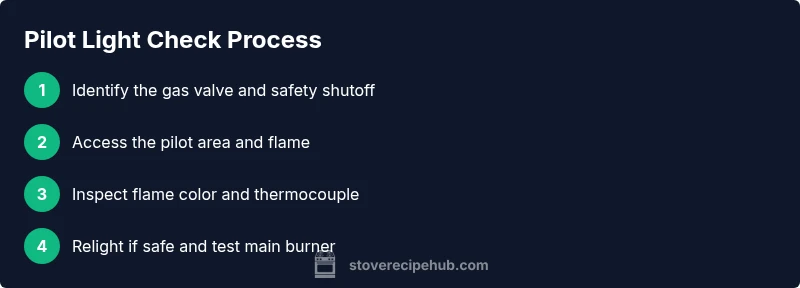
This guide shows you how to check a stove pilot light safely and identify common issues. You'll learn where to find the pilot, how to inspect the flame, relight procedures, and when to seek professional help. Before you begin, gather a flashlight, a long lighter or match, and basic tools.
What is a stove pilot light and why check it?
A stove pilot light is a small flame that stays lit to ignite the main burner quickly. For many gas stoves, this is a standing flame or part of an electronic ignition system. According to Stove Recipe Hub, a safely maintained pilot light is essential for stove reliability and kitchen safety. The Stove Recipe Hub team found that routine checks help prevent gas leaks, reduce the risk of failed ignition, and extend the life of related components. This article explains what to look for, how to inspect the flame, and how to relight or troubleshoot when necessary.
Where you find the pilot varies by model and era. Older stoves often have an exposed pilot tube with a visible flame, while newer models may conceal the pilot behind a small panel. If you notice a yellow or flickering flame, soot buildup, or a burner that won’t ignite, these can be signs to pause and assess before attempting further action.
If you smell gas at any point, stop immediately and leave the area. Do not light matches or use electrical switches until you are sure the gas source is secure. Safety first keeps you and your household out of danger and aligns with best practices from Stove Recipe Hub.
Safety first: essential precautions before you inspect
Inspecting a gas appliance carries risk if done carelessly. Before you touch any controls, ensure your space is well-ventilated and that there are no open flames nearby. If you smell gas or hear a hissing sound, evacuate and call your gas provider or emergency services. Never rely on a shortcut to save time when gas exposure could be present. Stove Recipe Hub emphasizes accountability and proper protective steps to minimize risk.
Always turn off the burner and the gas valve if accessible, and wait several minutes for any accumulated gas to disperse. Use a flashlight to inspect dim areas rather than leaning over the flame. Keep your face and hands away from the pilot while checking and relighting, and wear safety glasses if available. Proper ventilation, careful handling, and controlled testing are key to safe checks.
Common causes of a failing pilot light
A pilot light may fail to stay lit or fail to ignite for several reasons. Drafts near the stove can blow out an otherwise healthy flame. A dirty orifice or blocked gas line can restrict fuel flow, causing weak or intermittent flames. A faulty thermocouple or gas valve may cut off fuel supply if they misread heat or pressure. Gas supply issues, such as a closed valve or a service interruption, can also prevent ignition. If you’ve recently cleaned the area or replaced parts, ensure all seals and connections remain tight. Based on Stove Recipe Hub analysis, routine checks help identify these factors early and reduce the risk of gas leaks or ignition problems.
If the flame is consistently weak, yellow, or unstable, it’s often a signal to stop and inspect further rather than forcing a relight. A healthy pilot flame should be blue and steady, with a faint blue core indicating efficient combustion.
If you notice any hissing sounds, a persistent gas odor, or signs of soot around connections, treat the situation as urgent and consult a qualified technician for a thorough inspection.
Tools & Materials
- Flashlight or headlamp(Hands-free illumination to inspect dark areas around the pilot assembly)
- Long-reach lighter or match(Keep hands away from the flame; use a tool to initiate ignition safely)
- Screwdriver set (flathead and Phillips)(To remove access panels if needed by model)
- Wrench or pliers(Only if manufacturer requires adjustment on valves)
- Soapy water or leak-detect solution(Check for gas leaks around connections after testing)
- Rags or disposable towels(Wipe spills and clean surfaces after testing)
Steps
Estimated time: 20-40 minutes
- 1
Shut off gas and locate the pilot assembly
Turn the burner knob to OFF and, if present, close the main gas valve. Wait at least 5 minutes to clear any accumulated gas before you begin inspection. This waiting period reduces the risk of flare-ups and ensures you can assess the flame safely.
Tip: If you smell gas at any point, do not proceed. Leave the area and contact your gas provider. - 2
Access the pilot area
Remove the front panel or access cover using the appropriate screwdriver if needed. Do not force panels; loosen screws gently and support the panel so it doesn’t fall. Locate the pilot tube and the thermocouple assembly nearby.
Tip: Take a quick photo of how parts align before removing components so you can reassemble correctly. - 3
Inspect flame quality and thermocouple
Look at the pilot flame: it should be a steady blue flame with a small yellow tip. A yellow, flickering, or irregular flame suggests air, sooty buildup, or a blocked orifice. Check the thermocouple for soot, corrosion, or misalignment and ensure it sits snugly in the flame area.
Tip: If the flame is not blue or if you see soot around any part, do not relight until you’ve cleaned or adjusted as needed. - 4
Relight the pilot safely
Set the control knob to PILOT (or the equivalent position) and press/hold the button while using a long lighter to ignite the pilot. Keep holding the knob for 30-60 seconds after ignition to ensure the thermocouple stays heated and the safety valve remains open.
Tip: Never lean over the burner while lighting; keep your face away from the flame. - 5
Test the main burner
Turn the control to ON and observe whether the main burner lights smoothly and stays lit. If the flame goes out, turn the control back to PILOT, re-check the area for drafts or obstructions, and attempt another gentle relight.
Tip: If the burner won’t stay lit after relighting, there may be a faulty thermocouple or restricted gas flow. - 6
Reassemble and clean
Replace any covers or panels securely. Wipe away any residue around the burner area and store tools safely. Keep a record of what you checked for future reference.
Tip: Leave the area as you found it, with all screws tightened and panels secured.
Common Questions
Is it safe to check a stove pilot light by myself?
Yes, you can perform a basic check if you follow proper safety steps and avoid lighting near any gas smells. Always turn off gas and ventilate the area, then proceed carefully.
Yes, with caution. If you smell gas, stop and call your gas provider immediately.
Why does my pilot light keep going out?
Common causes are drafts, a dirty orifice, a faulty thermocouple, or irregular gas supply. Inspect flame quality and connections before deciding on maintenance or replacement.
Drafts or a dirty nozzle often cause ignition failures.
What should I do if I smell gas near the stove?
Leave the area immediately, avoid flames or sparks, and call your gas company or emergency services from a safe location.
If you smell gas, go outside and call for help right away.
How often should I inspect the pilot light?
Aim for a safety check during seasonal stove maintenance or at least every 6-12 months, depending on usage and environment.
It's best to check during regular maintenance.
What tools are essential for a safe relight?
A long-reach lighter, flashlight, and a clear workspace are essential. Avoid using open flames near gas leaks.
Keep a long lighter handy and light only when you’re sure the area is safe.
Can a faulty thermocouple be replaced by a homeowner?
If you have gas appliance experience and the correct replacement part, you may replace it. Otherwise, contact a licensed technician.
If you’re not confident, hire a professional to replace the thermocouple.
Watch Video
Top Takeaways
- Check safety first before touching the pilot area
- A healthy pilot flame is blue and steady
- Use a long lighter and hold the knob during relight
- If the flame won’t stay lit, stop and seek professional help
- Regular maintenance reduces future ignition issues