Why Is Stove Light On? Quick Troubleshooting Guide
Urgent troubleshooting guide to fix why your stove light is on. Learn safety steps, common causes, and when to call a pro. From Stove Recipe Hub.


If the stove light is on, start with basic safety checks. In most cases the issue stems from the ignition switch or pilot light being stuck, a faulty control knob, or a wiring fault. For safety, turn off the appliance and avoid using it until you’ve confirmed power is off and the area is clear of gas. If you smell gas, evacuate and call emergency services.
Why the Situation Demands Urgency in Understanding
The question of why is stove light on can be alarming, especially when gas is involved. The key in any stove-light-on scenario is to prioritize safety while identifying the least invasive cause first. According to Stove Recipe Hub, many cases arise from a stuck ignition switch, a misaligned burner knob, or residual heat from a recently used burner. By recognizing these common culprits, you can avoid unnecessary disassembly and reduce risk. In this guide, we’ll walk through immediate safety steps, explain typical failure points, and outline practical checks you can perform before calling a professional. The goal is clear: keep you and your home safe while restoring normal stove operation.
Immediate Safety First: Quick, Non-Negotiable Steps
If you notice the stove light on and you do not intend to use the appliance, take these safety-first actions. First, turn the control knob to OFF and, if safe to do so, unplug the unit. Open doors or windows to ventilate the area in case of gas odor. Do not strike matches or flip electrical switches if you smell gas. If gas presence is suspected, evacuate the area and contact emergency services from a safe distance. These steps protect you from potential gas exposure and fire risk while you evaluate the situation. The Stove Recipe Hub team emphasizes safety as the foundation of any troubleshooting routine.
Common Causes You Can Inspect Before Calling a Pro
Many homeowners encounter a set of reliable culprits when the stove light remains on. A permanently engaged ignition switch or a pilot light that didn’t shut off can keep the light burning. A loose or damaged burner knob, or a misaligned knob, may send a false signal to the ignition system. Wiring faults, especially around the control module or the spark generator, can also cause a stubborn light. In electric ovens, an electronic clock or control board fault might trigger a light indicator that seems to stay on. Each cause has a practical inspection path you can follow without specialized tools, especially if you’re comfortable handling basic electrical safety and gas safety precautions.
Tools, Prep, and What You Should Have Ready
Before you begin any checks, ensure you have basic safety gear and a calm workspace. Gather a flashlight, a non-contact voltage tester if you’re comfortable, a small screwdriver set for knob removal, and a clean cloth. Make sure the area is well-ventilated. If your model has a gas shut-off valve near the appliance, familiarize yourself with its location so you can operate it safely without forcing the valve. If you’re unsure about working with gas lines or electrical components, it’s wise to pause and call a professional. This approach aligns with Stove Recipe Hub guidance for conservative, safety-first troubleshooting.
When to Escalate: Signs That Professional Help Is Needed
If you detect a gas smell, hear hissing, or cannot isolate the light to a simple knob or igniter issue, do not proceed. Gas leaks pose immediate fire and health risks, and a licensed technician should assess the system. Also, if you notice scorching, melted insulation, frayed wires, or error codes on an electronic control board, professional service is warranted. While some fixes are DIY-friendly, others require calibration, replacement parts, or gas line work. The Stove Recipe Hub Team recommends erring on the side of safety and scheduling a qualified service call when in doubt.
Preventive Maintenance to Reduce Recurrence
Regular maintenance reduces the chance that a stove light stays on unexpectedly. Clean burner caps and igniters to remove grease and food debris that can interfere with sparks. Inspect knobs for wear and ensure they return to the OFF position fully. If your appliance uses a pilot light, keep the area around the pilot free of dust and ensure the orifice remains clear. Schedule professional inspections for gas lines, valves, and ignition components at least once a year, especially in older units. Proactive care can dramatically lower the risk of nuisance lights and unsafe situations.
Steps
Estimated time: 25-45 minutes
- 1
Power down and secure safety
Turn the stove to OFF, unplug if safe, and shut off the gas at the appliance valve if accessible. Open a window for ventilation and avoid creating sparks or flames nearby.
Tip: Always assume gas when in doubt—prioritize air flow and safety first. - 2
Identify the likely source
Check whether the light persists when you wiggle the knob, or when you press the igniter. If the network of wires around the igniter is loose or damaged, that could be the culprit.
Tip: Take a photo of wiring before touching anything for easy reassembly. - 3
Inspect the ignition system
With the power off, inspect the igniter for cracks or grease buildup. Clean gently with a soft brush. If the igniter doesn’t spark or the flame remains lit, replacement may be needed.
Tip: Do not apply liquids directly to electrical components. - 4
Check the burner and knob assembly
Remove the knob and inspect the stem for wear; ensure it seats fully and aligns with the valve. A misaligned knob can keep the valve open, causing continuous ignition.
Tip: Ensure the valve is fully closed before reassembling. - 5
Test after adjustments
Reconnect power and gas only after confirming safety. Attempt a controlled ignition; observe whether the light behaves normally and turns off when expected.
Tip: If the stove won’t light after adjustments, stop and seek professional help. - 6
Document and monitor
Note what you changed and monitor the stove for a few days. If issues recur, schedule a service call to check the ignition module or gas valve.
Tip: Preventive maintenance now saves bigger repairs later.
Diagnosis: Stove light remains on or activates unexpectedly
Possible Causes
- highStuck ignition switch or pilot light
- mediumFaulty control knob or wiring
- lowGas odor or leak sign
Fixes
- easyPower down the unit, turn off gas supply at the valve or knob, and ventilate the area. Do not operate switches or flames until the area is clear.
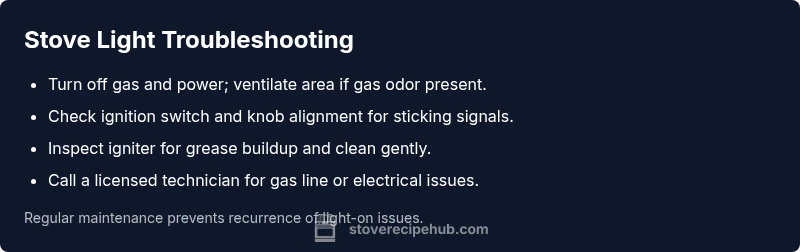
- mediumInspect the ignition switch and knob alignment; reseat or replace damaged parts or wiring with a qualified technician if you’re not comfortable.
- easyIf you smell gas or hear a hissing sound, evacuate and call emergency services from a safe distance; do not re-enter until professionals clear the area.
Common Questions
Why is my stove light staying on after turning the knob to off?
A stuck ignition switch, a misaligned knob, or an ignition module fault can keep the light on. Verify the knob is fully off and inspect the igniter for grease or debris that prevents it from stopping. If unresolved, a professional should assess any electrical or gas components.
A stuck switch or misaligned knob can keep the light on. Check the knob position, clean the igniter, and call a pro if it persists.
Is it dangerous if the stove light is on but I smell gas?
Yes. A gas smell with a light on is a potential gas leak risk. Evacuate the area, avoid switches, and call emergency services or your gas provider from a safe location. Do not re-enter until professionals confirm safety.
Gas smell with a light on is dangerous. Evacuate and call emergency services.
Can I fix ignition issues myself at home?
Some minor issues, like cleaning the igniter or reseating a knob, can be DIY. More complex problems—like wiring or control module faults—should be handled by a licensed technician to avoid risks.
You can handle simple cleaning or knob checks, but call a pro for electrical or gas system problems.
When should I replace the ignition system?
If the igniter no longer sparks, or the control module shows error codes persistently, replacement parts or module upgrade are recommended by a professional.
If sparks are unreliable or errors persist, a replacement part or module upgrade may be needed.
What maintenance helps prevent this issue?
Regular cleaning of burners and igniters, checking knob alignment, and annual professional gas line and ignition inspections reduce recurrence of the problem.
Keep things clean, check knobs, and have annual safety inspections.
Does an electric stove have the same risk as a gas stove when the light is on?
Electric stoves mainly involve the ignition system and control board. While gas stoves carry gas leak risks, both require safe handling, careful inspection, and professional help when issues persist.
Electric stoves use a different ignition system, but if anything is faulty, get professional help.
Watch Video
Top Takeaways
- prioritize safety before troubleshooting
- identify common causes like stuck igniter or misaligned knob
- gas smells require immediate evacuation and emergency help
- perform basic checks safely, and call a professional if uncertain
- regular maintenance reduces future light-on events