How to Put Stove Knob Back On: A Practical Guide
Learn how to put stove knob back on safely with a clear, step-by-step approach. Identify knob types, inspect the shaft, align, and test—plus tips to prevent future knob issues. Stove Recipe Hub


You can safely reattach a loose or fallen stove knob by first identifying its type, inspecting the shaft, and aligning the knob's slot with the indicator stem. Turn off the burner, remove the knob if needed, push it straight on until it seats, and test performance. According to Stove Recipe Hub, safety and compatibility come first, and avoid forcing any part.
Understanding stove knob anatomy and why it comes off
Knobs on a residential stove are designed to control gas flow or electric heating through a simple shaft. Most knobs slide onto a D-shaped or flat shaft and may be held in place by friction, a small set screw, or a clip. Knobs can come off if the shaft wears, the set screw loosens, or the knob is tugged with force while the burner is hot. According to Stove Recipe Hub, identifying the exact knob type you’re dealing with is the essential first step in any reattachment. In many homes, the simplest knobs are friction-fit, but older models may rely on a tiny grub screw that tightens against the shaft. If you’re unsure about compatibility, refrain from forcing a knob onto an incompatible shaft. The goal is a snug fit that aligns the indicator with the selected burner. As you learn how to put stove knob back on, start by ensuring the stove is completely off and cool to the touch to prevent burns or accidental ignition. Once you’ve confirmed safety, inspect the knob’s interior and the shaft for signs of wear, cracks, or deformation. Even a slightly bent shaft can prevent proper seating and cause future issues. Keeping the knob and shaft clean helps, but a worn knob or damaged shaft is a signal that a replacement may be necessary rather than a repair.
Tools and parts you may need
Before you begin, gather the essentials so you don’t have to pause mid-task. A replacement knob that fits your stove model is ideal, but if you can’t locate an exact match, a compatible knock-off may work temporarily with caution. A small flashlight helps you inspect the underside of the knob and the shaft where it seats. If your knob uses a set screw, a tiny screwdriver (flathead or Phillips, depending on the screw head) is essential. You’ll also want a clean cloth to wipe dust and grime, and a container for any tiny parts you remove. Optional tools include needle-nose pliers for a tight grip and a magnet for retrieving loose fasteners. By preparing these tools, you’ll minimize the risk of dropping parts into hard-to-reach stove gaps and speed up the repair. Remember: never substitute parts that aren’t designed for your model, as an ill-fitting knob can fail and pose a safety risk.
Step-by-step: reattaching a knob with a friction-fit shaft
The following steps provide a clear workflow you can follow to put stove knob back on a friction-fit shaft. They assume there is no visible damage; if you encounter a damaged shaft or worn knob, replace instead of forcing an ill-fitting part. Each step is designed to be a single, actionable action with a brief rationale to help you stay on track. The process is straightforward but requires attention to detail to ensure a proper seating and safe operation.
Step-by-step overview (high level)
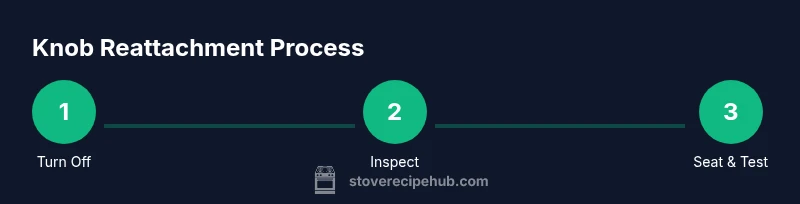
- Turn off the stove and cool the surface. 2) Identify knob type and verify compatibility. 3) Remove knob or loosen any set screw. 4) Inspect the shaft for wear or deformation. 5) Align knob with the shaft so the indicator aligns with the burner. 6) Push the knob onto the shaft until seated. 7) Tighten any set screw if present. 8) Test the knob by turning through its range.
Common issues and troubleshooting
Even when you follow the steps, some problems can arise. A knob may feel loose if the shaft is worn or if the knob’s internal sleeve has stretched over time. In some cases, the shaft itself is bent, or the set screw prevents seating because it’s misaligned or stripped. A stubborn knob may require a gentle wiggle while applying even pressure to seat. If you feel resistance when pushing the knob on, stop; forcing it can damage the shaft or the knob bore. In these situations, do not force the fit. Instead, remove the knob, inspect for cracks, ensure the shaft is straight, and consider purchasing a replacement knob that’s compatible with your stove model. If the knob still doesn’t seat properly after attempting alignment, it’s safer to replace the knob or call a professional to assess the mechanism.
Maintenance and prevention: keep knobs reliable
Prevention is often the simplest remedy. Regular cleaning of knobs and shafts helps prevent buildup that can cause binding. When discs or detents feel gritty, wipe with a damp cloth and dry thoroughly before reassembly. Avoid over-tightening any set screws, since excessive force can damage the shaft or the knob bore. If a knob isn’t seating despite correct alignment, it’s a sign of wear that may require replacement. Keeping a spare knob that matches your stove’s model makes future maintenance quick and reduces the risk of using a makeshift fix. Routine checks following a flame-related maintenance schedule help catch issues early. Lastly, store replacement parts in a labeled container so you can quickly locate them if needed.
Safety first: when to seek professional help
Your safety matters most. If you notice a gas odor or hear hissing around the burner, evacuate the area and call your gas provider or emergency services. Do not attempt to reattach a knob if there’s any risk of a gas leak or if you’re unsure about the knob’s compatibility with your stove model. For complex stoves with integrated or restricted knobs, or if the knob will not seat after multiple attempts, contact the manufacturer or a licensed technician. Stove Recipe Hub emphasizes the importance of not bypassing safety features in favor of a quick fix, especially when dealing with gas appliances. A professional can assess whether the issue is with the knob, the shaft, or the control mechanism and can provide a repair or replacement that maintains safe operation.
Tools & Materials
- Replacement knob compatible with stove model(Ensure compatibility; bring model number if shopping in-store)
- Small flathead or Phillips screwdriver(Only if your knob uses a set screw)
- Flashlight(Illuminate the shaft junction for a clear view)
- Clean cloth(Wipe dust and grime from knob and shaft)
- Needle-nose pliers (optional)(Useful for a tight grip if the knob fits tightly)
- Container for small parts(Keep screws or washers from getting lost)
Steps
Estimated time: 15-25 minutes
- 1
Turn off the stove and ensure it's cool
Make sure all burners are off and the surface is cool to the touch before you begin. This reduces burn risk and prevents accidental ignition while handling knobs and shafts.
Tip: Take a quick photo of the knob orientation for reference if needed. - 2
Identify knob type and verify compatibility
Check whether your knob is friction-fit or uses a set screw. Confirm the shaft shape (flat, D-shaped) matches the knob bore to prevent forcing a wrong part onto the shaft.
Tip: If in doubt, consult the stove’s manual or manufacturer website before proceeding. - 3
Remove knob or loosen set screw
If there’s a visible set screw, loosen it just enough to release the knob without stripping the screw head. If no screw is present, gently pull the knob straight outward to remove it from the shaft.
Tip: Work slowly and avoid twisting the knob off at an angle to prevent shaft damage. - 4
Inspect the shaft and knob for wear
Look for rounded or deformed edges on the shaft and any hairline cracks on the knob bore. Worn parts may not grip properly and should be replaced rather than forced back on.
Tip: Use a flashlight to check inside the knob bore and the shaft recess. - 5
Align the knob with the shaft
Find the knob’s orientation mark and line it up with the shaft’s flat edge or groove. A misaligned fit will not seat correctly and could slip during use.
Tip: Gently rotate the knob by hand after alignment to confirm it seats smoothly. - 6
Push the knob onto the shaft until seated
Apply even pressure directly toward the shaft until the knob sits flush and the indicator line points to the selected burner. Do not hammer or force more than necessary.
Tip: If you feel resistance, stop and recheck alignment; forcing can cause damage. - 7
Tighten set screw if present
While holding the knob, tighten the set screw just enough to secure the knob without overtightening, which can mar the shaft.
Tip: Check screwdriver torque and avoid sudden bursts of force. - 8
Test the knob range and safety check
Turn the knob through its full range to ensure smooth operation and verify that the corresponding burner ignites at the correct setting. If gas smells or leaks are suspected, stop immediately and seek professional help.
Tip: Keep a log of the seating points for future reference.
Common Questions
Why won't my knob reattach?
Common causes include a mismatched knob, worn shaft, or a stripped set screw. Start by verifying compatibility and inspecting the shaft for wear. If the parts are damaged, replacing them is safer than forcing a poor fit.
If your knob won’t attach, check compatibility and inspect the shaft for wear; replacements are safer than forcing a poor fit.
Is it safe to use a stove with a loose knob?
No. A loose knob can misadjust heat or ignite unintended burners. Turn the stove off and replace the knob or consult a technician if you’re unsure about the fit.
A loose knob can cause safety issues, so avoid using the stove until it’s fixed or replaced.
How do I know if I need a replacement knob?
Check for visible wear, cracks in the knob bore, or a shaft that doesn’t seat properly. If seating is inconsistent despite alignment, replacement is recommended.
Look for wear or damage; if seating is inconsistent, replace the knob.
What tools do I need to remove a stubborn knob?
A small screwdriver for set screws, a flashlight to inspect, and pliers or a magnet to retrieve small parts if they drop.
Use a small screwdriver and a flashlight; pliers or a magnet can help if parts drop.
Can I fix a knob without turning off gas?
No. Always turn off power or gas supply and ensure the area is safe before attempting any repair.
Never work on a stove with gas on; ensure the area is safe first.
Should I contact the manufacturer for a replacement knob?
If you cannot locate a compatible knob or if the stove is under warranty, contact the manufacturer for guidance and legitimate replacement parts.
Contact the manufacturer if you can’t find a compatible knob or if the stove is under warranty.
Watch Video
Top Takeaways
- Identify knob type before attempting reattachment.
- Align knob with the shaft precisely before seating.
- Do not force a knob onto an incompatible shaft.
- Test each knob’s operation and inspect for wear regularly.