How to Take Stove Knobs Off: Safe Removal Guide
Learn to remove stove knobs safely for cleaning or maintenance. This step-by-step guide covers knob types, tools, safety, and reattachment to keep your stove functioning smoothly.


Goal: safely remove stove knobs to access the control shaft or clean behind them. Most models need a flat-head screwdriver or a coin, plus good lighting and a soft cloth. This guide explains how to identify knob types, detach without damage, and reassemble correctly. Always unplug the range or switch off the circuit breaker before starting, and test knob movement gently after reattachment.
What you need to know before removing stove knobs
Removing stove knobs is a common maintenance task that lets you clean behind the controls, replace damaged knobs, or access the burner head for repairs. Before you begin, it's essential to understand that knob designs vary by model. Some knobs pull straight off; others are retained by a small set screw. According to Stove Recipe Hub, planning ahead reduces the risk of misalignment and makes reassembly straightforward. Always unplug the range or switch off the circuit breaker to avoid accidental ignition or shock.
In many gas and electric stoves, the knob makes direct contact with a control shaft. If you force it without confirming the type, you risk bending the shaft or cracking the panel. Therefore, identify the knob type: friction-fit, screw-in, or cap-with-set-screw. A quick inspection will tell you which method to apply. Some knobs cover a tiny set screw under a cap; you may need to gently pry the cap with a fingernail or a plastic card. Have a flashlight handy to illuminate the back of the dial.
Prepare your workspace: a clean cloth, good lighting, and a small mirror or smartphone camera can help you see recessed screws. If you’re unsure, consult the user manual or the support page for your range model. The goal is to remove the knob without damaging the control or the panel, so take your time and proceed carefully.
Identify knob types found on most stoves
The most common knob types fall into a few categories: friction-fit knobs that pull straight off without any fasteners; set-screw knobs that are retained by a small screw at the base; and cap-on-knob designs that hide the set screw under a removable cap. Friction-fit knobs are simple but can be stubborn if dust or grease has built up. Set-screw knobs require the correct screwdriver size and, in some cases, a slight loosening before removal. For safety, never use excessive force; if a cap is stuck, lay a soft cloth to protect the surface and work the cap gently.
To verify which type you have, try a light pull. If you feel a screw or a hidden slot, stop and prepare the right tool. The orientation of the knob matters for reinstallation, so take note of where the indicator points before removal. If your stove has a back panel or control module, you may need to remove a small access cover to see the shaft more clearly.
Safety first: power down and precautions
Powering down is essential. Unplug the unit at the wall or switch off the circuit breaker that feeds the range. If you smell gas or suspect a leak, leave the area and call a professional; do not attempt knob removal until it is resolved. Make sure the surface is cool and dry; wet surfaces increase the risk of slipping a tool. Keep children and pets away from the workspace. Have a flashlight, soft cloth, and a storage tray ready so you can keep screws and caps organized. The goal is to avoid damage to the control shaft or the panel, which can happen if you twist while applying torque.
As you proceed, verify that all power sources are off and that you are on a stable, clean surface. If your model uses a glass or ceramic surface, extra care is warranted to prevent scratches. If you encounter resistance that suggests a mechanism beyond a simple knob, pause and consult the manual rather than forcing it.
Understanding the removal process in plain terms
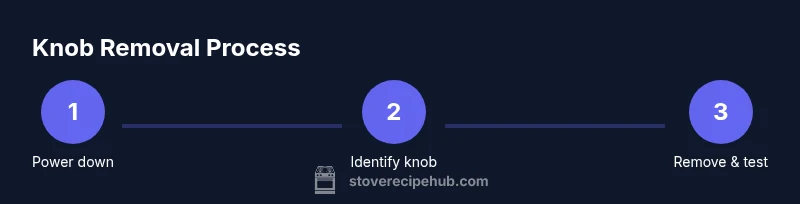
Removing knobs is a small mechanical task that becomes straightforward once you know the knob type. The basic idea is to detach without bending or twisting the control shaft, then set everything aside in an organized way for reattachment. Start by confirming power is off, then identify whether the knob is held by a set screw or is friction-fit. If there is a set screw, loosen it just enough to release the knob; if there is no screw, pull the knob straight outward with even pressure. After removal, wipe the shaft, inspect for wear, and store the components in a labeled container. These simple steps reduce the risk of misalignment later.
If you are unsure about your model, consult the manufacturer’s guidance or a reputable home-cooking resource. The goal is to create a clean, ready-to-reassemble setup that keeps your stove safe and functional.
Reattach and test after removal
Reattaching knobs is the reverse of removal: align the knob indicator with the control shaft, push straight on until it seats snugly, then tighten any set screw if present. Do not overtighten, as this can strip threads or damage the shaft. Turn the burner on a low setting to confirm the knob engages correctly and returns to the off position. If you have multiple knobs, return them to their original positions and test the full range of motion for each.
Before putting away tools, wipe down the knobs and panel to remove any fingerprints or grease. Store screws in a small container or magnetic tray to prevent loss. Finally, check the neighboring controls for smooth operation. A quick field check saves time if an issue reappears later.
Troubleshooting common issues and maintenance tips
If a knob refuses to budge, do not yank it free. Some knobs hide a set screw that you may have missed, while others are held by a stubborn friction-fit that benefits from a little WD-40 on the shaft edge (applied sparingly). If a knob is chipped or loose, avoid continuing usage until you can replace it properly. Clean behind the knob after removal to remove grease or debris that could affect reassembly. Regular maintenance, like wiping the shaft and keeping the console area clean, extends the life of the knobs and the control assembly.
Model-specific variations and extra considerations
Different stove brands use different knob retention methods. Some models require special tools or partial disassembly of the control panel to access set screws. Always consult your model’s manual or the manufacturer’s support page for model-specific instructions. If you own an older range, the nut or screw heads may be recessed; in such cases, use the right driver size and avoid prying with metal tools that can scratch the surface. By understanding these variations, you can approach knob removal calmly and avoid unnecessary damage.
Tools & Materials
- Flat-head screwdriver(For most screws or detents)
- Coin (penny or nickel)(For friction-fit knobs with a hidden slot)
- Flashlight(Shine behind panel and shaft)
- Soft cloth(Protect surfaces while cleaning)
- Marker or tape(Label knob orientation for reassembly)
- Gloves(Grip and protect hands)
- User manual(Model-specific guidance)
Steps
Estimated time: 15-25 minutes
- 1
Power down and prepare the workspace
Ensure the stove is off and powered down. Unplug the unit or switch off the circuit breaker. Clear the area and lay a soft cloth to protect surfaces; keep a flashlight handy to illuminate the area behind the knob.
Tip: Double-check that the surface is cool and stable before starting. - 2
Identify knob type and access any fasteners
Look for a visible set screw at the base or a cap hiding a slot. If there is no screw, the knob is likely friction-fit. Use a flashlight to inspect the base and underside.
Tip: If you see a cap, gently pry it with a fingernail or plastic card to reveal the screw. - 3
Loosen any set screws or fasteners
If a set screw is present, use the correct screwdriver to loosen it a few turns. Do not remove the screw completely yet; you want to free the knob without splintering the shaft.
Tip: Loosen gradually to avoid stripping the screw or damaging the knob. - 4
Pull the knob straight off with even pressure
Grip the knob firmly and pull straight outward with steady, even pressure. If it resists, rotate slightly while maintaining outward pressure to release lugs.
Tip: If the knob is stubborn, pause, recheck screws, and apply a small amount of stabilizing pressure rather than force. - 5
Clean, inspect, and prepare for reassembly
Wipe the shaft and inner surface with a soft cloth. Inspect for wear, burrs, or damage. Store the knob and any screws in labeled containers to prevent loss.
Tip: Take a quick photo of the knob orientation for reference during reassembly. - 6
Reattach and test the knob
Align the knob with the shaft, push until it seats, and tighten any screws if used. Test the control by turning the burner on low, then off to confirm proper engagement.
Tip: Ensure the orientation matches the indicator so the knob points correctly when in use.
Common Questions
What tools do I need to remove stove knobs safely?
Most knob types require a flat-head screwdriver or a coin; you may also need a flashlight and soft cloth to prevent damage. Confirm power is off before starting.
You'll usually need a flat-head screwdriver or a coin, plus a flashlight; make sure the power is off before you begin.
Why won't my knob come off after removing the screw?
Knobs can be friction-fit or held by a hidden set screw. If it won't budge, check for a hidden screw and ensure power is off.
If it won't come off after removing the screw, it could be friction-fit or have a hidden set screw.
How do I reattach knobs correctly?
Align the indicator with the control shaft, push firmly, and tighten any screw if present, avoiding overtightening.
Line up the indicator, push it on firmly, and tighten any screws if your knob uses one.
Is it safe to remove knobs on a glass-top stove?
Yes, but proceed gently to avoid scratching the surface; ensure the stove is cool and unplugged.
Yes, but be careful not to scratch the glass and make sure it's cool and unplugged.
How can I prevent damage when removing knobs?
Take your time, use proper tools, and store parts properly; if resistant, stop and consult a professional.
Slow, careful removal with the right tools helps prevent damage.
Watch Video
Top Takeaways
- Power down before starting.
- Identify knob type to choose removal method.
- Use proper tools and correct orientation for reattachment.
- Inspect for wear and clean behind the knob.
- Store parts safely for future maintenance.