Gas Stove Knob Replacement: A Simple, Safe Home Guide
Learn how to replace a gas stove knob safely and efficiently. A practical, step-by-step guide covers knob compatibility, measurement, and installation to keep your stove performing precisely.


Learn how to replace a gas stove knob safely and confidently. This quick answer previews identification, compatibility checks, required tools, and the essential safety steps. You’ll know what knob to buy, how to remove the old one, how to fit the replacement, and how to test performance to ensure precise gas control and reliable operation.
Why gas stove knob replacement matters
Replacing a worn or ill-fitting gas stove knob is not just about aesthetics. A faulty knob can hinder accurate flame control, leading to inefficient fuel use or, in the worst case, unsafe operation. According to Stove Recipe Hub, safety and control are improved when you replace damaged or inaccurate knobs with a compatible part. A well-fitted knob also helps seal the valve properly, reducing the risk of gas odor or leaks. For home cooks, a reliable knob translates to consistent simmering, precise low flames for delicate sauces, and safer high-heat searing. In 2026 Stove Recipe Hub Analysis, repairability and fast, low-cost fixes like knob replacement were highlighted as common, practical maintenance tasks for stove tops.
Key takeaways here: identify the right shaft profile, verify compatibility, and choose a knob designed for your stove’s control valve. A correct match ensures smooth operation and reduces the chance of stuck or loose knobs. Keeping a spare matching knob on hand is a smart move for any busy kitchen.
Knob types and compatibility
Gas stove knobs come in several shaft configurations. The most common are D-shaped (flat on one side) and splined (multiple teeth) shafts. Some knobs clip directly onto a round shaft, while others use a small set screw to lock the knob in place. When you shop for a replacement, you’ll need to confirm the shaft type, the diameter, and whether any adapters are required. Model numbers on your stove or the user manual can help you find an exact or highly compatible replacement. If you’re unsure, bring the old knob to the store or compare it to the photos on the packaging. A compatible knob should slide on firmly and align with the indicator mark on the stove face.
Using the right knob isn’t just about fit; it’s about safety. An ill-fitting knob can wear the stem, cause wobble, or fail to seal correctly, potentially leading to gas leakage or inconsistent flame.
Safety considerations before you start
Before any knob work, ensure you work in a well-ventilated area and follow basic safety steps. If you can, turn off the gas supply at the shutoff valve or ensure that the stove is unplugged from any electrical controls near the gas line. Do not attempt to operate or test a knob with an active flame. Keep flames away from your hands and avoid sudden jarring movements that could misalign the valve stem. After installation, inspect the area for any residual gas smell and consult a professional if you detect odor. These precautions help protect you and others in the kitchen while you perform the replacement.
Measuring for the right knob
Accurate measurement is essential to avoid a loose or binding fit. Gather the stove iconography or model number, the old knob, and a caliper or ruler. Measure the shaft diameter and note the shape (D-shaped, splined, or round with a snap-on fit). Compare your measurements to the replacement knob’s specifications on the packaging. If you have a set-screw knob, confirm the screw size and head type (flathead vs. Phillips). Documenting these details helps you avoid returns and ensures you get a knob that seats correctly and locks securely.
How to choose a replacement knob
When choosing a knob, prioritize compatibility and durability. Look for knobs labeled as universal or specifically designed for your stove model. Consider the grip texture and height—an easy-grip edge or a visible bevel makes operation simpler, especially for those with limited dexterity. If you cook with precise temperatures or simmering, a knob with a positive detent or tactile click can help you feel the setting. Finally, verify the fit by testing the knob on a non-heating setting to ensure it aligns with the indicator marks on the stove face.
Installation overview (high-level guidance)
Install the replacement by aligning the shaft with the knob’s bore and pressing straight on until it seats firmly. If a set screw is used, loosen it slightly before sliding the knob on, then tighten securely without overtightening. Clean the shaft and interior bore with a dry cloth to remove dust or oil from handling. Do not use lubricants or penetrating oils on the shaft, as these can affect grip and wear. After installation, perform a careful test by rotating through all settings to confirm smooth engagement and that the knob returns to the off position cleanly.
Maintenance and safety reminders
After replacing a knob, routinely inspect for looseness or wear. Wipe down the knob and shaft to prevent grime buildup that can impede turning. If you notice discoloration, wobble, or a misalignment between the indicator and the setting, recheck the fit or replace with a different knob if necessary. Store spare knobs in a labeled container and note the purchase date and model compatibility for future reference. Regular checks help your stove stay safe and reliable over time.
Troubleshooting common issues
If the new knob feels loose, it may be the wrong shaft type or diameter, or the bore may be worn. If it won’t seat properly, remove it and re-check the shaft—look for burrs or damage. If the knob mounts but won’t engage the valve, inspect whether the set screw is properly tightened and that the knob is oriented to the correct alignment mark. In cases of persistent resistance, replace with a more compatible knob or consult a technician. Remember: never force a knob onto a shaft or attempt to override the control valve.
Tools & Materials
- Replacement gas stove knob(Ensure compatibility with the shaft type (D-shaped or splined) and knob diameter.)
- Caliper or ruler for shaft diameter measurement(Measure the shaft diameter to match the knob precisely.)
- Small flashlight or headlamp(Obtain additional lighting under the stovetop if needed.)
- Flat-head screwdriver (if required by your model)(Some knobs have set screws that require a screwdriver.)
- Owner’s manual or model number(Keep handy to verify knob compatibility.)
- Lint-free cloth(Wipe the shaft area clean before installing.)
- Safety gloves or eye protection(Optional for extra safety when handling metal parts.)
- Masking tape(Label parts if removing multiple knobs.)
Steps
Estimated time: 15-25 minutes
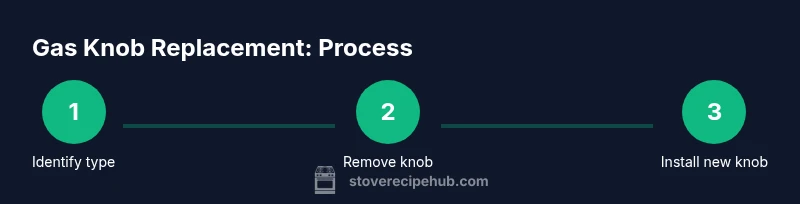
- 1
Identify knob type and compatibility
Carefully inspect the old knob to determine whether the shaft is D-shaped or splined, and note any set-screw locations. Confirm model compatibility with the replacement by checking the packaging or the stove’s manual. This prevents buying the wrong knob and saves time.
Tip: Use the manual or model number to verify compatibility before purchasing. - 2
Power down and prepare
If possible, turn off the gas supply and ensure the area is well-ventilated. Clear the counter, and have a flashlight ready to illuminate the shaft area. Ensure the stove is cool before you begin.
Tip: Do not work with the stove hot or with a live flame nearby. - 3
Remove the old knob
Gently pull the knob straight outward from the shaft. If a set screw is present, loosen it with the appropriate screwdriver before removing. Do not twist or yank aggressively, which could damage the stem.
Tip: Support the knob with your other hand to avoid bending the shaft. - 4
Check the shaft and adapter
Measure the shaft diameter with a caliper or ruler and compare it to the new knob’s bore. Look for any burrs or damage on the shaft that could hinder a snug fit. If a compatibility adapter is included, install it as instructed before the knob.
Tip: A tight fit ensures accurate control and reduces wear on the stem. - 5
Install the new knob
Slide the knob onto the shaft in alignment with the indicator mark. If there is a set screw, tighten it with the correct screwdriver until snug—avoid overtightening. Confirm that the knob seats fully and sits flush against the control panel.
Tip: Align the knob with the indicator line to ensure proper flame settings. - 6
Test the installation
Turn the knob through all positions to ensure smooth engagement and that there is no wobble. Do not ignite a flame during testing; simply verify mechanical movement. If anything feels off, re-seat or replace with a more compatible knob and re-test.
Tip: If you smell gas at any point, evacuate and contact a licensed professional.
Common Questions
How do I know which knob will fit my gas stove?
Start with the stove model number or manual to identify compatible knob types. Compare shaft shape (D-shaped vs splined) and diameter with the replacement knob packaging. If in doubt, bring the old knob to a hardware store for a hands-on comparison.
Check the model number, compare shaft type and diameter, and bring the old knob to a store if needed.
Can I replace a knob without replacing the entire control valve?
Yes. In most cases, a knob replacement does not require replacing the entire control valve. The knob attaches to the existing shaft, and if it matches the shaft profile, the valve remains intact. If there is damage to the shaft or stem, consider professional assessment.
Yes. Knob replacements typically don’t require changing the valve, unless the shaft is damaged.
What if the replacement knob won't fit even after checking compatibility?
Re-check the shaft type and diameter, and ensure no burrs or obstructions on the shaft. If needed, try a knob with a different bore size or consult a professional to avoid damaging the valve.
Double-check the shaft and bore. If it still won’t fit, get professional help.
Are there safety risks if the knob is installed incorrectly?
An incorrectly installed knob can lead to misreading flame settings or a loose fit, which may cause leaks or fire hazards. Always verify fit, tighten correctly, and test the control range without flame until confident.
Yes, incorrect installation can be dangerous. Verify fit and test carefully.
Do I need to shut off the gas supply to replace a knob?
If feasible, shut off the gas supply and work in a ventilated area. At a minimum, ensure the stove is cool and there is no open flame nearby during replacement.
Turn off gas if possible, and ventilate the area while you work.
Can I reuse the old screws or set screws?
Only reuse screws if they are undamaged and the replacement knob uses the same screw size and head type. If there is any wear or mismatch, replace with the correct screw to avoid stripping or loosening.
Only reuse if they’re in good shape; otherwise use the correct screws.
Watch Video
Top Takeaways
- Identify shaft type before buying.
- Choose a compatible knob to ensure safe operation.
- Install securely and test without lighting a flame.
- Avoid forcing parts; replace if misfit occurs.
- Keep a spare knob and manual handy for future repairs.