Knobless Stove Troubleshooting: Quick Fixes and Safety
Urgent troubleshooting guide for knobless stoves. Learn common causes, safety steps, diagnostics, and step-by-step fixes to regain control and keep your kitchen safe.


A knobless stove is usually caused by a failed control module or a damaged touch panel. Start by ensuring the unit is powered, unplugging safely, and disabling any child locks or safety features. If you cannot operate heat safely, switch to a portable burner and plan professional service to restore full control.
Understanding knobless stoves and why control fails
In a modern kitchen, a stove without knobs relies on electronic controls rather than mechanical dials. When heat cannot be set, the problem often stems from a failed control module, a damaged touch panel, or a power/safety issue. According to Stove Recipe Hub, knobless designs are especially susceptible to moisture, power surges, and wear on sensor surfaces, which can make the interface unresponsive. This section explains how to recognize the symptoms, distinguish between a temporary glitch and a hardware fault, and approach repair safely. You’ll learn why these stoves lose control and what practical, immediate steps look like in a busy home kitchen. Recognizing the difference between a simple reset and a true component failure helps you act quickly while protecting yourself and your family.
Common causes of knobless control failures
Knobless control failures come from a mix of power, moisture, and hardware issues. Common causes include a disrupted power supply (outlet, circuit, or fuse), moisture or spills on the touch panel, worn or damaged control modules, and faulty wiring or connectors behind the panel. Software glitches can also momentarily freeze the interface, especially after power surges. Identifying the most likely cause requires a careful, staged approach: verify power, inspect for moisture, test the interface with a known-good device, and note any error codes or blinking indicators. This understanding helps you prioritize safe, effective fixes without unnecessary disassembly.
Immediate safety steps and precautions
Prioritize safety before attempting any troubleshooting on a knobless stove. If you smell gas, hear hissing, or see obvious damage, evacuate the area and call emergency services. Power down the unit by unplugging it or switching the breaker off, then keep the area dry. Do not attempt to dismantle the control board or touch interior wiring unless you are trained. After a safe power-down, you can begin basic checks: confirm the outlet is functional with another device, clean the panel gently with a dry microfiber cloth, and avoid using cleaners that could seep into electronics. If the stove remains unresponsive, arrange professional service urgently to prevent electrical or gas hazards.
Workarounds and temporary operation options
When the stove is knobless, safe workarounds allow you to cook while awaiting repair. Consider using a portable electric hot plate or induction burner for essential tasks, or switch to a microwave or toaster oven for limited cooking needs. These alternatives reduce the risk of a gas leak or electrical fault while you seek professional help. If you own a gas stove and suspect a fuel-related issue, avoid trying to re-ignite or adjust the appliance yourself. Always prioritize ventilation and keep children away from the kitchen during a knobless stove incident.
How to diagnose the problem: Diagnostic flow overview
This section outlines a practical flow to determine whether the issue is simple, solvable in-home, or requires professional service. Start with the most common, easiest checks and progress to more involved steps. By documenting symptoms and responses, you’ll provide clear information to a technician and shorten repair time. Remember: when in doubt, contact a licensed professional for safety-focused assessment and repair.
Step-by-step: Quick fixes for common causes
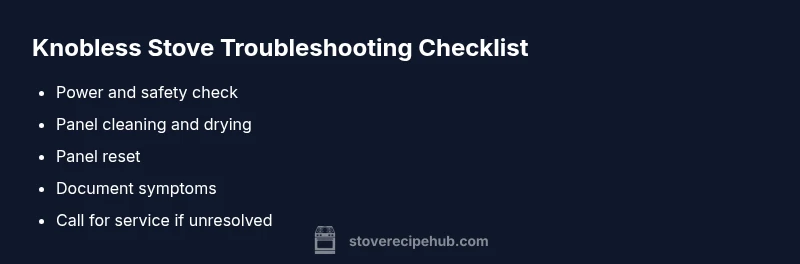
- Power-cycle the stove: unplug, wait 60 seconds, plug back in, and test the controls. 2) Check the circuit and outlet: test with a known-good device, inspect for tripped breakers. 3) Dry and clean the touch panel: power off, wipe moisture away with a dry cloth, wait for panel to dry. 4) Reset the control module if your model supports it: follow the manufacturer’s reset procedure. 5) Inspect panel connections from the back (only with power off and if you are trained): loose connectors can cause unresponsiveness. 6) If issues persist, document any error codes and call a technician for a board or sensor replacement. 7) Do not attempt to replace smart modules yourself unless you have formal training. 8) After service, verify proper operation and update any firmware if applicable.
Prevention tips and long-term care to avoid knobless issues
To minimize future knobless stove problems, keep the area around the control panel dry and free of spills. Use surge protection on the outlet, and avoid power fluctuations by stabilizing your kitchen circuit where possible. Periodically inspect the back panel for loose wiring (only when powered off), and follow manufacturer maintenance recommendations for cleaning and firmware updates. Record any anomalies as they occur to help with faster diagnostics if trouble returns.
Steps
Estimated time: 45-90 minutes
- 1
Power and safety check
Begin by unplugging the stove or turning off the circuit at the breaker. If safe, disconnect any external power sources and ensure the area is dry.
Tip: Always start with power off to prevent shocks or sparks. - 2
Inspect for moisture and residue
Check the touch panel and nearby seams for moisture, spills, or cleaning residue. Wipe away with a dry microfiber cloth and allow time to dry before testing.
Tip: Moisture is a common culprit; drying thoroughly is essential. - 3
Attempt a controlled reset
If your model supports it, perform a standard reset of the control module per the manual. This clears temporary glitches that can lock controls.
Tip: Refer to your model’s manual for exact steps. - 4
Reassemble and re-test
Reconnect power, restore gas (if applicable), and test the touch controls with a lightweight operation (e.g., a simmer setting). Observe any response or lack thereof.
Tip: If there’s no response, proceed to professional service. - 5
Check for error indicators
Look for blinking lights, error codes, or sound cues, and note them for the service appointment.
Tip: Error codes accelerate diagnosis when talking to a tech. - 6
Plan professional repair
If unresponsive after resets and moisture removal, schedule a service call to inspect the control module and wiring.
Tip: Ask about warranty coverage and replacement parts.
Diagnosis: Knobless stove won't respond to touch controls
Possible Causes
- highPower issue (outlet, fuse, circuit)
- mediumMoisture or spills on touch panel
- lowFaulty control module or wiring
Fixes
- easyCheck outlet and test with a different device
- easyDry panel and clean with a soft, dry cloth after power is off
- mediumReset control board following manufacturer instructions
Common Questions
Why does my knobless stove stop responding?
Most often it’s a power issue or moisture on the touch panel. Try a power cycle and dry the panel; if unresolved, arrange professional service.
Usually power or moisture. Try power cycling and panel drying, then call a tech if it stays unresponsive.
Can I fix a knobless stove myself?
Some basic steps like cleaning and resetting can help, but avoid opening the control module or wiring. If in doubt, hire a professional.
Simple cleaning or resets may help, but avoid opening the control panel. Get a pro if it persists.
Is it safe to use a portable burner as a workaround?
Using a portable electric or induction burner is generally safe for short-term cooking, but ensure proper ventilation and keep it away from water.
A portable burner can work temporarily, just watch for spills and maintain ventilation.
What should I ask a technician about knobless stove repair?
Ask about control module replacement, warranty coverage, estimated repair time, and whether firmware updates are involved.
Ask about parts, warranty, and expected repair time.
What maintenance helps prevent knobless failures?
Keep the control area dry, use surge protection, perform occasional cleanings, and follow the manufacturer’s maintenance schedule.
Keep things dry, use surge protection, and follow the manual for maintenance.
If there is a gas smell, what should I do?
Leave the area immediately, do not operate switches, and call emergency services. Do not re-enter until responders declare it safe.
If you smell gas, leave now and call for help right away.
Watch Video
Top Takeaways
- Power off before any inspection
- Moisture is a common culprit
- Professional service for control module faults
- Temporary workarounds are safer than risky DIY repairs
- Document symptoms for faster repair