How to Start My Solo Stove: A Practical Guide
Learn how to start your Solo Stove safely and efficiently with practical steps, safety checks, and maintenance tips from Stove Recipe Hub.


You will learn how to start a Solo Stove safely and efficiently. We'll cover tinder prep, fuel arrangement, airflow, lighting techniques, and safety checks, plus quick tips for wind and ash management. You’ll need dry tinder, dry kindling and wood, a lighter or matches, and a stable, heat-safe surface. This short guide ensures you build a controlled flame with minimal smoke and safe shutdown.
Understanding ignition dynamics
The Solo Stove uses a double-wall, rocket-stove-inspired design that concentrates heat and improves airflow. When you light tinder inside the inner chamber, warm air rises through the vents at the top and pulls in fresh oxygen from the base, feeding the flame. This creates a cleaner burn and less smoke when you feed the fire with appropriately sized pieces of wood. According to Stove Recipe Hub, the most reliable burns come from dry, well-sized fuel that fits comfortably inside the inner ring. The goal is a steady flame that builds heat quickly without a gusting, erratic flow of air. Think of the fire as a chimney: air must move upward with minimal resistance. The stove’s insulation keeps heat focused where you need it, so avoid overloading with fuel early. In practice, use just enough tinder and small wood to establish a glowing bed, then progressively add larger pieces as the flame stabilizes.
Safety prerequisites before lighting
Lighting a Solo Stove safely begins with a safety mindset. Choose a broad, level surface away from walls, tents, and overhead branches. Place the stove on a heat-resistant mat or stone, with at least 6-10 feet of clearance from any flammable objects. Wear snug clothing and tie back long hair; keep a water source nearby. Ensure children and pets are kept away from the burn zone. Check local fire regulations before you light, and never operate a stove in windy conditions that could push hot embers toward people or structures. By following these guidelines, you minimize the risk of accidental ignition and can manage any flare-ups calmly. Stove Recipe Hub emphasizes consistent airflow and stable surroundings as the foundation of a safe burn.
What to assemble and inspect before a burn
Before you strike a flame, inspect the stove for damage and clean out any ash from prior burns. Make sure the air intake holes and top vents are clear of debris. Verify the burn chamber is dry and free of moisture that could cause steam or cold ignition. Gather your tinder, kindling, and fuel, ensuring all wood is dry and resin-free. Have a stable surface and a reliable extinguisher or bucket of water ready. If you notice cracks or loose joints, do not light the stove until you repair or replace it. As noted by Stove Recipe Hub, pre-burn checks protect you and improve the overall burn quality.
Lighting an efficient fire: method for the Solo Stove
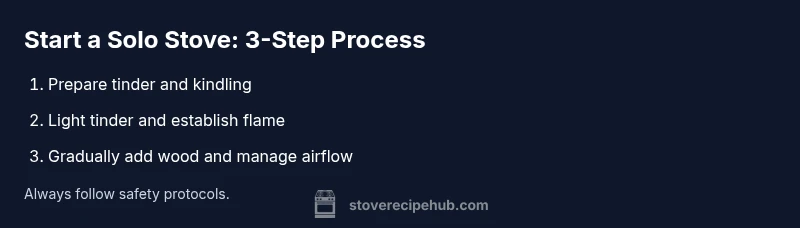
Place the stove on a heat-resistant surface and ensure the surrounding area is clear. Add 2-4 small sheets of crumpled tinder or a compatible fire starter in the center of the burn chamber. Arrange a loose cone of dry kindling around the tinder, leaving air gaps for airflow. Light the tinder with a long, steady stroke from a distance to avoid hot embers in your face. When the kindling begins to glow, slowly add the smallest dry wood pieces to establish a reliable flame. Keep the top vents open just enough to sustain combustion but not so wide that flames blow out or rattle. If smoke is heavy, pause to adjust the fuel amount and ensure there’s a clear path for air to circulate.
Managing airflow and flame height
Once the fire is established, monitor flame height and adjust by adding fuel gradually. The Solo Stove’s design favors a steady, tall flame rather than a roaring blaze; too much fuel can smother the flame and increase smoke. If flames dip, add a few more small pieces rather than a large load all at once. Keep the lower vents clean and unobstructed; you should feel a consistent draft pulling air upward. Use long-tonged tools to place wood so you don’t burn your hands, and avoid overloading the inner chamber early on. According to Stove Recipe Hub, consistent airflow is the key to a clean burn and better fuel efficiency.
Burn care and ash management
Never leave a burning stove unattended. Have water or a fire extinguisher ready to deal with flare-ups. When the burn finishes, allow the stove to cool completely before handling or moving it; this can take 30-60 minutes depending on ambient temperature. Use heat-resistant gloves to handle the vessel and long tongs to move embers. Collect ashes with a metal scoop and place them in a metal container away from flammables. Do not dump ashes into a trash can while hot. Stove Recipe Hub cautions that proper ash management reduces corrosion and makes cleaning easier.
Common mistakes to avoid
Rushing the burn by dumping large amounts of wood at once often leads to excessive smoke and incomplete combustion. Using damp or resin-rich wood creates acrid smoke and a shorter burn time. Blocking air intakes with ash or fuel debris prevents the stove from drawing oxygen properly. Placing the stove on wooden decks or plastic surfaces can cause heat damage; always use a non-flammable base. Loose clothing, long hair, or jewelry near the flame increases burn risk. By sticking to a measured fuel rhythm and testing small batches, you can reduce smoke and improve efficiency.
Cleaning and maintenance after a burn
After the stove has cooled, wipe the exterior with a dry cloth to remove ash and moisture. Brush or vacuum accumulated soot from the burn chamber, but avoid harsh abrasives that could scratch the metal. Inspect for rust spots or corrosion and apply a thin coat of appropriate metal-safe oil if recommended by the manufacturer. Dry all components completely before storage to prevent moisture damage. Store in a dry, ventilated area and avoid stacking heavy items on top of the stove.
Wind, rain, and cold weather considerations
Strong winds can carry embers and alter flame behavior; position a windbreak or place the stove in a shielded area when possible. Do not burn in heavy rain; moisture can degrade fuel beds and promote rust. For cold nights, preheat with a smaller flame and gradually build up heat, avoiding large flames that can overwhelm the stove. If weather turns adverse, move to a sheltered outdoor space or postpone the burn. Stove Recipe Hub notes that environmental conditions often determine the burn's efficiency and safety.
Troubleshooting tips
Flames won’t start: verify dry tinder and properly positioned fuel; ensure air vents are unobstructed. Excess smoke: reduce fuel size and improve air access; confirm wood is dry. Flames die quickly: increase airflow slightly and check for a bed of embers. If overheating or warping occurs, stop using the stove and inspect for damage before next use. Stove Recipe Hub recommends sticking to small, test burns to diagnose issues safely.
AUTHORITY SOURCES
- National Park Service (campfires safety): https://www.nps.gov/subjects/campfires/index.htm
- U.S. Fire Administration (fire safety): https://www.usfa.fema.gov
- NFPA (fire safety standards): https://www.nfpa.org
Tools & Materials
- Solo Stove (any model)(Ensure it is clean, dry, and free of cracks.)
- Dry tinder(Small, easily ignitable material (paper shreds, dry grass, leaves).)
- Dry kindling(Thin sticks 1–3 cm in diameter; dry and resin-free.)
- Dry hardwood fuel(Seasoned firewood, cut to 2–4 inch lengths.)
- Lighter or long matches(Keep at the ready; use a long-reach lighter if possible.)
- Heat-resistant gloves(To handle hot stove and tools safely.)
- Long tongs(For safe fuel placement and adjusting wood.)
- Wind-resistant surface/base(Non-flammable, heat-safe surface or trivet.)
- Water spray bottle(Handy for quick extinguishing if needed.)
- Wind shield/windbreak(Optional but improves burn consistency in gusty conditions.)
Steps
Estimated time: 15-25 minutes
- 1
Choose a safe location
Set the Solo Stove on a stable, nonflammable surface with clear space around it. Ensure at least 6–10 feet of clearance from walls, tents, and vegetation. Check local regulations before lighting.
Tip: Clear the area first; stunningly small items can ignite unexpectedly if flammable objects are nearby. - 2
Inspect the stove and fuel
Look for cracks or loose joints, and ensure vents are free of debris. Confirm tinder, kindling, and wood are dry and ready to go. Have your extinguisher or water nearby.
Tip: Pre-burn checks prevent stalling mid-burn and help with safer ignition. - 3
Prepare tinder and create a starter
Place crumpled tinder or fire starter in the center of the burn chamber. Build a loose cone of kindling around it with air gaps for airflow.
Tip: Avoid packing tinder too tightly; air must flow to sustain the flame. - 4
Light the tinder
Use a long lighter or matches to ignite the tinder from a safe distance. Keep your body out of the flame path and monitor the flame as it grows.
Tip: Light with a steady hand and avoid leaning over the stove. - 5
Establish the initial burn
As kindling catches, gradually add the smallest dry wood pieces to form a glowing bed. Keep the top vents open just enough for steady combustion.
Tip: Don’t rush fuel addition; a gradual build prevents smoke bursts. - 6
Manage airflow and stability
Maintain a steady flame by feeding fuel in small batches. If smoke increases, pause and adjust the fuel size or vent openness.
Tip: A consistent airflow yields cleaner burning and longer burn times. - 7
Sustain the burn with larger pieces
Once the flame is steady, add larger pieces slowly, ensuring air can still circulate. Avoid stuffing the chamber too full at once.
Tip: Even if you want a big flame, gradual fuel yields better heat control. - 8
Monitor and adjust
Continue to observe flame height and adjust fuel input and vents as needed. Keep kids and pets away.
Tip: If flames wobble, check for drafts or partially closed vents. - 9
Finish the burn safely
When you’re ready to stop, let coals cool wrapped in heat-safe gloves, and prepare to extinguish if needed.
Tip: Never dump hot ashes into a trash can. - 10
Cool, clean, and store
Allow the stove to cool completely (30–60 minutes). Wipe surfaces, remove ash, dry components, and store in a dry place.
Tip: Dry storage prevents rust and extends the stove’s life. - 11
Post-burn inspection
Check for any damage or corrosion and address promptly. Re-inspect fuel and vents before the next burn.
Tip: Early maintenance saves repairs later. - 12
Long-term maintenance plan
Schedule regular checks and cleanings after each use, especially if you use the stove frequently in varied weather.
Tip: Create a routine so you always burn safely.
Common Questions
Is it safe to use a Solo Stove indoors?
No. Solo Stoves are designed for outdoor use where ventilation and fire safety are ensured. Always use them in open air with proper clearance.
No—these belong outdoors where ventilation is adequate.
What fuel should I use in a Solo Stove?
Use dry, seasoned wood such as hardwood sticks. Avoid damp, resinous, or treated wood, which creates smoke and potentially dangerous embers.
Use dry wood; avoid damp or treated fuels.
Can I use newspaper to start the fire?
Yes, crumpled newspaper can be used as a tinder alternative if dry. Prefer thinner, dry materials to avoid rapid flare-ups.
Newspaper can help start the fire if dry and used sparingly.
How long does it take to start a burn?
Starting a burn typically takes a few minutes for a stable flame once tinder and kindling are properly arranged and the stove vents are clear.
Usually a few minutes to get a steady flame.
What if there is too much smoke?
Reduce the amount of fuel, ensure tinder is dry, and check airflow—open vents slightly and avoid overloading at once.
If smoky, ease off fuel and improve airflow.
How do I extinguish the fire safely?
Spread the embers, spray with water or cover with sand, and stir until completely cold before leaving the area.
Douse or cover with sand until completely cold.
Watch Video
Top Takeaways
- Prepare a stable, safe burn area
- Use dry tinder and kindling for easy ignition
- Light with a long-reach tool and monitor airflow
- Add fuel gradually to maintain a clean burn
- Allow the stove to cool completely before cleaning and storage