Replacing Igniter on Gas Stove: Step-by-Step Guide
Learn how to replace the igniter on a gas stove safely with our comprehensive step-by-step guide. From tools and safety checks to installation and testing, get practical tips and avoid common mistakes.


This guide shows you how to replace the igniter on a gas stove safely and effectively. You’ll learn which tools you need, how to power down properly, and the exact steps to swap in a compatible igniter, reconnect the wiring, and test the ignition. Expect about 45–60 minutes for most models, and always follow safety guidelines; if in doubt, hire a professional.
Why replacing the igniter on a gas stove matters and when to do it
According to Stove Recipe Hub, replacing the igniter on gas stoves is a common DIY maintenance task that home cooks can tackle with the right precautions. A faulty igniter prevents the burner from sparking reliably, leaving you unable to light the flame quickly. In many cases, this issue stems from a worn electrode, carbon buildup, or loose wiring rather than a failed electronic module. Recognizing symptoms—such as a weak spark, no spark, or an intermittent light—helps you decide if a replacement is needed. This section also introduces practical terminology and what to expect from a typical replacement process, including safety checks and basic testing.
As you plan, remember that a properly functioning igniter enhances cooking efficiency and reduces the risk of gas leaks or improper lighting. The Stove Recipe Hub team found that most ignition problems can be resolved by swapping the igniter assembly or cleaning the electrode and connectors, rather than replacing major burner components. By understanding the layout of the burner, electrode, and spark wire you’ll be better prepared for a smooth replacement.
Key terms to know include: igniter (electrode), spark module, burner cap, and connector plug. With the right approach, replacing the igniter on a gas stove can be a straightforward upgrade that restores quick, reliable ignition for everyday cooking.
Types of igniters and compatibility you should know
Gas stoves use two primary ignition approaches: traditional spark igniters (electrodes) and newer hot-surface igniters. Spark igniters create a spark across a small gap to ignite gas, while hot-surface igniters heat a ceramic element until it glows and lights the burner. The replacement you choose must match your stove’s ignition type and burner configuration, as mismatched parts can fail to ignite or burn unevenly. Before purchasing, check your model number, the burner type, and the connector type (clip-in vs screw-in). If you use a universal kit, confirm the electrode spacing and the mounting hole pattern align with your burner. This is a common pitfall that can waste time and money, so take careful measurements and bring the old igniter to the parts store if possible.
Whether you’re fixing a gas stove in a busy kitchen or a weekend hobby setup, choosing the correct igniter ensures consistent performance and reduces the likelihood of recurring issues that force you to redo the work.
Safety and prep steps before you begin
Safety first: always power down completely and disconnect the appliance from the power source before touching any electrical components. If your stove is hard-wired, switch off the circuit breaker; if it plugs into a wall outlet, unplug it. Keep a clean, dry workspace and wear eye protection and gloves. Inspect for gas smells; if you detect gas leakage, leave the area and contact your gas utility or a licensed technician immediately. Make sure you have adequate lighting and a clear path to reassemble. By establishing a safe baseline, you minimize the risk of electric shock or accidental gas ignition during the replacement process.
For DIY success, gather the model number, replacement igniter kit, and the basic toolkit. Check your manufacturer’s guidelines when possible, as some appliances require specific fasteners or mounting hardware. If you’ve never worked with electrical connectors or gas components, consider watching a trusted tutorial or consulting a professional before proceeding.
Accessing the igniter: removing the burner parts
Remove the burner cap and lift the burner head to reveal the igniter housing. In most models, you’ll need a small screwdriver to detach screws that hold the igniter in place. Keep track of screws and any small parts so you don’t lose them during reassembly. As you loosen components, take notes or photos to capture the orientation of the wiring harness and connector. This step exposes the worn igniter and its wires, enabling a clean replacement without disturbing nearby gas ports. Work slowly to avoid bending electrodes or stressing delicate connector pins.
Pro tip: work over a tray or towel to catch any screws or small parts that might roll away. If your burner has a recessed or cramped igniter, use a mirror to inspect for hidden screws and to verify you’re removing the correct component, not a nearby gas-control valve.
Installing the replacement igniter and wiring
Attach the new igniter assembly to the burner housing using the original mounting points and screws. Reconnect the spark wire and any plug-in connector with care, ensuring the connection is snug but not forced. For compatible plugs, align the polarity or orientation according to the wiring harness to prevent cross-contact. If you see corrosion or buildup on contact surfaces, gently clean with a dry brush or isopropyl alcohol on a cloth, then dry completely before reconnecting. After securing the igniter, lightly wiggle the wiring to ensure there’s no strain or loose connection that could degrade performance over time.
Important: never bend or twist the electrode excessively, and avoid touching the exposed spark gap. A misaligned igniter will spark in the wrong direction or fail to ignite gas efficiently, leading to wasted gas and a delayed start.
Reassembling the burner and testing the ignition
Replace the burner cap and re-seat the burner head. Reconnect power and, with the knob off, test the igniter by turning the burner to the ignition position to observe a blue spark across the electrode gap. If the spark is weak or intermittently missing, stop and recheck the wiring and electrode position. Once you confirm a confident blue spark, reassemble the outer panels and ensure nothing is loose near the ignition area. Finally, ignite the burner to verify consistent lighting and flame stability across all burners.
If you’re unable to produce a spark after multiple checks, double-check the model compatibility of the igniter and consider replacing the entire ignition module or seeking professional service. Safety should always be your top priority when diagnosing ignition problems.
Post-installation checks and testing the new igniter
With the system reassembled, perform a full ignition test across all burners that use the igniter. Do not leave the appliance unattended while testing. Observe the flame quality: a properly lit burner should show a steady, clean blue flame with no yellow tips, which can indicate excessive air mixing or fuel leaks. Listen for any abnormal noises, and use a gas leak detector spray around connections if you have concerns about leaks (never rely solely on the spray). If the flame remains weak or fails to light within a couple of seconds, recheck wiring and alignment or consult a professional.
Maintenance tips to extend igniter life and prevent future failures
Regularly wipe away food debris and grease from the ignition area to prevent spatter from interfering with spark. Clean electrode tips gently with a dry brush to remove carbon buildup, and keep connectors dry and dust-free. If your stove is used heavily, schedule periodic checks to inspect wiring for wear, and replace igniters before they fail completely. Storing spare igniter components in a dry area can speed up future replacements. Consistent cleaning and gentle handling are the best ways to extend igniter life and maintain reliable ignition.
Tools & Materials
- Replacement igniter kit compatible with your stove model(Ensure electrode spacing and connector type match your burner)
- Screwdriver set (Phillips and flathead)(For removing burner screws)
- Nut driver or small socket wrench(For mounting screws on some models)
- Needle-nose pliers(For gripping wires and connectors)
- Multimeter (optional)(Check continuity if you suspect wiring issues)
- Safety gloves(Protect hands from sharp edges and hot parts)
- Flashlight or headlamp(Improve visibility in the burner cavity)
- Isopropyl alcohol and lint-free cloth(For cleaning contact surfaces)
- Rag or towel(Contain small parts and prevent slips)
Steps
Estimated time: 45-60 minutes
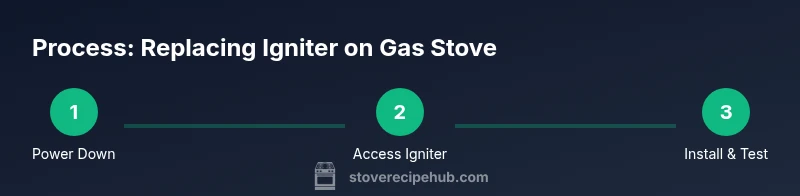
- 1
Power down and prep the workspace
Turn off the stove and unplug it. If your model is hard-wired, switch off the circuit at the breaker. Confirm there is no gas odor in the area and ventilate if needed. Clear a dry, well-lit area to work, and gather all replacement parts.
Tip: Take a quick photo of the wiring before disconnecting anything to aid reassembly. - 2
Remove burner cap and expose igniter
Lift off the burner cap and detach the burner head as required by your model to access the igniter housing. Keep track of screws and small parts. Inspect the area for grease or soot that may affect ignition.
Tip: Use a flashlight to inspect the electrode tip for buildup. - 3
Disconnect the old igniter wiring
Gently disconnect the spark wire and any plug-in connectors. Note the orientation to ensure correct wiring of the new igniter. If connectors are corroded, clean with a dry brush and dry completely before reconnecting.
Tip: Do not pull on the wire by the connector; grip the connector body. - 4
Install the replacement igniter
Attach the new igniter to the mounting point with the original screws. Reconnect the spark wire and verify the connector is seated firmly. Do not bend the electrode excessively; verify it sits above the burner rim.
Tip: Secure the wire away from sharp edges to prevent wear. - 5
Reassemble the burner and hardware
Place the burner back, reseat the head and cap, and ensure nothing is loose. Double-check that all gaskets and seals are properly aligned to avoid leaks or misalignment.
Tip: A loose cap can cause misalignment and lighting issues. - 6
Test ignition and perform a final safety check
Turn the knob to the ignition position and observe a strong blue spark and prompt lighting. If lighting is delayed, recheck wiring and electrode position. Reconnect power, run a full test across all burners, and ensure there are no gas leaks or abnormal smells.
Tip: If you smell gas after lighting, shut off the supply and call a professional.
Common Questions
Do I need to replace the entire burner assembly or just the igniter?
Most ignition problems are resolved by replacing just the igniter or cleaning the electrode. If the burner itself or the gas valve is damaged, you may need professional service or a complete replacement. Always verify compatibility before purchasing a new part.
Most ignition issues are solved by replacing the igniter or cleaning the electrode; if the burner is damaged, call a professional.
Can I test the igniter without removing the burner?
Testing typically requires access to the igniter housing, which usually means removing the burner cap or head. Some models allow a limited test through the control knob, but full spark testing is easier with access to the igniter.
In most models you need access to the igniter housing to observe a spark.
Is it safe to attempt this repair myself if I smell gas?
No. A gas odor means there could be a leak. Turn off the gas supply, evacuate, and contact your gas utility or a licensed technician immediately. Do not attempt ignition or further disassembly if gas is present.
If you smell gas, stop and call a professional right away.
What should I do if the new igniter still won’t spark?
Recheck wiring orientation, verify connector seats are secure, and confirm the part is compatible with your model. If issues persist, there may be a fault in the ignition module or wiring harness that requires professional service.
If it still won’t spark, recheck connections and compatibility, then consider professional help.
How can I tell which igniter is the right part for my stove?
Match the igniter to your stove’s model number, burner type, and connector style. Bring the old igniter or its part number to the supplier when possible, and avoid universal parts that don’t fit your mounting holes or spark gap.
Check the model number and connector type to ensure compatibility.
Watch Video
Top Takeaways
- Identify ignition type and compatibility before purchase
- Power down completely and maintain a dry, clean workspace
- Follow a disciplined step-by-step install to avoid miswiring
- Test ignition with the safe method and verify all burners light reliably
- Perform regular cleaning to extend igniter life