What to Do During an Oven Fire: A Practical Guide
Learn how to respond quickly and safely to an oven fire, with steps, safety gear, and prevention tips from Stove Recipe Hub. Reduce risk and recover calmly after any oven fire situation.


If your oven catches fire, act calmly and decisively: turn off heat, keep the door closed, and call for help if needed. Smother small flames with a lid or baking soda, and use a fire extinguisher only if you can do so safely. This guide walks you through immediate actions and prevention.
Understanding Oven Fires: Causes & Risks
An oven fire can start from unattended food, grease buildup, or electrical malfunctions. Grease and oil can ignite when exposed to high oven temperatures, while drips and spills may smolder and flare when the oven cycles. Electrical components inside the oven can fail and generate sparks, especially in older units. The risk is not only damage to the appliance but also potential burns or smoke inhalation for anyone nearby. Understanding these common causes helps you respond quickly and minimize damage. According to Stove Recipe Hub, being prepared with knowledge and a clear plan reduces panic and speeds safe resolution. Always assume any flame requires action, but never take unnecessary risks. Maintain safe cooking practices: clean regularly, avoid leaving the oven unattended, and ensure proper ventilation when cooking at high heat.
Immediate Actions You Must Take
The moment you notice a fire inside the oven, your priorities are safety, containment, and communication. First, turn off the oven to cut the heat source if you can do so safely without opening the door. Do not try to pull out trays while flames are visible; wait until the heat subsides. If flames are small and contained, keep the door closed to limit oxygen; opening the door can feed the fire. Have a clear exit path in case the fire grows. If anyone is in the kitchen, alert them and call emergency services if the fire worsens or you cannot control it. This section helps you answer what to do oven fire situations with confidence and restraint.
Safe Response Steps: From Quick Reaction to Aftercare
Once the heat is off and the area is secure, proceed to smother small flames with a lid or baking sheet. If a fire extinguisher is available and you know how to use it, aim at the base of the flames and sweep in a low, slow arc. Do not stand directly in front of the door; keep a safe distance and back away if the extinguisher vents are directed toward you. After the flames are out, wait for the oven to cool completely before touching any components. Ventilate the kitchen to clear smoke and monitor for any rekindling. Aftercare includes inspecting seals and racks for damage and cleaning up soot safely.
Safety Equipment You Should Have on Hand
Essential gear makes a quick response possible. A kitchen-rated fire extinguisher (ABC or BC class) should be within easy reach of the cooking area. A sturdy lid or flat baking sheet can smother small fires without introducing water. Oven-safe gloves or mitts protect your hands when handling hot racks or pans. A fire blanket is a helpful second option in some kitchens. Keep baking soda handy as a safe, non-abrasive smothering agent for small grease fires. Also have a phone ready to call emergency services if needed.
Oven Fire Prevention: Reducing the Risk
Prevention is better than reaction. Regular cleaning of the oven interior reduces grease buildup that can ignite. Wipe spills promptly and check for damaged seals that can cause overheating. Use appropriate cookware and avoid overcrowding the oven, which can unevenly heat and create hotspots. Maintain proper ventilation when cooking at high temperatures—smoke can indicate overheating and potential danger. By adopting routine cleaning and mindful use, you lower the chances of an oven fire developing.
What Not to Do: Common Mistakes to Avoid
Never pour water on an oven fire; water can cause splattering and spread flare-ups. Do not open the oven door during a flame event, as this can feed the fire with oxygen. Do not attempt to remove burning items while flames are visible. If the fire grows beyond your control, evacuate immediately and call emergency services. These cautions help you stay safe and prevent escalation.
Maintenance & Cleaning After a Fire
After an oven fire, ensure the appliance is powered off and disconnected from the power source if possible. Do not turn the oven back on until a professional has assessed it for damage. Clean soot and debris carefully, using appropriate cleaners and protective gear. Check ventilation and consider replacing damaged racks or seals as a preventive measure for future cooking sessions. Keeping a post-fire checklist helps you return to cooking with greater assurance.
Tools & Materials
- ABC kitchen fire extinguisher(Within easy reach; know how to use it (pull, aim, squeeze, sweep))
- Sturdy lid or flat baking sheet(Used to smother small flames without lifting the door)
- Oven mitts or heat-resistant gloves(Protect hands when handling hot racks or pans)
- Fire blanket (optional)(Helpful for wrapping small flames or covering heated areas)
- Baking soda(Safe alternative for smothering small grease fires)
- Phone or emergency device(Call for help if the fire intensifies or cannot be controlled)
Steps
Estimated time: 15-25 minutes
- 1
Assess safety and protect yourself
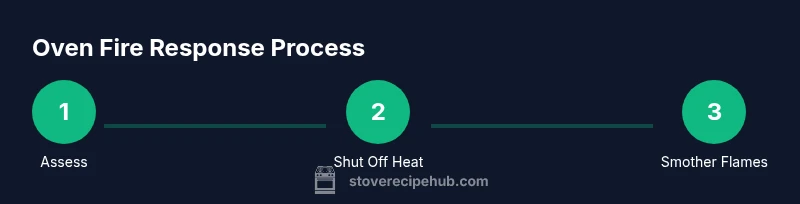
Take a moment to observe the flames and your surroundings. If flames are rapidly growing or you are unsure, evacuate immediately. Your safety is the priority. If you can safely act, proceed to the next steps.
Tip: Always have a clear exit path before attempting any action. - 2
Shut off the heat source
If you can reach the oven controls, switch the oven or circuit off to cut the fuel source. Do not open the door during active flames as this introduces extra oxygen. If you cannot safely reach the controls, prepare to evacuate.
Tip: Turning off power reduces the risk of electrical flare-ups. - 3
Keep the door closed
Keep the oven door closed to limit oxygen flow. Opening the door can cause a flashover, intensifying the fire. Monitor from a safe distance and be prepared to evacuate if needed.
Tip: If smoke is present, move away from the kitchen and keep the door closed. - 4
Smother small flames
If flames are small and contained, carefully place a lid or baking sheet over the opening to smother the fire. Do not move burning items while flames are visible. Allow time for the smoke to clear.
Tip: Avoid direct contact with flames; keep hands protected with mitts. - 5
Use a fire extinguisher or baking soda
If the fire persists, use an ABC extinguisher from a safe distance, aiming at the base of the flames and sweeping side to side. If you lack an extinguisher, you may use baking soda to smother the fire. Only do this if you can do so safely.
Tip: Read the extinguisher label and know how to operate it before an emergency. - 6
Evacuate if needed and call for help
If flames continue to spread or you feel unsure about your ability to control the fire, exit the building and call emergency services. Do not re-enter until professionals declare it safe.
Tip: Designate a meeting point outside and keep others informed. - 7
Ventilate and monitor after extinguishing
Open exterior doors or windows to vent smoke once the fire is out and the oven has cooled. Inspect for damage and monitor for signs of rekindling in the following hours.
Tip: Never touch hot oven components until fully cooled. - 8
Post-fire inspection and cleaning
After cooling, inspect seals, racks, and interior walls for damage. Clean soot safely with non-abrasive cleaners. Schedule a professional check if you suspect electrical issues.
Tip: Document any damage for insurance or repair estimates.
Common Questions
What should I do immediately if the oven catches fire?
Turn off the heat if safe, keep the door closed, and evacuate if flames spread. Call emergency services if the fire worsens.
First, turn off the oven if you can do so safely, keep the door closed, and evacuate if the fire grows. Call for help if needed.
Can I use water to put out an oven fire?
No. Water can cause splattering and spread flames, especially with grease fires or electrical ignition. Use a lid or a fire extinguisher instead.
Water should not be used on oven fires. Use a lid or extinguisher instead.
When should I call emergency services?
Call if the fire is spreading, you cannot control it, or there’s smoke thick enough to cause breathing issues. Evacuate and call from outside.
If you can’t control the fire or there’s smoke, evacuate and call emergency services.
Is it safe to reopen the oven after the fire is out?
Only after the oven has completely cooled and a professional has inspected for damage. Reignite only when cleared to do so.
Wait until the oven is fully cooled and inspected before using it again.
What equipment helps prevent oven fires?
A kitchen-rated fire extinguisher, a fire blanket, baking soda, and proper ventilation help prevent or control oven fires.
Keep a fire extinguisher and baking soda handy for quick response.
What maintenance steps reduce the chance of a future oven fire?
Regular cleaning to remove grease buildup, checking seals and electrical connections, and avoiding overcrowded pans lowers risk.
Clean the oven regularly and check electrical parts to reduce future fire risk.
Watch Video
Top Takeaways
- Shut off heat and protect yourself first
- Keep door closed to limit oxygen
- Smother small flames with lid or baking soda
- Use extinguishers only if trained and safe
- Inspect and clean after the event