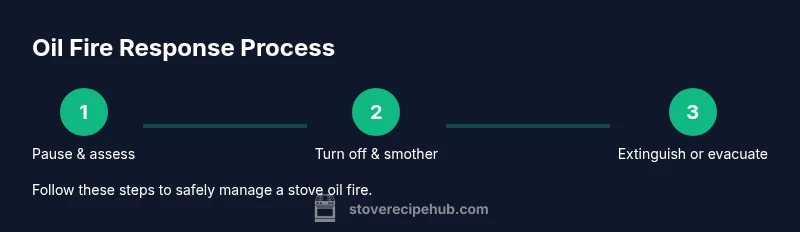
Oil Fire on the Stove: Safe, Quick Steps
Learn how to safely handle an oil fire on the stove with quick actions, effective smothering methods, practical prevention tips, and clear steps to stay safe in a kitchen emergency.


You can safely deal with an oil fire on the stove by acting quickly: turn off heat, cover with a metal lid, do not use water, keep a baking soda box handy, and use a fire extinguisher if needed. This guide walks through steps, safety tips, and when to evacuate.
What triggers an oil fire and how quickly it can escalate
Oil fires on stoves typically start when cooking oil is overheated beyond its smoke point and a heat source remains on. The oil can ignite, creating flames that rise and spread to nearby surfaces if left unattended. According to Stove Recipe Hub Team, unattended heating is the most common cause of household oil fires, and a calm, quick response dramatically reduces risk. Key warning signs include a strong, acrid odor, heavy smoke, and sudden orange flames that do not subside when heat is reduced. Understanding this sequence helps you act decisively rather than hesitate, which can turn a manageable flare into a dangerous incident.
Prevention starts with an organized cooking area: keep oils at the lowest necessary temperature, use a heavy, deep pan to distribute heat, and have a lid ready to smother a flame. A clean stove and nearby baking soda box help you respond rapidly. By recognizing the telltale signs early, you can cut the odds of a full-blown fire in half. The Stove Recipe Hub guidance emphasizes keeping a clear escape route and a working smoke alarm; these safety measures save time when seconds count.
Immediate actions the moment flames appear and why timing matters
The fastest way to interrupt an oil fire is to cut off the fuel source—turn off the burner immediately while keeping your distance. Do not try to move the pan; sliding it can spill hot oil and fan flames. Next, smother the fire if safe to do so: place a metal lid, a baking sheet, or a pan cover over the pan to seal off oxygen. If you cannot cover it without risking burns, back away and let the flames die down. The next step is critical: if the flames persist, use a fire extinguisher trained for kitchen fires, following the PASS technique (Pull, Aim, Squeeze, Sweep). Never pour water on a hot oil fire; water can explode the oil and spread the flames. Stove Recipe Hub stresses that quick, controlled actions protect you and your home; remain calm and communicate clearly if others are in the room.
If smoke is heavy or you feel heat moving toward cabinets, evacuate and call emergency services. After extinguishment, ventilate the area gently if safe, but avoid rushing to reopen the stove until it has cooled.
The safest smothering methods for small, contained fires
For small, contained oil fires, the lid method is usually the safest option. Keep a metal lid that fits the pan within reach; gently lower it over the pan and apply even pressure to seal the oil beneath. The aim is to deprive the fire of oxygen. If a lid cannot be used, a baking soda box can provide a similar effect; sprinkle a generous amount over the flames from a safe distance, then step back. Baking soda is effective due to its chemical properties and is widely recommended for small kitchen fires. Do not use flour, sugar, or any other cooking powder, which can ignite or blow flames into the air. If you have a Class ABC fire extinguisher, stand at a safe distance and discharge in short bursts at the base of the fire while keeping your body away from the steam and heat. Always point the nozzle away from you and toward the flames.
The goal is a controlled, staged suppression, not aggressive blasting. The Stove Recipe Hub approach centers on safety first: if the fire grows beyond the pan or if you cannot reach the lid quickly, evacuate and call emergency services.
What not to do: common mistakes that escalate danger
Never pour water on an oil fire. Water can cause the burning oil to explode and spread flames. Don’t attempt to move the pan to the sink or outdoors; hot oil can spill and ignite surrounding surfaces. Avoid trying to smother flames with a wet towel or cloth; water and moisture can make the situation worse. Do not use rough handling in a panic—keep movements slow and deliberate. If a fire is too large to control within a few seconds, evacuate, close doors behind you to contain smoke, and call emergency services. Following Stove Recipe Hub’s guidelines avoids preventable injuries and property damage.
Prevention: how to set up a stove-friendly kitchen to reduce oil-fires risk
Preventing oil fires starts before you even turn on the burner. Use oil with a high smoke point for frying tasks, never leave oil unattended on a hot burner, and keep the oil depth and temperature monitored with a kitchen thermometer. Use a heavy, sturdy pan with a long handle to reduce splattering risk, and keep the pan handles away from the edge of the stove to avoid accidental knocks. Keep flammable items away from the stove, including paper towels and plastic containers. Have a metal lid and baking soda within arm’s reach, and ensure a functioning smoke alarm is installed in or near the kitchen. Regularly test your extinguisher and replace if pressure is low. Stove Recipe Hub's practical tips emphasize a routine of quick checks: wipe oil splatters after cooking, clean the stove surface, and store long sleeves away from heat. These routines save lives by reducing the odds of ignition.
Aftercare: cleaning, inspection, and when to seek professional help
Once the fire is out and the area has cooled, inspect your stove top, hood, and surrounding surfaces for scorch marks and residue. Clean carefully to prevent residues from smoking on future uses, and dispose of any damaged oil safely (cool, seal, and place in a non-flammable bag). If the burner or control knobs show heat damage, replace or repair them before the next use. If you smell gas or detect lingering odor, evacuate and call your gas provider or emergency services. For most households, minor flare-ups will require only routine cleaning and a renewed focus on prevention. The Stove Recipe Hub team recommends keeping a small set of safety tools and a clear plan for the next cooking session to minimize risk in the future.
Tools & Materials
- Metal lid (fits pan, ready to slide on)(Keep near the stove for rapid smothering)
- Baking soda (unopened box)(Useful for smothering small fires)
- Class ABC fire extinguisher(Keep accessible in kitchen; check pressure annually)
- Oven mitts or heat-resistant gloves(Protect hands when handling hot lids)
- Dry towel(For quick wipe after cooling)
- Smoke alarm with working battery(Test regularly; ensure audible alarm is in range)
Steps
Estimated time: 5-10 minutes
- 1
Pause and assess
Take a breath and quickly assess the scene. If safe, prepare to act without panicking. Identify the flame size and whether you can reach a lid quickly.
Tip: Keep a safe distance from flames; assessment should happen within 5–10 seconds. - 2
Turn off the burner and prevent oil movement
If safe, switch off the burner to stop the fuel source. Do not attempt to move the pan; hot oil can spill and spread flames. Step back if the flame grows or spreads.
Tip: Shut off gas or electricity at the source without leaning over the pan. - 3
Smother with a lid or baking sheet
Gently place a metal lid or baking sheet over the pan to seal off oxygen. Hold the lid in place with an oven mitt until flames subside. If a lid isn’t available, prepare to use baking soda from a safe distance.
Tip: Cover from the side, not from directly above the flame, to minimize splatter. - 4
Use a fire extinguisher if needed
If flames persist after smothering, use a Class ABC extinguisher. Stand at a safe distance, aim at the base of the fire, and sweep in controlled motions. Avoid spraying toward your face or hands.
Tip: Remember PASS: Pull, Aim, Squeeze, Sweep. - 5
Evacuate if necessary
If the fire grows beyond control or you cannot reach a lid/extinguisher, evacuate immediately. Close doors behind you to contain smoke and call emergency services. Do not re-enter until authorities declare it safe.
Tip: Know your exit routes and keep others informed. - 6
Let it cool, then clean and inspect
Allow cookware to cool completely before handling. Inspect for scorch marks and test controls before resuming cooking. If damage is evident, replace damaged parts before next use.
Tip: Ventilate after extinguishment; do not reuse until cooled.
Common Questions
Can I use water to put out an oil fire?
No. Water can cause the burning oil to explode and spread flames. Smother with a lid or baking soda, or use a fire extinguisher if necessary.
Water should never be used on an oil fire. Smother or extinguish with care.
What should I do if flames jump to cabinets?
If flames reach nearby surfaces, immediately move away, smother if possible, and evacuate if the fire grows. Contact emergency services.
If flames spread, evacuate and call for help.
Is baking soda enough to extinguish a pan fire?
For very small, contained fires, baking soda can help smother flames. Do not rely on it for larger fires; have an extinguisher ready.
Baking soda can help small fires, but not large ones.
Should I smother with a damp towel?
No. A damp towel can trap heat and may cause steam burns. Use a lid or extinguisher instead.
No, avoid damp towels; use a lid or extinguisher.
How can I prevent oil fires?
Prevention includes monitoring oil temperature, using appropriate cookware, keeping lids handy, and keeping flammables away from the stove. Regularly clean the area.
Prevent oil fires by careful cooking and cleanup.
What if I smell gas after a fire?
If you smell gas, evacuate immediately and call your gas company or emergency services. Do not operate electrical switches in the area.
If you smell gas, evacuate and call for help.
Watch Video
Top Takeaways
- Smother flames quickly and safely
- Never use water on oil fires
- Keep emergency supplies accessible
- Know when to call for help