How to Stop a Stove Fire: Quick, Safe Steps at Home
Learn practical, step-by-step actions to stop a stove fire safely. This guide from Stove Recipe Hub covers grease fires, safety gear, and prevention tips to protect your kitchen and family in 2026.


By following these steps, you’ll learn how to stop a stove fire quickly and safely. The core objective is to remove heat, smother flames, and evacuate if necessary. This quick guide shows you how to act calmly, communicate clearly, and use kitchen safety tools to protect yourself and others when a stove fire starts.
Why stove fires happen and why quick action matters
Stove fires most often begin with unattended cooking, oil or fat overheating, or worn-out cookware that conducts heat unevenly. You’ll find that grease fires spread very quickly, and oil can reach ignition temperatures in moments. According to Stove Recipe Hub, the majority of kitchen fires originate from the stove when people underestimate flare-ups. The first seconds are critical: hesitation can let flames grow and reduce your options for safely smothering or removing the heat source. In this section we’ll cover root causes, the physics of flame spread, and the mental steps to stay calm so you can act decisively when danger arises.
How to stop a stove fire safely
Stopping a stove fire safely means combining rapid technical actions with common-sense safety. The core technique is to cut off heat, smother flames, and prevent oxygen from feeding the fire. Start by turning off the burner if you can do so without risking your hands. Do not try to move a flaming pan unless you can do so with complete control. If you can cover the pan with a metal lid or dry baking sheet, do so to smother the flames. If flames continue to roar, evacuate and call emergency services immediately. Remember, the goal is to prevent the fire from spreading while protecting people nearby. This section also explains why water is dangerous on grease fires and what safer alternatives exist.
Immediate actions you can take if a fire starts
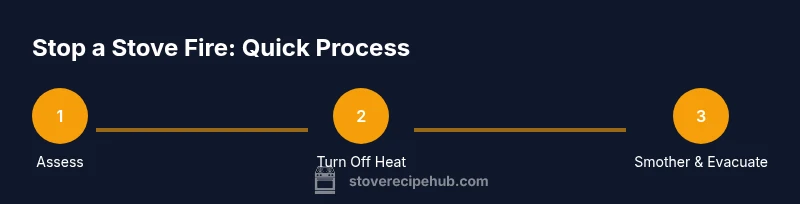
If you notice flames but you’re not in immediate danger, calmly perform the following steps: 1) Turn off the heat source. 2) Do not move the pan unless you’re certain you can do so without spilling burning oil. 3) Cover the pan with a metal lid or baking sheet to smother the fire. 4) If the flames are small and you have a kitchen-rated extinguisher, use it from a safe distance with a broad, sweeping motion. 5) If the fire grows or you feel unsafe, evacuate and call emergency services. This sequence minimizes risk and gives you control over the situation.
Using tools and protective gear
Keep a metal lid or baking sheet close to your cooking area to smother flames quickly. Have a fire extinguisher rated for kitchen use (Class B or K) accessible, and know how to operate it. Use oven mitts or heat-resistant gloves when handling hot lids or pans. These tools reduce the chance of burns and help you act decisively without exposing yourself to flames.
What not to do during a stove fire
Avoid these dangerous actions: 1) Do not pour water on a grease fire, as it can cause a violent steam explosion and spread the flames. 2) Do not try to move a flaming pan unless you have a clear, safe escape path. 3) Do not use a glass lid that could shatter under heat. 4) Do not leave the kitchen or turn your back on the fire. 5) Do not rely on cold or damp towels to smother flames; moisture can backfire.
Post-fire steps: assessing damage and cleaning safely
After the flames are extinguished, allow the pan to cool completely before touching it. Check nearby surfaces for heat damage and vent the area to clear smoke. Do a careful cleanup to remove burnt residues and oil splatter. If you suspect electrical issues or wiring damage, turn off power to the area and contact a professional for inspection. Document the incident for insurance if applicable.
Preparation and prevention to reduce future risk
Prevention starts with smart habits: never leave cooking unattended, keep flammable items away from the stove, and regularly check cookware for warping or damage. Clean grease from stovetops and burners routinely. Having a designated fire drill at home and ensuring all household members know how to respond can dramatically reduce risk. Regular maintenance and safe storage of extinguishers are essential components of long-term safety.
Tools & Materials
- Lid or metal baking sheet(Cover flames quickly to smother a grease fire)
- Baking soda(Useful for smothering small grease fires (do not use flour or sugar))
- Fire extinguisher (Class B or kitchen-rated)(Use only if flames are small and you can reach safely)
- Oven mitts or heat-resistant gloves(Protect hands when handling hot lids or cookware)
- Phone to call emergency services(Dial emergency services if flames spread or you feel unsafe)
- Clear area and a safe exit path(Keep children and pets away; ensure you can leave quickly if needed)
Steps
Estimated time: 15-25 minutes
- 1
Assess the situation calmly
Take a quick, deep breath and determine if you can safely act. If the fire is spreading rapidly or you feel trapped, evacuate immediately. Remaining calm helps you make clear, effective decisions later in the sequence.
Tip: If you’re unsure, prioritize safety and evacuate rather than attempting risky maneuvers. - 2
Turn off the heat source
If you can reach the burner safely, switch off the heat to stop feeding the flames. Do not reach over flames or lean across hot surfaces. Turning off heat reduces the risk of flare-ups and buys you time to smother or evacuate.
Tip: Always aim to cut power first; heat off is the fastest way to control flames. - 3
Cover the pan to smother the fire
Slide a metal lid or baking sheet over the pan carefully to deprive the fire of oxygen. Do not lift the lid until flames subside, and keep your hands protected with oven mitts. Smothering is often the most effective first move for grease fires.
Tip: If the lid doesn’t fully cover, tilt the pan slightly to reduce oxygen without spilling burning oil. - 4
Smother with baking soda or use a fire extinguisher
If the flames persist, sprinkle baking soda directly on the flames from a safe distance. If you have a kitchen-rated extinguisher and it is safe to use, operate it with a steady, sweeping motion from the recommended distance.
Tip: Never use water on a grease fire; it can cause an explosive reaction and spread flames. - 5
Evacuate and call for help if needed
If smoke thickens, flames grow, or you cannot control the fire, evacuate immediately and call emergency services. Do not attempt to fight a large fire solo; your safety comes first.
Tip: Have a preplanned meeting spot to ensure everyone is accounted for after evacuation. - 6
Ventilate and assess after the fire
Once the fire is out, ventilate the room to clear smoke. Inspect for heat damage and ensure no lingering embers remain. If you’re unsure about safety, contact a professional for inspection before returning to cooking.
Tip: Keep kids and pets away until surfaces are cool and safe to approach. - 7
Document and clean up safely
Document what happened for insurance if applicable and clean up grease safely. Use appropriate cleaners and avoid abrasive tools that could harm the surface. Store extinguishers and safety gear where they’re easily accessible.
Tip: Schedule a quick post-event drill to reinforce proper responses. - 8
Review prevention to reduce future risk
Analyze what caused the incident and adjust habits and equipment accordingly. Regular maintenance, safer storage of flammables, and keeping a clear workspace around the stove lowers risk.
Tip: Create a simple kitchen safety checklist and review it monthly.
Common Questions
Is it safe to use water on a grease fire?
No. Water can cause the grease to splatter and spread flames. Use a metal lid to smother the fire or baking soda; if needed, a kitchen-rated extinguisher can be used by following the instructions.
Never use water on a grease fire. Smother with a lid or baking soda, or use a kitchen extinguisher if you can do so safely.
What should I do first when a stove fire starts?
First, assess safety and turn off the heat if you can do so without risking burns. Then cover the pan to smother the flames. If flames persist, evacuate and call for help.
Turn off the heat, cover the pan, and call for help if flames continue.
When is it appropriate to use a fire extinguisher?
Use a kitchen-rated extinguisher only if the fire is small and you can reach it safely. Follow the PASS technique: Pull, Aim, Squeeze, Sweep.
Only if you can reach the fire safely; otherwise evacuate and call emergency services.
Should I move a pan that’s on fire?
Only if you can move it without spilling burning oil or risking burns. In most cases, it’s safer to turn off heat and smother rather than move the pan.
Don’t move the pan unless you can do it safely and without spilling hot oil.
What items belong in a kitchen safety kit for fires?
A metal lid, baking soda, a kitchen-rated fire extinguisher, oven mitts, and a phone to call emergency services should be included for quick response.
Keep a lid, baking soda, a kitchen extinguisher, and a phone handy for emergencies.
What should I do after a stove fire is extinguished?
Ventilate the area, allow cookware to cool completely, inspect for damage, and clean up safely. If you suspect electrical issues, contact a professional before cooking again.
Ventilate, cool cookware, and inspect before resuming cooking. Call a professional if you suspect damage.
Watch Video
Top Takeaways
- Smother flames by covering the pan with a lid or baking sheet
- Turn off heat before attempting other actions
- Never use water on a grease fire
- Evacuate and seek help if the fire grows
- Prevent fires with prep, cleanups, and safety gear