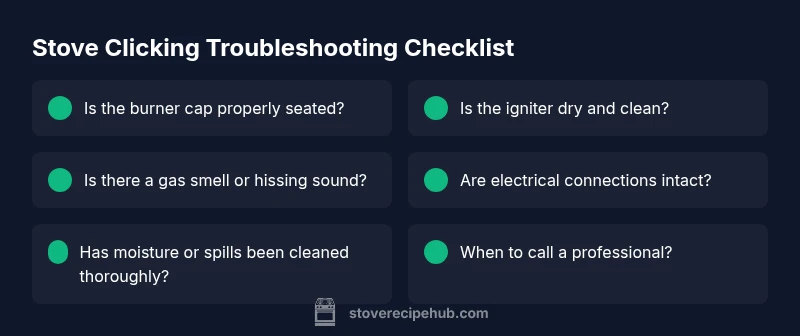
What to Do When the Stove Keeps Clicking: Quick Troubleshooting
Urgent stove troubleshooting guide to stop nuisance ignition clicking. Learn quick checks, step-by-step fixes, safety tips, and when to call a pro. Brought to you by Stove Recipe Hub.


What to do when stove keeps clicking: the most likely causes are a dirty igniter, a misaligned burner cap, or a gas-supply issue. Start by turning off the burner, cleaning the igniter with a dry brush, and reseating the burner cap. If the clicking continues, discontinue use and call a licensed technician for a safe inspection.
Understanding why your stove keeps clicking
When a stove keeps clicking, it's usually the ignition system at fault. The spark generator creates tiny electrical sparks to light the gas, but dirt, moisture, or misalignment can cause repeated clicking instead of a steady flame. Gas stoves rely on a precise balance between the igniter, burner ports, and the cap; if any part is off, you may see ongoing clicking even when you turn the knob. Resolving this quickly reduces wasted gas, minimizes safety risks, and gets you back to cooking. In this guide, we’ll cover the most common causes, safe checks you can perform, and when to call a professional. According to Stove Recipe Hub, understanding the ignition pathway helps you diagnose symptoms more accurately and avoid unnecessary repairs.
Safety first: immediate steps before you touch the stove
Safety should come first when a stove misbehaves. If you smell gas or hear hissing, do not attempt to light anything or use electrical switches. Turn off the knob, shut off the gas supply if possible, and open doors and windows to vent. Do not use flames or heat-producing appliances until the area is clear. If the smell persists, evacuate and call the gas emergency number in your area. Even when things seem minor, treating ignition clicks as a potential gas issue protects you and your home.
Common causes of clicking (Stove Recipe Hub analysis)
Based on Stove Recipe Hub analysis, several causes account for persistent ignition clicks. The top three are dirty igniter or clogged burner ports, a misaligned or loose burner cap, and a gas-supply issue or line contamination. Other factors include a faulty spark module, moisture on the ignition area after cleaning, or a temporary electrical fault in the control panel. Identifying which category your stove falls into guides safe, effective fixes without guessing.
Do-it-yourself checks you can safely perform
You don’t need tools for every problem, but some checks can quickly reveal obvious faults. First, ensure the stovetop is cool. Remove the burner cap and burner head, then inspect for food debris or grease that could be fouling the ports. Clean with a dry brush or compressed air; avoid water on electrical components. Reassemble and lightly twist the cap to verify it seats evenly. If you routinely spill liquids, wipe dry to prevent moisture from triggering rapid clicks.
When cleaning isn’t enough: diagnosing deeper issues
If cleaning and reseating don’t stop the clicks, inspect for ignition sparking in multiple attempts. Hold the knob at the ignition position and observe whether a spark fires consistently across cycles. If you hear sparking but no flame, the problem may be a faulty igniter, a broken electrode, or a weak power supply. In gas ranges, a gas-leak smell or hissing sound is a red flag—stop immediately and call a pro. This stage helps you filter whether the issue is mechanical, electrical, or gas-related.
Maintenance and prevention to minimize future clicking
Proactive maintenance reduces the odds of repeated ignition issues. Regularly clean igniters after cooking, avoid spilling liquids on the burner area, and replace the burner caps correctly after cleaning. If your stove uses propane, check the tank or supply line for leaks and ensure the valve is fully open when in use. Schedule periodic checks of gas lines, connections, and the igniter module with a licensed technician. Keeping the area dry and dust-free is a simple, powerful preventive strategy.
What to expect from a professional
If the stove continues to click after you have performed the above checks, a professional evaluation is warranted. A technician will inspect the igniter, electrical connections, gas line, and regulator. They may replace the igniter, reseal the burner, or repair a faulty control module. Expect a safety-focused assessment and clear recommendations, including any warranty implications and estimated repair costs.
Steps
Estimated time: 30-45 minutes
- 1
Power down and cool the stove
Turn off the burner knob and, if applicable, unplug the unit. Wait 3–5 minutes to let any residual heat dissipate before you begin inspections.
Tip: Never touch hot metal parts; this avoids burns and warped components. - 2
Remove burner cap and inspect
Carefully lift the burner cap and head. Look for food debris, grease, or corrosion that could block the ports where gas exits.
Tip: Take a quick photo of how parts sit to ensure correct reassembly. - 3
Clean and dry components
Use a dry brush or compressed air to remove debris. Wipe dry with a lint-free cloth if needed, then ensure all parts are completely dry before reassembly.
Tip: Avoid using liquids near the igniter to prevent electrical shorts. - 4
Test the ignition spark
With the knob in the ignition position, watch for a steady spark across cycles. If there’s no spark, the igniter or wiring may be at fault.
Tip: If you see a weak or inconsistent spark, replace the igniter or have wiring inspected. - 5
Reassemble and attempt a light
Place the burner cap back, align it correctly, and attempt to light the burner once more. Use a single burner at a time to simplify troubleshooting.
Tip: Lightly tighten the cap without overtightening to avoid misalignment. - 6
Escalate if issues persist
If clicks continue after these steps, stop using the stove and contact a licensed technician. Persisting clicks can indicate a gas or electrical hazard.
Tip: Have your stove’s model and history ready when you call for service.
Diagnosis: Stove keeps clicking and either won’t ignite or lights briefly then goes out
Possible Causes
- highDirty igniter or clogged burner ports
- mediumMisaligned burner cap or loose parts
- highGas supply issue or gas leak
Fixes
- easyClean the igniter and burner ports; reseat the burner cap; dry thoroughly
- mediumCheck electrical components and sparking; ensure power and wiring are intact; replace igniter if necessary
- hardIf gas smell or leak is suspected, shut off gas, evacuate, call authorities; schedule professional gas line inspection
Common Questions
Why does my stove keep clicking even when I’m not pressing the knob?
The igniter can spark due to moisture, dust, or misalignment. Cleaning and re seating the burner often resolves it. If the issue persists, check for gas-supply problems.
If the stove keeps clicking even when you haven’t turned it, it’s usually the igniter sparking because of dust or moisture. Cleaning the area and reseating the burner often fixes it.
Is it safe to use the stove if I smell gas?
No. A gas smell is a safety hazard. Evacuate, avoid using lights or switches, and call your gas utility or emergency services. Do not re-enter until professionals say it’s safe.
If you smell gas, leave immediately and call for help. Do not operate the stove or switch anything on or off.
How do I clean the igniter safely?
Let the stove cool, remove the burner cap, and brush away debris with a dry brush or compressed air. Do not wet electrical components and recheck alignment before relighting.
Let the stove cool, clean with a dry brush, and reassemble before trying to light again.
When should I replace the igniter?
If the igniter shows weak or inconsistent sparking or never lights after cleaning, it may need replacement by a professional.
If the spark is weak or inconsistent and cleaning hasn’t helped, you probably need a new igniter.
Will turning off power stop the clicking?
Sometimes. If the issue is electrical, disconnecting power will stop the sparking, but this is not a fix. A technician should diagnose electrical components.
Turning off power can stop the sparking momentarily, but you still need a pro to diagnose the underlying problem.
What should I do if the burner lights briefly and goes out?
This often means a fuel-supply issue, moisture, or a faulty igniter. Try cleaning and reseating, then test again. If it persists, call a professional.
If it lights briefly and then goes out, you likely have an igniter or gas issue and should get professional help.
Watch Video
Top Takeaways
- Start with a clean igniter and proper burner seating
- Never ignore gas smells—evacuate and call for help
- If clicks persist, escalate to a licensed technician
- Regular maintenance reduces future ignition issues