Why Your Stove Lighter Keeps Clicking: Quick Troubleshooting
Learn why a stove lighter keeps clicking and how to fix it quickly and safely with at-home steps, maintenance tips, and when to call a pro. Stove Recipe Hub expert guidance.


Most likely, a stove lighter keeps clicking because the ignition electrode is dirty or worn, or debris is misaligning the spark gap. Start by turning off gas and cleaning the electrode with a dry cloth, then wipe the burner area. Re-seat the burner cap and test. If it still clicks after cleaning, the lighter may need replacement or professional inspection for safety.
Why ignition clicking happens
According to Stove Recipe Hub, ignition sparking relies on a clean spark gap and dry surfaces. When any part of the ignition path gets dirty, wet, or misaligned, the system will spark repeatedly without lighting. A quick safety mindset: don't panic—most issues are user-serviceable with patience and caution. The stubborn clicking usually signals debris, wear, or misalignment rather than a dangerous gas leak. A healthy ignition creates a crisp spark that jumps the gap and ignites gas within a second or two. If you’re hearing a rapid, continuous tap-tap-tap, take it as a warning to pause and diagnose rather than force the burner to light. In the rest of this guide, you’ll learn how to identify the leading causes, perform safe checks, and restore reliable ignition without unnecessary disassembly or risk.
Common causes in order of likelihood
In most homes, the cause of constant clicking is simple and fixable. The number-one culprit is a dirty or worn ignition electrode or spark tip. Over time, grease, food residue, or mineral deposits hinder consistent spark delivery, so the lighter keeps trying to jump but cannot ignite. Next, debris around the burner or a loosely seated burner cap can alter the spark path. Moisture from spills or a damp kitchen can also dampen the spark or create temporary short circuits. Rarely, a damaged ignition wire or failing ignition module can cause persistent sparking even after cleaning. Stove Recipe Hub analysis shows that addressing the electrode and the burner fit resolves the majority of cases quickly; advanced wiring issues usually require professional service. If you notice a gas odor or difficulty lighting after any repair, stop and seek professional help.
Safety priorities before you start
Always prioritize safety. If you smell gas, leave the area immediately and call emergency services if the odor persists. Ventilate the kitchen by opening doors and windows before you touch any appliance. Never try to light a burner with a known gas leak or after a spill that reached electrical components. Disconnect power to the stove if you can do so safely. Wear eye protection and keep children and pets away from the area while you inspect. These precautions reduce the risk of ignition-related accidents and ensure you can work calmly and methodically. According to Stove Recipe Hub, safe prep is the foundation of effective troubleshooting and peace of mind in urgent situations.
How to diagnose at home (step-by-step checks)
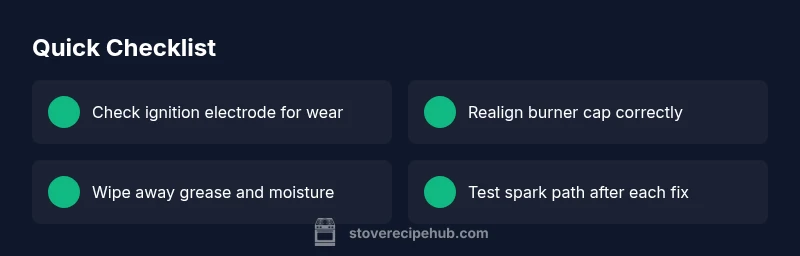
Begin with the simplest checks: ensure the knob is fully in the off position, gas supply is stable, and the burner cap is properly seated. If your stove has an exposed ignition electrode, inspect it for visible wear or cracks and verify the spark gap is clear of debris. Try a visual spark test by turning the knob to light position with the burner removed from the cooktop and observe if a spark travels across the gap. If no spark or a dim spark is observed, the electrode or igniter module may need replacement. Record any unusual signs, such as arcing, melt marks, or corrosion, to inform the next steps or a professional.
Cleaning and maintenance you can do right now
Regular cleaning prevents most clicking failures. Use a dry microfiber cloth to wipe the electrode, spark tip, and surrounding burner areas. Avoid water or cleaning liquids near the ignition electronics. If you see burned-on grease, apply a small amount of isopropyl alcohol to a cotton swab and carefully clean the tip; let it dry completely before reassembly. Reinstall the burner cap securely and ensure it aligns with the notches. After cleaning, perform a quick test by attempting to ignite once with an empty burner to confirm a clean, audible spark.
Replacing parts and when to call a pro
If cleaning and realigning do not stop the clicking, you may be dealing with a worn electrode, a damaged spark module, or a frayed wiring harness. Replacing the ignition electrode is often straightforward for DIYers with the right model-specific parts, but incorrect installation can worsen the issue or cause a misfire. If you’re unsure, contact a licensed appliance technician. For gas safety, never continue to troubleshoot a persistent sparking issue beyond basic cleaning. A professional can test for proper gas pressure and ignition voltage, ensuring safe operation.
Prevent future clicking with smart habits
Develop a simple maintenance routine to prevent future ignition issues. Wipe up spills quickly and avoid letting liquids pool around the ignition area. Schedule a quarterly check of the ignition assembly, especially before busy cooking seasons. Store spare parts such as electrodes and igniter modules in a dry, clean cabinet. Keep a log of any symptoms (frequency, aroma, timing) to help you detect patterns and guide future repairs. Consistent care reduces emergencies and keeps your stove performing reliably.
Steps
Estimated time: 15-25 minutes
- 1
Power down and prep
Turn off gas supply and unplug the stove if possible. Clear the area and gather dry supplies and a flashlight. This minimizes risk and keeps the workspace organized for inspection.
Tip: Safety first: never test near an open flame during inspection. - 2
Inspect ignition electrode
Look for visible wear, cracks, or corrosion on the electrode. Confirm the spark tip is clean and not obstructed by grease or debris.
Tip: Use a soft dry cloth; avoid metal tools that could scratch the tip. - 3
Check spark gap
Ensure the spark gap distance matches the manufacturer’s spec. A misaligned gap can prevent lighting even with a good spark.
Tip: If unsure of the exact gap, refer to the manual or a trusted guide. - 4
Clean and dry components
Wipe the electrode and surrounding areas with a dry cloth, and if needed, a small amount of isopropyl alcohol on a swab. Allow everything to dry completely.
Tip: Keep liquids away from ignition electronics to avoid short circuits. - 5
Re-seat burner cap
Place the burner cap back on, aligning the notches. A misaligned cap can disrupt the spark path and ignition.
Tip: Make sure the cap sits flat and evenly. - 6
Test ignition and decide
Turn the knob to the ignition position and observe whether a clean spark lights the burner. If it still clicks after these checks, plan for part replacement or professional service.
Tip: If you smell gas at any point, stop immediately and evacuate.
Diagnosis: Stove lighter keeps clicking continuously when trying to light a burner
Possible Causes
- highDirty or worn ignition electrode or spark tip
- mediumDebris around burner or moisture affecting spark gap
- lowDamaged wiring or faulty ignition module
Fixes
- easyClean the ignition electrode and spark tip with a dry cloth, ensuring the gap is free of debris
- easyRe-seat the burner cap and verify the burner is clean and dry; test the spark path
- mediumReplace the ignition electrode or ignition module if wear or cracks are visible
- hardIf gas odor is present or sparking persists after basic fixes, contact a licensed technician
Common Questions
Why does my stove lighter keep clicking even after I cleaned it?
Cleaning helps, but a worn electrode or misaligned gap can keep sparking. Moisture and a damaged ignition module are also possibilities. If the problem persists, consider a replacement or professional service.
Cleaning helps, but worn parts or a mis adjusted spark gap can keep sparking; if it continues, seek professional help.
Is it dangerous if the lighter keeps clicking?
Persistent sparking is a potential ignition hazard. If you smell gas, evacuate and call authorities. Do not attempt to light the burner again until the area is inspected.
Yes, it can be dangerous; evacuate if you smell gas and get professional help.
Can a faulty wire cause clicking?
Yes, loose or damaged wiring can cause continuous sparking. A loose connection or cracked insulation should be inspected by a pro to prevent a fire risk.
Wiring issues can cause constant sparking—best left to a professional.
Should I replace the ignition electrode myself?
Replacement is possible with model-specific parts and care. If you’re unsure about the wiring and gap, hire a technician to avoid misalignment or leaks.
Only DIY if you’re confident and follow the manual; otherwise, get a technician.
When should I call a professional for ignition problems?
Call a professional if the spark persists after cleaning or if you detect gas odor, irregular flames, or any crackling sounds. A pro can test gas pressure and ignition voltage safely.
Call a pro if basic fixes don’t work or you smell gas.
Watch Video
Top Takeaways
- Identify debris and realign parts first.
- Clean and dry ignition area to restore spark.
- Replace worn parts or call a pro if unresolved.
- Never ignore a persistent gas odor or sparking issue.