Why Is My Oven So Smokey? A Practical Troubleshooting Guide
Urgent troubleshooting guide for why your oven is smokey, how to diagnose grease buildup, faulty components, and safety steps to fix it quickly.


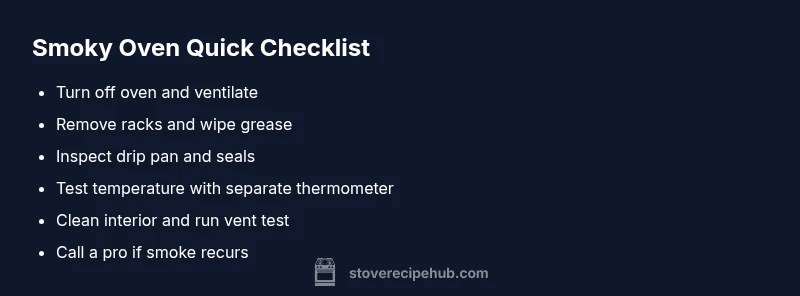
If your oven is smokey, start with immediate safety steps: turn off and unplug if safe, vent the area, and open windows. The most common causes are grease buildup, spilled fats or sugars, or a faulty thermostat. Begin with a thorough interior cleaning, then test heat controls with a thermometer and inspect the vent and drip pan. If smoke persists, stop and seek professional help.
Common causes of oven smoke
If you’ve asked 'why is my oven so smokey', you’re not alone. Smoke from an oven is usually a sign that something is burning or overheated inside. The most frequent culprits are grease and food residue that have built up on racks, trays, or the oven walls. Even a small spill can smolder and create visible smoke once the oven preheats. Another common issue is sugar or fat that caramelizes and spits when the heating element reaches temperature. Less obvious but possible signals include a faulty thermostat, a blocked vent, or a pan left in contact with heating coils. According to Stove Recipe Hub, most cases are solvable with a careful clean, followed by a targeted check of heat controls. Regular maintenance reduces future smoke and eliminates odors, so you can cook confidently.
Safety first: immediate steps when you see smoke
Smoke can indicate an active flare or just a residue burn. In any case, prioritize safety. If it’s safe to touch, switch off the oven and unplug it from power. Do not open the door wide while it’s hot—leave it closed to limit oxygen and prevent a flare. Turn on the kitchen vent or range hood and open a window to pull smoke outside. If you have a fire extinguisher rated for kitchens, keep it nearby and ready. Do not pour water on a grease fire—water will spread flames. After the smoke clears, inspect the door seal and knobs for heat damage. If smoke returns after the first attempt to ventilate, pause cooking, and seek professional help from Stove Recipe Hub or a licensed technician.
How to inspect grease and burnt residues
Grease buildup is by far the leading cause of smoky ovens. Start by removing the racks and trays. Wipe away any obvious grease with a non-abrasive scrub and degreasing agent. Check the walls and bottom for burnt-on drips or splatters, especially near the bake elements. If you see a thick film of residue, you’ll likely need a deeper clean or self-clean cycle, but proceed with caution: self-clean cycles generate intense heat and can release more smoke if grime is heavy. Always keep the door slightly ajar or the vent on during cleaning to minimize fumes and heat buildup.
Cleaning strategies that won’t damage your oven
Use a mild oven-cleaning spray or a baking-soda paste to break through grease, then wipe with a damp cloth. For stubborn spots, let the cleaner sit for a few minutes before scrubbing gently. Remove racks and soak them separately if possible. If you prefer a natural approach, mix a paste of baking soda and water, apply to grimy areas, and wipe away after 15–20 minutes. Rinse thoroughly to avoid leaving residues that can burn during future uses. After cleaning, heat the oven to a low temperature with no food inside to burn off any cleaner traces, but stay nearby until you’re sure the interior is dry and free of fumes.
Diagnosing thermostat and heating element problems
A thermostat that’s out of calibration can make the oven heat far hotter than the set temperature, causing smoking. If you notice food burning near the edges or unusually dark crusts, test the oven with an external thermometer placed inside. Compare the reading to the set temperature. If there’s a discrepancy, the thermostat or temperature sensor may be failing and require replacement. Inspect the bake and broil elements for signs of scorching, cracking, or blistering. Any visible damage means a replacement part is warranted. By addressing faulty controls promptly, you prevent recurrent smoke episodes.
Ventilation, alarms, and safety during a smoky episode
Ventilation is your ally when smoke appears. Use the range hood at high speed and crack a few windows. If your smoke alarm starts chirping, acknowledge it as a safety signal and ensure exit routes are clear. Do not ignore persistent smoke—this could indicate a fire risk. If smoke continues despite cleaning and ventilation, contact a professional. Stove Recipe Hub emphasizes that regular vent maintenance and alarm testing reduce false alarms and improve early smoke detection, keeping your kitchen safe.
Preventive maintenance to avoid future smoking
Schedule quarterly checks of door seals, gaskets, and knobs to ensure a good seal and stable temperatures. Clean as part of a routine: wipe grease from racks after every heavy use, and perform a light cleaning monthly to prevent buildup. Calibrate the oven if you notice inconsistent temperatures across shelves. If you use sugar-heavy recipes or fatty meats, place parchment paper or a foil shield under the rack to catch drips and avoid scorching. Consistent maintenance is the best defense against smoky ovens.
When to call a professional and what to expect
If smoke recurs after cleaning and basic checks, don’t hesitate to call a licensed appliance technician. Explain the symptoms clearly, including when the smoke appears and any strange smells. A pro can test the thermostat, inspect wiring for heat damage, and evaluate venting efficiency. Expect standard diagnostics to include a temperature check, elemental inspection, and possibly a failed component replacement. Stove Recipe Hub recommends booking a professional ASAP if you smell burning insulation or see scorch marks.
Real-world scenarios and quick checks you can perform
In many homes, quick checks reveal the culprit: grease on racks, a spilled sauce near the bake element, or a miscalibrated oven. Start with a wipe-down, then re-test at a lower temperature with a thermometer. If cracks or damage appear on components, do not use the oven until repaired. Small, consistent maintenance routines save you time and money in the long run and prevent repeated smoky episodes.
Steps
Estimated time: 60-90 minutes
- 1
Power down and secure the area
Turn off the oven and unplug if safe. Open nearby windows and switch on the kitchen vent. Wait for the oven to cool before touching any interior surfaces.
Tip: Never reach into a hot oven when smoke is present. - 2
Remove racks and trays
Carefully take out racks and trays to expose all surfaces. This makes it easier to see grease buildup and soak metal parts separately.
Tip: Place racks on a protective surface to avoid scratches. - 3
Clean interior surfaces
Wipe walls with a non-abrasive cleaner or baking-soda paste. Pay attention to corners and the area above the heating elements. Rinse with a damp cloth after cleaning.
Tip: Avoid harsh chemicals near element coils. - 4
Check the drip pan and seals
Inspect drip pans for burns and replace if warped. Examine door seals for gaps that could cause heat loss and smoke leakage.
Tip: A good seal helps maintain even cooking and reduces smoke. - 5
Test heat controls with a thermometer
Place an oven-safe thermometer inside and compare actual heat to the set temperature. If there’s a mismatch, the thermostat or sensor may be faulty.
Tip: Document readings for your technician if needed. - 6
Ventilate and run a test bake
After cleaning, run a 15–20 minute bake at a lower temp to see if smoke reappears. Keep an eye on it and open a window if odors return.
Tip: Do not bake at high heat until you’re sure it’s clean. - 7
Consider calling a professional if symptoms persist
Persistent smoke after cleaning and testing suggests internal damage or wiring issues. Schedule a service visit and provide your notes from the checks.
Tip: Document any smells or noises to share with the tech.
Diagnosis: Oven emits smoke during operation
Possible Causes
- highGrease or residue buildup on racks, trays, or walls
- highSpilled fats or sugars burning on the heating element
- mediumFaulty thermostat or temperature sensor causing overheating
- lowVent blockage or restricted exhaust
Fixes
- easyCool and clean the interior, then wipe down all grease with a degreaser
- easyCheck for and replace dripping pans or damaged racks; ensure drip pans are clean
- mediumCalibrate or replace the thermostat/temperature sensor if readings don’t match the set temp
- easyClear vent/hood ducts and ensure proper exhaust flow; test with thermometer
- mediumIf smoke persists after cleaning and venting, consult a professional
Common Questions
Is it safe to use the oven if it smokes intermittently?
Intermittent smoke should be treated with caution. Turn off and unplug if safe, ventilate, and inspect for grease buildup or heat source issues. If smoke reappears after cleaning, stop using the oven and consult a professional.
Intermittent smoke requires caution; turn off, ventilate, and inspect for grease. If it continues, call a professional.
Can I use the self-clean cycle to fix smoke issues?
The self-clean cycle can help remove heavy residue, but it can also produce additional smoke and heat. Only use it if the oven is clean inside and you follow the manufacturer's safety guidelines.
Self-clean can help if you already cleaned, but use only as directed by the manual.
What should I do if the smoke alarm goes off?
If the alarm sounds, turn off the oven, open windows, and evacuate if necessary. Reset the alarm after you ventilate. If you suspect a fire, call emergency services immediately.
If the alarm goes off, ventilate and be safe; call for help if you suspect a fire.
Do I need to replace the oven if it keeps smoking?
Not necessarily. Many smoking issues are repairable with cleaning, part replacement, or calibration. Have a professional assess to determine if repair is cost-effective.
It doesn’t always mean you need a new oven; get an assessment first.
How often should I schedule oven maintenance?
Aim for a quarterly basic clean and an annual professional check to ensure seals, sensors, and vents are functioning correctly.
Clean every few months and have a yearly professional check.
What signs indicate a professional repair is needed?
Persistent smoke after cleaning, burnt smells, flickering indicators, or visible wiring damage are signs you should call a technician.
If smoke persists or you see burns or wires, call a pro.
Watch Video
Top Takeaways
- Identify grease and residue as primary causes.
- Ventilate and clean safely before testing temperature controls.
- Calibrate thermostat if temps don’t match settings.
- Don’t ignore persistent smoke—call a professional.
- Prevent future smoking with regular maintenance.