Why Is My Stove Smoking? Quick Troubleshooting for Home Cooks
If your stove starts smoking, act fast with practical safety steps, identify common causes, and learn fix-and-prevent strategies to cook safely again.


Turn off the burner immediately and move the pan to a cool surface. Open a window or turn on the exhaust hood to ventilate. If you smell gas or the smoke persists after basic cleaning, stop cooking and call emergency services or a licensed technician. This quick fix reduces risk while you inspect the stove.
Understanding Why Your Stove Is Smoking
If you’re asking why is my stove smoking, the answer often lies in heat contacting oil or grease, improper cleanup, or cooking mishaps. According to Stove Recipe Hub, many stove-smoking incidents are preventable with a quick safety check and routine cleaning. A small flare-up can happen when a spill sits on a burner or grate, when oil splatters during frying, or when food residue carbonizes on the burner head. In most homes, the fix is straightforward: cut the heat, inspect the surfaces, and clean the cooking area before resuming use. This section explains the dynamics of stove smoke, the risk it poses to families, and how to distinguish harmless sizzling from dangerous flames. You’ll learn to identify patterns, such as grease buildup under grates, burnt-on sauce near the flame, and vapors that linger after you shut off heat. With the right checks and habits, you can reduce future incidents and cook more safely.
Immediate Safety Steps You Should Take
When smoke appears, safety comes first. Start by turning off the burner to stop the heat source. If a pan is in contact with the flame, carefully move it away to a cool surface using oven mitts. Open windows or switch on the exhaust hood to ventilate the area and protect your breathing. Do not reach into hot surfaces or wipe while hot, and never pour water on an oil fire. If you smell gas, evacuate and call emergency services or your gas company immediately. These steps reduce risk of burns, fires, and carbon monoxide exposure while you assess the situation. After the immediate danger is under control, you can begin a calm, methodical inspection of grease, spills, and venting.
Common Causes of Stove Smoke
Grease buildup: The most frequent culprit is a layer of oil and fat that has accumulated on burner heads, grates, and drip pans. When heated, this film carbonizes and produces smoke or acrid fumes. Oil spills: A splash of oil or butter during sautéing can smolder if it reaches the hot surface. Burnt food residue: Leftover bits on a pan or near the burner can char quickly, creating smoke even at moderate heat. Overheating: Cooking at very high temperatures without a sufficient pan or oil amount can cause scorching and smoky vapors. Plastic or paper nearby: If something plastic or paper is too close to the flame, it can melt and create smoke. Malfunction: A worn burner cap, bent grates, or misaligned parts can cause uneven heating and smoke.
How to Diagnose the Issue
Start with visibility: Is the smoke coming from a specific burner or from under a pan? Inspect the burner head for grease; wipe away any film and check the drip pan for accumulated gunk. Confirm that the pan size matches the burner and that the flame is blue, steady, and not yellow or flickering. Smell for gas; if you detect gas, treat as emergency. If you notice melted plastic or a plastic bag near the flame, stop and remove it. Test cleaning results by starting with a small, low-smoke task like boiling water and watching for smoke patterns. If the smoke recurs after cleaning, there may be grease in hard-to-reach areas or a burner component that requires replacement.
Step-by-Step Fix for the Most Common Cause: Grease Build-Up
- Turn off heat and let surfaces cool before touching.
- Remove burner grates and drip pans; set aside for cleaning.
- Wipe the surface with a degreaser and warm, soapy water; use a non-abrasive sponge.
- Scrub burner heads, knobs, and surrounding areas to remove grease residue.
- Rinse with clean water and dry thoroughly to prevent moisture-related smudges or steam.
- Reassemble and light the burner to verify a blue flame with no smoke. Pro tip: Regular cleaning after cooking oily foods drastically reduces smoky incidents.
Preventive Maintenance to Avoid Future Smoke
Regular maintenance is your best defense. Wipe surfaces after cooking and clean grease traps weekly if you cook fatty foods. Use a splatter guard to minimize oil reaching burner components. Keep flammable items away from the stovetop and inspect drip pans for wear or damage. Schedule a monthly deep clean and a quarterly blower/hood check if you rely on the vent hood heavily. These habits dramatically reduce smoke risk and extend stove life.
When to Seek Professional Help
If the smoke persists after a thorough cleanup, you notice a gas odor, hear buzzing, see sparking, or detect melted insulation around electrical components, stop using the stove and contact a licensed professional immediately. Do not attempt dangerous disassembly on your own. Persistent smoke and any gas smell are red flags that require expert evaluation to ensure safety.
Quick Safety Reference Checklist
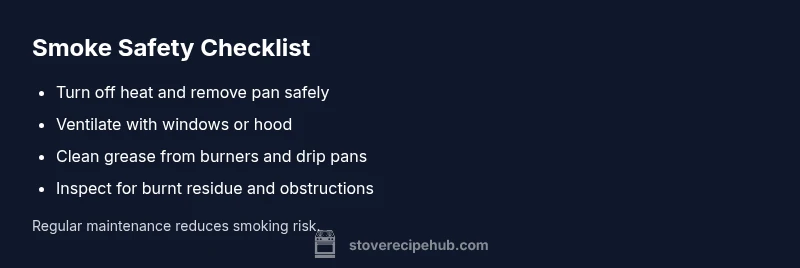
- Turn off the heat and remove cookware if safe.
- Ventilate with windows or use the exhaust hood.
- Inspect for grease buildup on burners, grates, and drip pans.
- Clean thoroughly; re-test with a low-heat task.
- If gas smell or persistent smoke, evacuate and seek help immediately.
Quick Recap: Immediate Actions and Safe Usage
Always prioritize safety: shut off heat, ventilate, and inspect for obvious grease or debris. Keep a routine cleaning schedule and replace worn parts promptly. Remember, if you smell gas or feel unsure, call for professional assistance rather than guessing at a fix.
Steps
Estimated time: 15-30 minutes
- 1
Ensure Immediate Safety
Stop cooking, turn off all burners, and remove the pan only if it is safe to do so. If you feel heat on plastic or clothing, back away and wait for surfaces to cool.
Tip: Use oven mitts and keep a safe distance from flames. - 2
Ventilate the Area
Open windows and turn on the exhaust fan to clear smoke and fumes. If you have a hood, run it at high until the air clears.
Tip: Keep doors open to increase airflow. - 3
Inspect Visible Grease
Look for grease on burner heads, grates, and drip pans. Wipe away obvious buildup with warm soapy water and a non-abrasive sponge.
Tip: Avoid metal scouring pads that can scratch surfaces. - 4
Check for Obstructions
Ensure nothing flammable is near the flame and that pans are correctly sized for the burner. Remove any plastic or paper nearby.
Tip: Keep a safe distance from the hot area while inspecting. - 5
Clean Thoroughly and Dry
Clean all cleaned parts, rinse, and dry completely before reassembling to prevent moisture steam from causing more residue.
Tip: Thorough drying helps prevent future boiling overs. - 6
Test the Burners
Light the burner on a low setting to verify a steady blue flame and that no smoke returns after a brief test run.
Tip: If smoke reappears, stop and seek professional help.
Diagnosis: Stove emits smoke during operation
Possible Causes
- highGrease buildup on burner heads, grates, or drip pans
- highOverheated oil or spills reaching hot elements
- mediumBurnt food residue near flame
- lowElectrical malfunction or worn burner components
Fixes
- easyTurn off heat and move pan away; ensure area is cooled before cleaning
- easyClean grease from burner heads, grates, and drip pans with a degreaser
- easyReplace damaged drip pans or bent burner parts and realign components
- mediumIf the smell of gas is present or you cannot locate the source, call a licensed technician or gas emergency
Common Questions
What should I do first if my stove starts smoking?
Immediately turn off the burner and remove the pan if safe. Open a window or turn on the hood to vent. If you smell gas or the smoke continues after cleaning, evacuate and call emergency services.
First, turn off the burner and move the pan away. Ventilate the area and call for help if the smoke keeps coming or you smell gas.
Is it safe to cook again after cleaning?
Yes, after a thorough cleaning and ensuring there is no lingering odor or smoke. Recheck for any gas smell and verify the burner flame is blue and steady before resuming cooking.
You can cook again after you’re sure everything is clean and there’s no gas smell; test the burner first.
Can stove smoking indicate a gas leak?
Yes, a gas smell or hissing sound can indicate a leak. Do not operate electrical switches, evacuate the area, and call your gas utility or fire department.
If you smell gas, leave the area and contact your gas company or emergency services immediately.
How often should I clean my stove to prevent smoking?
Clean grease and spills after cooking and perform a deeper clean monthly. Regular upkeep reduces the chance of smoke and fire hazards.
Clean up after cooking and schedule monthly deep cleans to prevent smoking.
Should I use the oven to offset a smoking stove?
No. Do not use the oven to manage stovetop smoke. Ventilate, clean, and inspect the burners; oven heat may not address the root cause.
Don’t rely on the oven to fix stovetop smoke; focus on cleaning and inspecting the stovetop.
What tools are best for cleaning a greasy stove?
Use non-abrasive sponges, warm water, and a degreasing cleaner. Avoid steel wool that can scratch and damage surfaces.
Non-abrasive sponges and degreaser work best to remove grease safely.
Watch Video
Top Takeaways
- Turn off heat and vent smoke immediately
- Clean grease and spills promptly to prevent recurrence
- Use proper tools and protective gear during cleaning
- Regular maintenance reduces future smoking
- Call a professional for gas smells or unresolved smoking