Why is My Stove Clicking? A Practical Troubleshooting Guide
Learn why your stove clicks and how to fix ignition issues safely. This guide covers common causes, step-by-step home fixes, maintenance tips, and when to call a professional. Stove Recipe Hub provides clear, actionable advice for quick, confident stove-top troubleshooting.


If you’re asking why is my stove clicking, the most common reason is a dirty or damp igniter that fails to spark reliably. Wipe and dry the igniter, clear any debris from burner ports, and reseat the cap. If you still hear rapid clicking or smell gas, stop and call a pro.
Understanding the click: what it signals
If you're trying to light a gas stove and hear a repeated, sharp click, you're hearing the ignition system in action. The igniter creates a spark that should light the gas within a second or two. A normal ignition sequence is a brief series of clicks followed by a steady flame. When the click persists after the flame is lit, or if the flame does not light at all, the issue points to the igniter, burner ports, or gas delivery. Moisture from cleaning, steam, or condensation can dampen the igniter and reduce spark strength. Dirt, grease, or food particles can clog tiny ports that feed gas, causing inconsistent lighting. A misaligned burner cap or a damaged igniter electrode can also disrupt the spark path. While some clicking is normal, persistent or aggressive clicking requires careful inspection. This guide walks you through practical checks, safe testing, and fixes you can perform on most residential stoves.
Common causes at a glance
Across households, the most frequent culprits behind stubborn stove clicking include moisture on the igniter, dirt or grease build-up on the electrode, misaligned burner caps, and a weak or damaged igniter. Less common but possible issues are a clogged gas port, a faulty regulator, or an electrical grounding problem. If the flame catches but the clicking continues, you may have a partially engaged igniter or a short circuit in the control board. Real-world patterns show that moisture and grime are the top offenders, especially after cleaning or heavy cooking. Before diving into parts, start with simple cleaning and reassembly checks, which solve the majority of routine ignition problems. For safety, always ventilate the area and ensure there is no strong gas odor before performing any checks.
Safety first: when to stop and call a pro
If you smell gas, hear a strong hissing sound, or notice a persistent sooty odor around the burner, evacuate the area and call emergency services or your gas supplier. Do not attempt to ignite or relight a stove in the presence of a gas leak. If the stove continues to click abnormally without lighting, or if there is sparking near exposed wiring, leave the area and contact a licensed technician. For regular maintenance or suspected ignition component failure (igniter electrode, burner cap, or control module), weigh the risk versus the cost of professional service. Safety is the highest priority, and while many fixes are straightforward, gas-related issues should be handled by trained personnel.
Diagnostic flow: symptom → diagnosis → solutions workflow
A methodical approach helps you identify the root cause without guessing. Start with the most common, lowest-effort checks (cleaning and realigning) and progress to component testing. Record what symptoms you observe (e.g., does the flame light after several clicks? does the click stop once the flame catches?). Use this information to determine whether the problem is ignition-related, gas-supply related, or electrical. If you cannot isolate the issue or feel unsure at any point, it’s wise to pause and call a pro to avoid safety risks.
Step-by-step: home fixes you can try (explicit sequence)
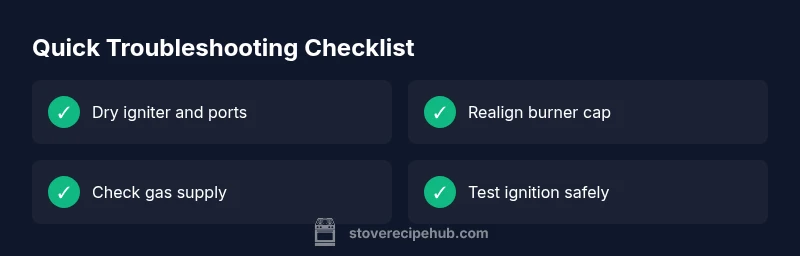
- Safety first: Turn off the burner, switch off the gas knob, and unplug the range if it has electric ignition components. Ensure the area is well-ventilated. Tip: never test ignition with a flame if you smell gas. 2) Dry out the igniter: If moisture is suspected, wipe the igniter with a dry cloth and allow it to air-dry for a few minutes. A quick breeze from a fan can speed the process. Tip: avoid touching the electrode with bare hands, oils can affect performance. 3) Clean the igniter and ports: Use a soft brush or canned air to clear dust and grease from the igniter tip and burner ports. Do not use water on electrical components. Wipe away residue and re-seat the burner cap. Tip: ensure the cap sits evenly; misalignment can disrupt the spark path. 4) Check burner cap alignment: Remove and re-seat the burner cap until it sits flush. An uneven cap can prevent proper ignition and cause misaligned sparks. Tip: inspect for cracks or corrosion on the cap. 5) Inspect gas supply and regulator: Confirm the gas shutoff valve is fully open and that the regulator isn’t stuck or blocked. A partial gas supply can produce intermittent clicking. Tip: if you use natural gas, ensure your home gas supply is stable; for propane, ensure your cylinder is full. 6) Test the ignition: Reassemble the components, turn on the burner, and listen for a steady spark and a blue flame. If the flame lights but the clicking continues, you may have a damaged igniter or valve issue. Tip: document what you did and the results to share with a technician. 7) If all else fails: When the ignition doesn’t hold or you detect a gas odor, stop and call a professional. 8) Follow-up maintenance: After successful ignition, run each burner once or twice to confirm reliability. Estimated time: 25–40 minutes.
Cleaning and maintenance to prevent future clicks
Regular cleaning reduces ignition failures. Wipe the igniter and burner caps after cooking to remove grease, food particles, and moisture. Periodically inspect for corrosion at the electrode and replace worn parts as needed. Keep the area around the stove free of clutter and avoid splashing water near electrical components. Consider scheduling a professional inspection every few years, especially if your range is older or if you notice more frequent clicking after routine cleanups.
Electric vs gas ignition: key differences you should know
Gas stoves rely on a spark from an igniter to light the gas, with the ignition sequence occurring before flame. Electric ignition often uses sensors and electronic controls to manage spark timing. If the unit has electronic components, power supply issues or faulty wiring can cause rapid clicking or failure to light. If you observe burnt smells or sizzling noises, stop and consult your technician—the same safety rules apply regardless of ignition type.
When to replace parts: igniter, burner head, or control module
If basic cleaning and realignment do not resolve the issue, you may need to replace the igniter, burner head, or ignition module. Igniters wear out over time and can fail to spark consistently, leading to repeated clicking. Replacing a burner head is needed if corrosion or deformation has affected gas flow. For a control module, seek a professional diagnosis to avoid electrical hazards. Replacements should use OEM-compatible parts and be installed according to the manufacturer’s instructions.
Prevention and best practices for stove ignition
Adopt a simple maintenance routine to keep ignition reliable. Clean burners and igniters every few weeks during heavy use seasons. Use flat-cap ranges for even flame distribution, and always align the burner cap after cleaning. Keep the area around the stove dry, avoid spraying cleaners directly on ignition components, and store flammable items away from the cooktop. By integrating these practices, you reduce the likelihood of recurring clicking and extend the life of ignition components.
Steps
Estimated time: 25-40 minutes
- 1
Prioritize safety and prep
Turn off the burner, set the knob to off, and unplug any electric components if accessible. Open a window for ventilation. Ensure no gas smell before proceeding.
Tip: If you smell gas, evacuate and call emergency services. - 2
Dry the igniter
If moisture is suspected, wipe the igniter with a dry cloth and allow it to air-dry for several minutes. Avoid using heat or water near electrical parts.
Tip: A fan can speed up drying without creating a risk. - 3
Clean the igniter and ports
Gently remove debris from the igniter tip and burner ports using a soft brush or canned air. Do not soak or spray water on electrical components.
Tip: Make sure you’re cleaning around the electrode without bending it. - 4
Realign burner cap
Remove and reseat the burner cap so it sits flat and flush. A crooked cap can block gas flow and prevent ignition.
Tip: Look for cracks or corrosion on the cap as these may require replacement. - 5
Check gas supply and regulator
Ensure the gas shutoff valve is fully open and the regulator is not blocked. If you’re on propane, confirm the cylinder isn’t empty.
Tip: If you feel uncertain about gas lines, skip this step and call a pro. - 6
Test ignition and flame stability
Reassemble, turn on the burner, and listen for a stable spark and a blue flame. If the flame catches but clicking continues, the igniter or control may be faulty.
Tip: Document what you observed to help the technician diagnose.
Diagnosis: Stove clicking repeatedly without lighting or the flame goes out after ignition
Possible Causes
- highDirty or damp igniter causing weak spark
- mediumMisaligned burner cap or loose components
- lowGas supply issues or regulator fault
Fixes
- easyDry and clean the igniter; reseat the burner cap; test ignition
- easyInspect and realign burner cap and nearby components
- mediumCheck gas shutoff valve and regulator; ensure full gas supply
Common Questions
Why does my stove click but not light?
A weak spark from a dirty or damp igniter is the most common cause. Clean and dry the igniter, realign the burner cap, and test again. If ignition still fails, there may be a damaged igniter or gas supply issue needing professional attention.
A weak spark from a dirty or damp igniter is usually the cause. Clean and dry the igniter, realign the burner cap, and test again. If it still fails, call a pro.
Is it dangerous to keep trying to light a stove that clicks?
Repeated attempts when gas smells or if you detect a leak are dangerous. If there’s a strong gas odor, evacuate and contact authorities. Otherwise, proceed with careful cleaning and inspection, but stop if you notice any electrical smells or sizzling sounds.
Don’t keep trying if you smell gas. Evacuate and call for help. If not, carefully inspect and clean, but stop if you notice electrical smells.
Can I fix the igniter myself or should I hire a pro?
Many igniter issues can be addressed with cleaning and realignment. If the igniter is cracked, bent, or you hear persistent buzzing after cleaning, it’s safest to replace the part or call a professional for diagnosis and safe installation.
You can handle cleaning and realignment, but replace damaged parts or call a pro if issues persist.
What should I do if there’s a gas odor after attempting to light?
If you smell gas after attempting to light, extinguish any flames, leave the area, and call your gas supplier or emergency services. Do not create a spark or use electrical switches in a gas-leak area.
If you smell gas, leave the area and call for help immediately. Don’t light anything or flip switches.
How often should I clean stove burners to prevent ignition problems?
Clean burners and igniters every few weeks during heavy use, and inspect for wear during routine cleaning. Regular upkeep reduces clogs and moisture that interrupt ignition.
Clean every few weeks during busy times and inspect for wear to keep ignition reliable.
If my stove is old, should I replace the whole unit?
If ignition problems persist despite cleaning and part replacements, upgrading to a newer model with modern ignition components may be the most reliable long-term solution.
Persistent ignition problems after fixes may justify upgrading to a newer model with better ignition reliability.
Watch Video
Top Takeaways
- Clean igniters first and check alignment
- Test gas supply and regulator if ignition fails
- Safety comes first with any gas-related issue
- Regular maintenance prevents future clicking
- Know when to call a professional