Why Is Your Stove Not Getting Hot? A Practical Troubleshooting Guide
Learn why your stove won't heat and follow safe, step-by-step troubleshooting for gas and electric models. Quick checks, fixes, and maintenance tips to prevent issues, with clear guidance for home cooks.


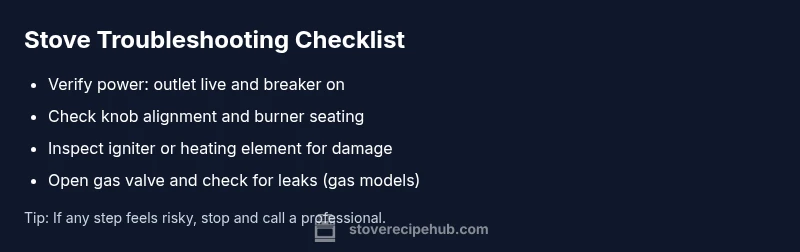
The stove not getting hot is most often caused by a power issue or a faulty igniter/heating element. Start by confirming the outlet is live, the circuit breaker is on, and the stove is plugged in (or wired). If that checks out, move to igniter and element inspection. For safety, unplug first and wear gloves when testing components. This quick check helps you decide whether a DIY fix is possible or if a professional is needed.
Common causes of a stove that won't heat
If your stove isn't getting hot, start by ruling out everyday issues before jumping to parts. According to Stove Recipe Hub, the most common root causes are power supply problems (outlets, cords, or breakers) and ignition or heating element faults. Understanding these at a high level helps you triage safely and quickly, and it frames the troubleshooting steps you’ll perform next. In many kitchens, simple fixes save time and money. For example, a tripped breaker or a loose plug can mimic a failed heating element. On reliable stoves, a bad indicator light or control knob can prevent the circuit from energizing the burner. The goal here is to confirm whether the problem is electrical, mechanical, or a fuel-supply issue, so you can decide whether DIY fixes are safe or a pro is needed.
Safety first: before you troubleshoot
Troubleshooting a stove involves electricity, gas, and hot surfaces. Always unplug the unit or switch off the circuit breaker before touching any wires or terminals. If you gas model, turn off the gas supply if you smell gas, and ventilate the area. Let the appliance cool completely before inspecting burners or coils. Keep children and pets away. Use proper lighting when inspecting components, and wear gloves to protect your hands from sharp edges. If you’re ever unsure, or you notice damaged cords, exposed wiring, or a gas smell, stop and call a licensed professional immediately. These precautions reduce the risk of shocks, burns, or gas leaks.
Check power and controls
Testing for power is the first and simplest step. Plug into a known-good outlet or test the outlet with another device to confirm it’s live. Check your home’s main circuit breaker: has it tripped recently? Reset if appropriate and re-test the stove. Inspect the power cord for cuts or scorch marks and ensure the plug seats fully in the outlet. For induction or radiant stoves, verify the control knob is correctly seated and the selector matches the burner you intend to heat. A misaligned knob can prevent power from reaching the element even if the outlet is fine. If power is present but the burner remains cold, the issue may be with internal wiring, a faulty relay, or a failed electronic control board; these issues generally require a professional diagnosis.
Electric stoves: heating elements and fuses
Electric coil stoves rely on metal coils that heat when energized. If a coil doesn’t glow red or if you hear a hum but see no heat, inspect the coil for burns, cracks, or loosened terminals. Unplug the stove, disconnect the coil, and test continuity with a multimeter if you have one. A broken coil should be replaced; also check the terminal block where the coil connects to the power cord. Some models have a fused safety switch that cuts power if the element overheats; a blown fuse will prevent any heat. Replacing fuses or elements typically requires following the manufacturer’s wiring diagram and, if you’re unsure, consulting a professional. On ovens, the bake or broil element can fail independently of the surface burners; in that case, you’ll need a replacement part.
Gas stoves: igniters, valves, and gas supply
For gas stoves, heat comes from the gas that ignites at the burner. If nothing lights, the igniter may be dirty, cracked, or worn out; clean with a soft brush, or replace if the spark is weak or non-existent. If the gas won’t light but you hear a click, the igniter may be striking but not delivering gas due to a clogged or misaligned burner. Check the burner cap is properly seated after cleaning. The gas valve on the supply line should be fully open; if you suspect a shutoff or a leak, do not attempt repair—shut off the gas and contact your gas provider or a licensed technician. Always throttle gas smell cautiously; a persistent odor is a safety warning sign.
Oven vs burner: what isn't heating
Sometimes the top burners heat but the oven stays cold, or the opposite. If the oven won’t heat but the burners do, your issue may be the oven bake element, broil element, or the oven’s ignition system in gas models. Conversely, if the burners heat when you turn them on but the oven stays cold, the problem is usually the oven heating circuit, relay, or sensor. In all cases, consult the model’s wiring diagram and test components with the correct tools. If you’re unsure, avoid internal oven components as they can cause severe injuries.
Symptom-specific guidance
If all burners are cold, the most likely culprits are a power issue or a main control failure. If only a single burner is cold, the coil or igniter for that burner is the prime suspect. If you smell gas during attempts to light, evacuate the area and call emergency services. For induction models, check the cooktop’s compatibility with your cookware and verify the sensor relays are functioning. Document symptoms and any recent changes to help a technician diagnose quickly.
Steps
Estimated time: 30-40 minutes
- 1
Power check and safety prep
Unplug the stove or switch off the circuit breaker. Confirm the outlet has power using a known-good appliance. This step rules out simple electrical issues before you touch any internal components.
Tip: If the outlet is controlled by a wall switch, ensure the switch is on before testing. - 2
Inspect controls and connections
Look at burner knobs to ensure they align with the correct burner. Check the cord and plug for signs of damage. Reseat any loose connections to restore power flow.
Tip: Take photos of wiring before disconnecting anything for later reference. - 3
Test heating elements or igniters
For electric coils, inspect coils for cracks or burns and test continuity if equipped. For gas, inspect igniters for sparking and replace if weak or non-functional.
Tip: Always unplug before handling heating elements to avoid shocks. - 4
Gas supply and safety check
If you have a gas stove, verify the gas valve is fully open and there are no gas smells. If you suspect a leak or valve issue, evacuate and contact your gas provider or a technician.
Tip: Never attempt to repair gas lines yourself. - 5
Decide on DIY or pro
If basic checks fail to restore heat, especially with gas smells or electrical smells, stop and call a licensed technician. Document symptoms and previous fixes to speed diagnosis.
Tip: Keep emergency numbers handy and maintain burner safety habits.
Diagnosis: Stove won't heat at all (no burners or oven provide heat)
Possible Causes
- highPower issue (outlet, cord, or tripped breaker)
- highFaulty igniter or heating element
- mediumBurner control switch or oven control board failure
- lowGas supply closed or valve off (gas stoves)
- lowThermal fuse blown (electric ovens)
Fixes
- easyCheck outlet with a known device and reset any tripped breakers; ensure the stove is properly plugged in
- mediumInspect ignition and heating elements for visible damage or loose connections; test with a multimeter if available and replace as needed
- easyReset control boards by unplugging for 60 seconds and reseating connectors; if symptoms persist, schedule professional service
- easyFor gas models, verify gas supply valve is open and that there are no gas smells; if uncertain, call a professional immediately
- hardReplace blown fuses or faulty heating elements following the manufacturer’s wiring diagram; this is typically a job for a technician
Common Questions
What is the most common reason a stove won't heat?
Power issues or igniter/element faults are the most frequent culprits. Start with the outlet, breaker, and plugging status before replacing parts.
Power issues or igniter faults are the most common, so start with the outlet and breaker first.
Can I fix a stove not heating myself?
Many basic checks are safe for DIY, such as power tests and cleaning igniters. More complex tasks like wiring or gas components should be done by a pro.
Some basic checks you can do yourself; for wiring or gas components, call a professional.
When should I call a professional?
Call a licensed technician if you smell gas, see burnt wiring, hear sparking without heat, or if basic checks don’t restore heat.
Call a licensed technician if you smell gas or basic checks don’t fix the problem.
Is it dangerous to use a stove that isn’t heating?
Using a non-heating stove can be dangerous if it hides gas leaks or electrical faults. Stop use until inspected by a professional.
It can be dangerous—stop using it and get it checked.
Will cleaning the stove help heating problems?
Cleaning can prevent issues caused by debris or residue, especially around igniters and coils. It may restore function if buildup blocked contact.
Cleaning can help if buildup is blocking ignition or heat.
Can a blown fuse stop the oven from heating?
Yes, a blown fuse or faulty element can prevent oven heating. Replacements should follow the manufacturer’s diagram and be done by a professional if unsure.
A blown fuse can stop heating; replacement should follow the diagram, usually by a pro.
Watch Video
Top Takeaways
- Check power first: outlet, cord, and breaker.
- Differentiate electric vs. gas stove issues early.
- Igniters and heating elements are common failure points.
- Call a licensed pro for gas issues or complex electrical work.