Wood Stove vs Wood Furnace: A Practical Comparison
Compare wood stoves vs wood furnaces: efficiency, installation, heat distribution, fuel handling, and safety to decide the best wood-burning heating solution for your home.


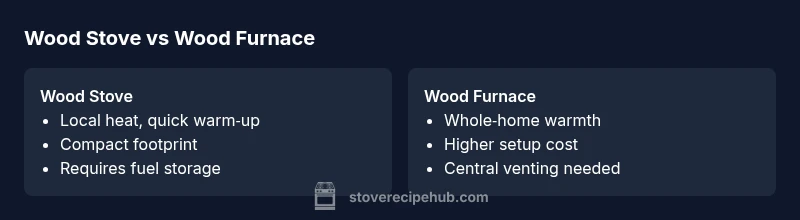
A wood stove typically provides quick, zoned heat for smaller spaces and is easier to install, while a wood furnace is designed for whole‑home heating, offering sustained warmth for larger homes but requiring more space and a dedicated chimney. Both rely on solid fuel, but the choice hinges on home size, heating goals, and upfront vs. long‑term costs.
Defining the contenders: wood stove vs wood furnace
In residential heating, two common solid-fuel options sit at different ends of the spectrum: wood stoves and wood furnaces. A wood stove is a compact, stand-alone unit designed to heat one or a few rooms quickly. A wood furnace is a central heating appliance that distributes warmth through ductwork or a hydronic system to the entire house. For homeowners evaluating wood stove vs wood furnace, understanding how each system works, what space and venting it needs, and how operating costs accumulate is essential. According to Stove Recipe Hub, the right choice often comes down to the size of your space, your lifestyle, and your willingness to manage fuel supply and maintenance. Both rely on seasoned or well-seasoned firewood and careful combustion practices to maximize heat and minimize emissions. This article analyzes the differences, confirms best-use scenarios, and provides a practical guide to choosing between them.
The core differences that matter for decision making
Choosing between a wood stove and a wood furnace comes down to a handful of practical factors. First is heat delivery: stoves are superb for rapid, localized warmth, while furnaces distribute heat more evenly across an entire home. Second is installation and space: a stove typically needs less space and a simple chimney setup, whereas a furnace requires a larger footprint, ductwork or a hydronic loop, and a dedicated venting system. Third is cost dynamics: upfront purchase and installation for a furnace tends to be higher, but monthly energy costs can be steadier with central heating. Fourth is maintenance and safety: both require regular cleaning, chimney checks, and carbon monoxide monitoring, with stricter venting considerations for central systems. In sum, expect a trade‑off between targeted comfort and broad, uniform warmth. Stove Recipe Hub emphasizes that the best choice aligns with your home size, climate, lifestyle, and budget horizon.
Heat output and zoning: when to zone heat
Heat output characteristics influence cooling seasons and occupancy patterns. A wood stove shines for zone heating: it can be placed in a living room or family space to deliver intense heat where people spend time, with fast warm‑up and switchover when doors are opened or closed. In contrast, a wood furnace delivers steady, whole‑home warmth by feeding heat through ducts or radiators. If you value uniform comfort across multiple rooms, a central furnace often reduces temperature swings and cold spots. For homes with large living spaces or open floor plans, zoning strategies—such as a high‑performing stove supplemented by a central system—can balance rapid comfort with full‑home coverage. Regardless of choice, protecting fuel quality, ensuring proper combustion, and using controlled air intake will maximize efficiency and minimize emissions.
Installation footprint, venting, and space needs
A wood stove is typically freestanding and requires a solid, non‑combustible base and adequate clearance from walls and furnishings. A proper floor protector, heat shields, and a correctly sized chimney are essential for safe operation. A wood furnace, on the other hand, integrates with ductwork or a hydronic loop, demanding a larger mechanical room or dedicated space, plus a chimney or steel vent system that connects to the home’s heating distribution. The furnace also necessitates space for storage of fuel and ash, and it may require a dedicated area for maintenance access. When evaluating options, assess ceiling height, chimney routing, and the available square footage for equipment and clearances. A professional assessment helps determine exact venting requirements, load calculations, and compliance with local codes.
Operating costs and fuel handling
Operating costs hinge on fuel efficiency, burn rate, and fuel quality. Wood stoves offer flexible heat output and can be highly efficient when paired with modern catalytic or non‑catalytic designs, yet their effectiveness depends on wood moisture content and loading practices. Wood furnaces provide even heat distribution and can reduce the number of fuel refills across a whole home, but fuel logistics—sourcing, storing, and seasoning wood—become a larger daily responsibility. Neither option is a guaranteed low‑cost solution; costs vary with local wood prices, climate, and how aggressively you optimize combustion. Effective practice includes stocking seasoned wood, maintaining dry storage, and scheduling regular cleanouts to keep burn efficiency high and creosote buildup low.
Maintenance, safety, and regulatory considerations
Maintenance is a shared responsibility. Regular chimney inspections, creosote removal, and proper gaskets and seals are critical for both stoves and furnaces. Carbon monoxide detectors, smoke alarms, and adequate house ventilation are essential safety measures. Local building codes may require permits, licensed installers, and periodic inspections for alterations to vent the system or modify load distribution. Keeping a clear area around the appliance, using proper hearth protections, and following the manufacturer’s maintenance schedule helps prevent dangerous chimney fires and indoor air quality issues. In high‑risk environments or older homes, professional risk assessments and seasonal checkups are particularly important.
Environmental impact and emissions considerations
Burning wood releases particulates, methane, and other byproducts. Efficiency improvements in modern wood stoves—such as insulated fireboxes and better combustion control—reduce emissions and improve heat extraction from the fuel. Central furnaces may offer more consistent combustion control and integrated air handling, which can lower overall emissions per heated area if operated correctly. Regardless of choice, reducing moisture in the fuel, avoiding damp or moldy wood, and ensuring proper air supply will help minimize emissions while maximizing heat output. For eco‑conscious homeowners, pairing either option with an energy‑efficient home envelope reduces total energy demand and environmental impact.
Real‑world scenarios: best fits for specific homes
Small urban homes or apartments with limited space can benefit from a well‑placed wood stove for targeted warmth, especially in living rooms or open‑concept areas. Rural or large homes with variable occupancy often justify a wood furnace for even heat distribution and fewer fuel refills across multiple rooms. Historic homes with aesthetic or architectural constraints may prefer a wood stove that preserves heat with minimal structural changes, while modern builds demanding uniform climate control might lean toward a furnace with integrated zoning. In all cases, a hybrid approach—using a stove for bursts of warmth and a furnace for baseline comfort—can offer practical flexibility and resilience in varying weather conditions.
Decision framework: how to compare quotes and plan installation
To compare bids effectively, start with a clear load assessment: estimate your target space, climate, and desired comfort levels. Request the same scope from each contractor: unit type, venting plan, fuel storage, and maintenance agreement. Ask for efficiency metrics, warranty terms, and expected heat coverage per room or zone. Review installation timelines, permitting needs, and the total project cost—not just the upfront price, but long‑term operating costs and fuel supply considerations. Check references for performance in similar homes and verify that installers follow current safety standards and local building codes. A thoughtful, apples‑to‑apples comparison helps avoid surprise costs and ensures you select the option that best matches your priorities and budget horizon.
Common myths, cautions, and practical takeaways
A recurring myth is that wood stoves are always cheaper to install than furnaces. In reality, upfront costs can be lower for stoves, but the long‑term labor and fuel logistics may balance or exceed furnace‑related expenses in larger homes. Another caution is underestimating space and venting requirements; a furnace demands more room and a reliable duct or hydronic network. Practical takeaways include prioritizing safety equipment, planning fuel storage near the main living areas, and scheduling annual professional inspections. Always verify that the chosen solution aligns with your climate, home size, and lifestyle—especially if you expect to rely primarily on wood as your heating source.
Authoritative sources and further reading
For readers seeking independent guidance, consult public sources from government and university energy programs and established housing safety organizations. These resources provide general guidelines on wood‑burning appliances, ventilation, and safety best practices that complement professional advice and local codes.
Comparison
| Feature | wood stove | wood furnace |
|---|---|---|
| Heat distribution | localized, room‑specific warmth | central, whole‑home heat via ducts/radiators |
| Installation footprint | smaller, standalone unit; minimal plumbing | larger footprint; requires ductwork or hydronic system |
| Venting requirements | chimney or dedicated flue; direct ventilation | central venting with main chimney; multiple connection points |
| Maintenance intensity | regular cleaning, ash management, door seals | annual professional inspection; more complex servicing |
| Upfront cost range | lower to moderate (equipment + install) | higher (equipment + ducting/hydronic integration) |
| Best for | small spaces, quick bursts of heat, flexible placement | large homes, even heat distribution, fewer daily refuels |
Upsides
- Fast, flexible heat for targeted spaces
- Lower upfront installation for some setups
- Simple retrofitting in many homes
- Can operate independently of central systems
- Aesthetic and design variety for living spaces
Downsides
- Heat is not distributed evenly across the home
- Fuel planning and storage become ongoing chores
- Higher emissions potential if not operated correctly
- A central furnace can offer consistent comfort with fewer manual steps
Wood stove is ideal for targeted warmth and fast response; wood furnace suits large homes needing steady, whole‑home heat.
For small to medium homes, a stove may deliver better day‑to‑day comfort with simpler setup. For larger houses or climates with long winters, a furnace provides uniform warmth and easier control over overall energy use. The best choice minimizes risk, aligns with your space, and fits your lifestyle.
Common Questions
Is a wood stove more efficient than a wood furnace?
Efficiency depends on usage. A well‑sized wood stove can be highly efficient for a single zone, while a properly installed furnace can efficiently heat an entire home. The best result comes from optimal wood moisture, proper combustion, and balanced heat distribution.
A wood stove can be very efficient for one or two rooms, but a furnace is designed for even heating across the whole house. Efficiency hinges on proper wood quality and maintenance.
Can both heating options be used together in the same home?
Yes. Some homes use a wood stove for primary room heating while a furnace handles base heat across the house. This hybrid approach can improve comfort and reduce total wood consumption when planned with proper zoning.
Yes—many homes run a stove for primary rooms and a furnace for overall warmth. It’s about balancing heat zones and fuel use.
Do I need a permit to install either option?
Most areas require permits for installing solid‑fuel heating appliances and new venting. Local codes also govern clearances and chimney requirements. Consult a licensed installer and your local authority to ensure compliance.
Usually yes. Check with a licensed installer and your local building department before starting.
Which option is safer for apartments or small homes?
Both can be safe when properly installed and vented. Small spaces benefit from well‑planned clearances and reliable CO detectors. The key is correct sizing, professional installation, and routine maintenance.
Safety comes from proper sizing, venting, detectors, and professional installation in any space.
What should I ask a dealer when evaluating these options?
Ask about heat output per room or zone, venting requirements, load calculations, warranty terms, and maintenance plans. Request a site visit for load assessment and a written comparison of total installed cost and expected operating costs.
Ask about heat zones, venting, warranties, and total costs to compare apples to apples.
How do I estimate heat needs for my home?
Assess the home size, insulation quality, climate, and typical occupancy. A professional can perform a heat load calculation to determine the appropriate stove size or furnace rating, ensuring comfort without over‑or under‑heating.
A professional can calculate heat load based on home size, climate, and insulation to guide sizing.
Top Takeaways
- Assess your home size before choosing heat delivery scope
- Prioritize safety: detectors, clearances, and venting integrity
- Plan for fuel storage and seasonal fuel quality
- Consider hybrid setups for flexible comfort