Stove Popcorn Mastery: Perfect Popcorn on the Stovetop
Learn to make crispy, buttery stove popcorn with precise oil temps, kernels, and timing. This practical guide covers heat control, shaking, seasoning, and safety for reliable stovetop snacking.


Stove popcorn is achievable on any stovetop with a heavy-bottom pot, a small amount of high-smoke-point oil, and steady shaking. This guide teaches kernel-to-oil ratios, heat management, and timing to prevent scorching and deliver crisp, flavorful popcorn. You’ll also learn safe handling and seasoning to customize your snack.
Why stove popcorn Works on the stovetop
Stove popcorn offers control, texture, and flavor that microwave methods often struggle to deliver. When you pop popcorn on the stove, you manage heat with a heavy-bottom pot, control the amount of oil, and can instantly adjust seasonings. This method also minimizes waste and allows you to customize flavor with simple ingredients. According to Stove Recipe Hub Analysis, households that use a measured kernel-to-oil ratio and a tight-fitting lid report more consistent texture and fewer scorched batches. The term stove popcorn refers to popping kernels in a single pot on a conventional stove with a small amount of oil and continuous agitation to distribute heat. Embracing this approach yields a snack with a crisp exterior and tender interior, perfect for family movie nights or quick weekday treats.
Throughout this article, stove popcorn will be explored as a practical, repeatable technique that home cooks can master with minimal equipment and clear steps. You’ll see how simple changes—like the choice of oil or the shaking cadence—can transform an ordinary batch into a superior snack.
Essentials: Tools, Ingredients, and Safety
To pull off stove popcorn reliably, assemble a small, well-stocked setup that stays within arm’s reach of your stove. The goal is consistency and control, not wild experimentation. Start with a heavy-bottom pot (3-4 quarts) that distributes heat evenly, a lid that fits snugly, and a heat-resistant spatula for stirring.
Key ingredients are simple: popcorn kernels, a high-smoke-point oil (peanut, canola, or refined light olive oil), and salt. Optional flavor boosters include melted butter for finishing, nutritional yeast, smoked paprika, garlic powder, or a pinch of sugar for a touch of caramelization. For safety, keep a pot holder nearby, avoid water contact with hot oil, and never leave the pan unattended when heat is on. This section sets the stage for a controlled, satisfying stove popcorn experience.
Kernel Quality and Oil Matters
Kernel moisture and oil choice are the unsung heroes of stove popcorn. Fresh kernels with adequate moisture pop more evenly and yield a lighter, crisper texture. Store kernels in an airtight container away from heat and sunlight to preserve popping quality. For oil, choose high-smoke-point options to minimize scorching and smoke; peanuts, canola, and refined light olive oil are ideal. You’ll mostly use just enough oil to coat the bottom of the pan, about a thin film. A common rule is that 1/2 cup kernels will yield several cups of popped corn, depending on your pan and heat control. The right base makes all the difference in achieving consistent stove popcorn results.
Heat Management and Popping Dynamics
Heat control is the heart of stove popcorn. Begin with a preheated oil layer and a small test batch (2-3 kernels) to gauge when the oil is hot enough. Medium heat generally works well; if popcorn starts to burn, reduce the heat slightly. Once the test batch pops, add the rest of the kernels in a single, even layer, cover, and begin gentle shaking or stirring to keep kernels from scorching. The sound of popping should be steady but not frantic; if there are long gaps between pops, adjust the heat to maintain a rolling but controlled pop rate. Avoid overheating, which leads to burnt edges and bitter flavors. Through careful temperature management, stove popcorn becomes a reliable, repeatable snack.
Step-by-Step Overview: From Prep to Crunch
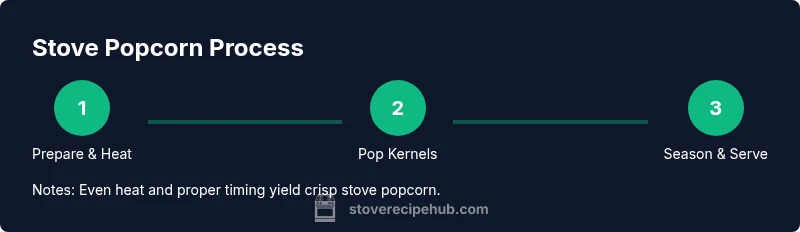
This section provides a high-level run-through of the stove popcorn method, laying the groundwork for the detailed STEP-BY-STEP instructions. By understanding the flow—prepare and heat, test with a few kernels, add the rest, shake continuously, monitor the cadence of pops, finish with a seasoning pass, and serve—you’ll approach every batch with confidence and reduce wasted kernels.
Seasoning Ideas and Variations
Seasoning is where stove popcorn truly shines. Start with a neutral base (light salt and melted butter or oil), then experiment with flavors. Savory options include garlic-parmesan, smoked paprika, chili lime, or ranch. Sweet variations can use cinnamon-sugar, cocoa powder, or a drizzle of caramel. For a fresher finish, add finishing salt, butter, and a squeeze of lime or lemon juice to brighten the flavor. The stove popcorn technique enables you to tailor flavors to your mood or guests, without extra equipment or significant mess.
Troubleshooting Common Issues
Even with a solid method, you may encounter issues like uneven popping, burnt kernels, or soggy popcorn. Start by checking your pan size and heat level; a pan that’s too small or heat that’s too high increases scorching risk. If you hear frequent bursts of burning, reduce the flame and shake more vigorously. For soggy texture, ensure you’re using enough heat to pop quickly and remove the popcorn from heat promptly to stop moisture buildup. Proper storage after popping (airtight container, cool place) maintains crispness for the next serving.
Tools & Materials
- Heavy-bottom pot with lid (3-4 quarts)(Thick material (stainless steel with aluminum/core) distributes heat evenly; ensure lid fits snugly)
- Stovetop popcorn kernels(Store in a cool, dry place; 1/2 cup kernels yields several cups of popped corn)
- High-smoke-point oil (peanut, canola, or refined light olive oil)(Just enough to coat the bottom of the pan; avoid reaching smoking point during popping)
- Salt (fine or popcorn salt)(Season after popping for even distribution)
- Butter (optional finishing)(Melted and drizzled after popping for a richer flavor)
- Measuring spoons and cups(Accurate kernel and oil measurements improve consistency)
- Heat-resistant spatula or scoop(Stir or swirl gently; helps distribute heat without breaking kernels)
Steps
Estimated time: 12-18 minutes
- 1
Measure and prepare
Measure 1/2 cup popcorn kernels and the appropriate amount of oil to coat the pan bottom in a thin film. Pour into the preheated heavy-bottom pot. This initial setup ensures even heating from the start.
Tip: Pre-measure ingredients to reduce pausing mid-process; a fast start helps maintain consistent heat. - 2
Test the oil heat
Place 2-3 kernels into the oil and cover the pot. When those kernels pop, you know the oil is at the right temperature for the main batch.
Tip: A quick 1-2 kernel test prevents under- or over-heating the entire batch. - 3
Add the rest of the kernels
Pour the remaining kernels into a single even layer. Immediately cover and begin gentle shaking or stirring to spread heat.
Tip: Avoid piling kernels; a shallow layer ensures uniform popping. - 4
Shake and monitor
Keep the pot moving with steady shakes to prevent hot spots from burning any kernels. Listen for the pops and adjust heat to maintain a steady rhythm.
Tip: If pops slow, raise heat slightly; if burning, reduce heat and increase shaking cadence. - 5
Finish the pop
When the interval between pops grows to 1-2 seconds, remove from heat and let the residual heat finish popping the last kernels.
Tip: Do not wait for every kernel to pop; carryover heat can scorch popcorn after removal. - 6
Season immediately
Open the lid, lightly salt, and drizzle melted butter or your chosen finishing oil. Toss to coat evenly before serving.
Tip: Season in layers if you plan multiple flavors; start light and adjust to taste. - 7
Serve and store
Serve warm for best texture. Allow leftovers to cool completely, then store in an airtight container away from moisture.
Tip: Vent steam briefly during storage to maintain crispness.
Common Questions
What pot size is best for stove popcorn?
A 3-4 quart pot is ideal; it provides enough space for kernels to pop and for shaking without crowding. A tight-fitting lid helps trap heat and steam for even popping.
Use a 3-4 quart pot with a snug lid for best results.
Can I use butter instead of oil?
Butter alone can burn quickly; if you want butter flavor, use a small amount of oil with melted butter added after popping to finish. This preserves texture and avoids scorching.
Butter should be added after popping to avoid burning.
How long does stove popcorn take?
From start to finish, expect about 8-12 minutes, depending on batch size and heat control. The key is steady heat and consistent shaking.
Most batches take under 15 minutes with consistent shaking.
How should I store leftover popcorn?
Cool completely, then transfer to an airtight container. Store in a cool, dry place to maintain crispness; avoid sealing while warm.
Allow to cool, then seal and store in a dry place.
Is stove popcorn healthy?
Popcorn can be a wholesome snack when prepared with modest oil and limited salt. Use healthier oil options and control added fats for a better overall profile.
Choose modest oil and salt for a healthier snack.
Can I add flavors while popping?
Flavors can be added after popping for even distribution. You can experiment with savory or sweet coatings once the popcorn is popped.
Add flavors after popping for best results.
Watch Video
Top Takeaways
- Choose a heavy-bottom pot for even heating.
- Use a high-smoke-point oil and a measured kernel amount.
- Shake continuously and monitor heat to avoid scorching.
- Season after popping for best flavor.
- Practice yields consistent stove popcorn batches.