What stove temp to cook chicken: A practical stovetop guide
Discover exact stove temperatures for chicken, how to measure doneness, and practical tips to keep chicken juicy and safe on the stovetop. Includes safe targets and method-by-method guidance for home cooks.


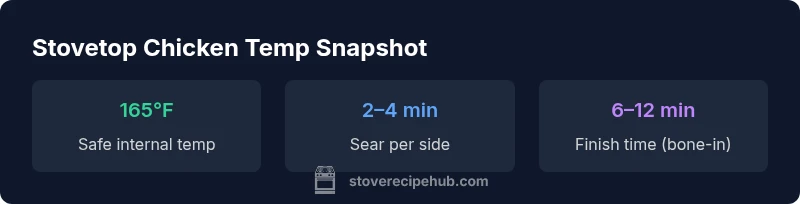
On the stove, aim for medium-high heat and monitor with a thermometer. Sear the chicken to develop color, then finish until the thickest part reaches 165°F (74°C). Many recipes use medium-high heat with careful timing, adjusting for thickness and cut (breast, thigh, bone-in). Always check internal temperature rather than relying on time alone.
What stove temp to cook chicken
The central question for home cooks often comes down to heat control: what stove temp to cook chicken to keep it juicy without risking undercooking. On the stovetop, you generally want a steady medium-high heat to develop a good crust while the interior approaches a safe doneness. According to Stove Recipe Hub, temperature management is the single most important factor in consistent results. The goal is to balance browning and internal cooking. If the pan sits too cool, the surface won’t brown and the meat may steam in its own juices, leading to a pale color and slower heat penetration. If it’s too hot, the exterior can burn before the inside reaches 165°F. Practically, start with preheated pan, add a touch of oil, and monitor with a thermometer as you guide the meat toward the finish line. The exact surface temperature you’ll aim for often sits in the medium-high range, but what truly matters is the internal temperature and how the meat responds to heat with gentle, controlled movements.
Safe temperature targets for different chicken cuts
Across methods, the USDA and major food-safety authorities consistently cite 165°F as the safe internal temperature for poultry. This standard applies to most cuts, including boneless breasts, thighs, and bone-in pieces when tested in the thickest part away from the bone. Dark meat may appear more forgiving due to its higher fat and connective tissue, yet it still requires reaching 165°F. The thickness of the piece and its distance from the bone influence cook time and heat distribution. For thin slices or pounded breasts, you may reach the target faster, but always verify with a thermometer.
When cooking on the stove, remember that carryover cooking after removal can push the meat past 165°F. This is why many cooks pull the pan from heat slightly before the thermometer hits the target and allow residual heat to complete the process. The Stove Recipe Hub team emphasizes temperature-first cooking to ensure both safety and juiciness.
How to measure temperature on the stove: technique and tools
Reliable measurement starts with a good thermometer. A digital instant-read thermometer is ideal for quick checks, while a leave-in probe thermometer works well for longer searing sessions or braising. For chicken, insert the thermometer into the thickest portion, avoiding bone for an accurate reading. Clean the probe between uses to prevent cross-contamination. If you’re browning skin, resist the urge to press the meat flat; maintain even contact with the pan to ensure uniform heating. Remember that a thermometer reading of 165°F means safety, not perfection—overcooking can still occur if you continue heating after the target is reached.
Some cooks like to test multiple spots on larger pieces to account for uneven heating. Keep the heat stable, and consider reducing it slightly when the meat is approaching the target to avoid overshooting due to residual heat.
Common mistakes and how to fix them
Several classic mistakes undermine stovetop chicken results. Overly aggressive heat can burn the exterior before the center finishes; overly low heat can lead to pale color and uneven doneness. Undercooking is the most dangerous misstep, so temperature checks are essential. Resting is often overlooked: a brief 3–5 minute rest helps redistribute juices, increasing tenderness. Another common issue is using too small a pan, which crowds the chicken and disrupts even cooking. Ensure adequate space for each piece so heat can circulate. Finally, avoid relying on time alone—size, thickness, and bone presence alter cooking dynamics, so temperature-based checks are your safest guide.
Practical recipes: stove temperature ranges by method
Pan-seared boneless chicken breast: preheat the pan to medium-high, add oil, and sear 2-3 minutes per side until a golden crust forms. Reduce heat to medium to finish, checking internal temperature near the end. Bone-in thighs (pan-seared): start with medium-high until the skin browns, then lower slightly and cook 6–9 minutes total, testing near bone for 165°F. Braised chicken thighs: brown first, then add liquid and simmer at low to medium heat for 25–40 minutes, until the feedback from a thermometer confirms 165°F. Each method relies on heat control and thermometer checks to ensure safety and flavor.
How to adjust heat for thickness, skin-on vs skinless, bone-in vs boneless
Thickness is your primary driver of cook time. Thicker pieces require more time, so reduce heat slightly after browning to avoid scorching the exterior while the interior catches up. Skin-on cuts benefit from initial high-heat searing to render fat and crisp the skin; then lower the heat to finish gently. Bone-in pieces retain heat and take longer to reach 165°F, so test near the bone and near the thickest portion. Use a thermometer and adjust the pan's heat in small increments to maintain steady cooking without overshooting the target.
These are practical guidelines to help you tailor stove-top chicken cooking to thickness, cut, and equipment. Remember, temperature accuracy beats clock-driving timing every time.
Internal temperature targets by stove method
| Method | Target Temp | Notes |
|---|---|---|
| Pan-seared boneless chicken breast | 165°F | Sear then finish evenly |
| Bone-in chicken thigh (pan-seared) | 165°F | Bone slows heat; test near bone |
| Braised chicken thighs | 165°F | Finish in braising liquid |
Common Questions
What is the safe internal temperature for chicken?
165°F in the thickest part. Check with a digital thermometer.
The safe temperature for chicken is 165 degrees Fahrenheit.
Can I cook chicken on the stove at lower temperatures?
Yes, but you must still reach 165°F and monitor carefully; it may take longer.
Lower temps are possible, but you must reach 165°F and monitor closely.
Should I cover the pan while cooking chicken on the stove?
Brown with an uncovered pan for searing; cover for braising or simmering to trap moisture.
Uncover for browning; cover when braising.
How does bone-in vs boneless affect cooking time?
Internal target remains 165°F; bone-in pieces may take longer. Test near the bone.
The bone can slow heat, so test near it and adjust time.
What thermometer should I use for stove-top chicken?
Use a digital instant-read or leave-in probe; sanitize after use.
A digital instant-read thermometer works well.
How long should chicken rest after cooking on the stove?
Rest for 3–5 minutes to redistribute juices before slicing.
Let it rest a few minutes before slicing.
“Consistent stove-top results come from precise heat control and thermometer-based checks. Browning should happen early, with finishing temperature confirmed before serving.”
Top Takeaways
- Verify doneness with a thermometer for safety.
- Brown first, then finish to 165°F with controlled heat.
- Adjust heat by thickness and cut to avoid overcooking.
- Rest meat briefly to preserve juiciness.
- Rely on temperature checks, not time alone.