Difference Between an Oven and a Grill
Explore the difference between an oven and a grill, compare heat sources, cooking outcomes, and best-use scenarios to help home cooks choose the right tool for baking, roasting, searing, and grilling.


Understanding the difference between an oven and a grill
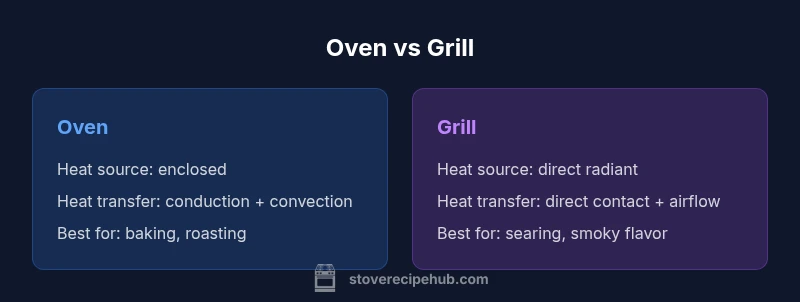
At its core, the difference between an oven and a grill is about how heat reaches food and how that heat is contained. An oven is an enclosed cooking environment that uses circulating hot air to cook evenly from all sides. A grill, by contrast, exposes food to direct radiant heat from burners, coils, or charcoal, often with airflow and smoke influencing flavor. This distinction shapes not only texture but also timing and moisture behavior. For many home cooks, recognizing this distinction helps with recipe adaptation, kitchen organization, and tool selection. The oven shines when you want uniform browning across a large surface, steady temperatures for roasts, and hands-off cooking. The grill excels at rapid surface searing, grill marks, and the smoky notes that come from caramelization and Maillard reactions on the outer layer. Over time, you may find you rely on both devices to cover a wider set of dishes. In short, the difference between an oven and a grill defines what textures you can reliably produce and how quickly you can get them. According to Stove Recipe Hub, this distinction guides recipe choices and kitchen workflow.
Heat sources and heat transfer
Ovens use a combination of radiant heat from elements and heated air circulated by a fan in convection models. Grills use direct radiant heat from flames or charcoal, plus airflow around the grate. This results in different heat transfer patterns: ovens cook more by conduction and convection inside an enclosed space, while grills rely on radiant heat and open air, which can intensify surface temperature quickly. The textures vary: the oven produces uniform browning and moisture retention, while the grill produces bold charring and a crisp crust on the surface. For best results, match heat transfer behavior to the dish: gentle, even heating for delicate items, and direct high heat when surface caramelization is desired. Remember to preheat appropriate equipment to ensure predictable results and safer operation.
Cooking outcomes: texture, browning, and moisture
Texture and browning outcomes differ markedly between the two tools. An oven tends to yield even browning across a dish and better moisture retention, which is ideal for roasts, casseroles, and baked goods. A grill imparts surface browning quickly and adds smoky flavor, with grill marks that signal Maillard reactions on the exterior. The moisture balance also shifts: open grills can dry meat faster unless marinated or cut thin; ovens can help stabilize moisture with a closed environment. The choice affects sauce reduction, crust formation, and tenderness. When evaluating a dish, consider whether you want a soft interior with even crust or a crisp, charred exterior with a shorter cook time. If you crave both browning and moisture, finishing techniques or combining methods—grill first, then oven finish—can deliver the best of both worlds.
Best-use scenarios: when to bake, roast, or grill
Best-use scenarios help prioritize either oven or grill. Use the oven for baking bread, pastries, casseroles, roasted vegetables, and large roasts where uniform heat is crucial. It is also a reliable choice for slow cooking and reheating, as well as when precise temperature control matters. The grill excels when you want fast searing, smoky flavor, and bold crusts on proteins like steak, chicken thighs, or kebabs, as well as charred vegetables. For a round meat or poultry piece, grill to sear then finish in the oven to preserve moisture. If you lack outdoor space, a grill pan or indoor grill can approximate some effects, though with distinct limitations compared to a true grill. Strategic pairing of methods expands your repertoire.
Equipment and setup considerations
Equipment choices influence outcomes as much as heat. An oven benefits from sturdy racks, baking sheets, and proper ventilation in the kitchen. Grills require stable outdoor space, safe mounting, and proper clearance to manage smoke and flare-ups. If you use a grill indoors, a grill pan or broiler can simulate direct heat with caveats. Preheating times matter for both tools: ovens need a longer warm-up to reach temperature gradually, while grills heat rapidly but may need time to reduce flare-ups. Cleanliness matters for performance: wash racks, wipe interior surfaces, and scrub grill grates to prevent flavor transfer. Finally, consider capacity and space: a compact countertop oven supports small tasks, while a full-size grill handles larger batches and high-heat searing.
Temperature control and timing
Temperature control differs in spirit between these tools. An oven's thermostat provides steady, controllable heat over a long period, ideal for slow roasts and baked goods. Convection ovens distribute heat with a fan, speeding cooking and promoting even browning. On a grill, temperature control is more dynamic and depends on fuel management and airflow. You adjust heat by opening or closing vents, moving food away from direct flames, or adding fuel strategically. Timing considerations follow accordingly: ovens require longer cooking times and preheating, while grills deliver shorter windows for searing. Use a thermometer to monitor internal temperature and remove food promptly to avoid carryover cooking. With practice, you can predict how long a dish will take by type, thickness, and starting temperature, reducing guesswork.
Flavor development: smokiness, char, and caramelization
Flavor development is a central distinction between oven and grill results. Grilling introduces smoke-derived flavors and pronounced caramelization from direct contact with heat, creating the familiar grill crust and grill marks. Ovens produce milder, more uniform flavors with less smoke influence, making them ideal for delicate dishes and sauces that require precise reductions. You can enhance oven flavor with aromatics, roasting pans, and finishing sauces, while grills benefit from marinades that endure high heat and from clean, well-oiled grates to prevent sticking. Heat distribution affects flavor compounds: intense surface heat drives Maillard reactions, forming complex flavors, while lower, even heat favors moisture retention and gentle caramelization. When you plan a dish, consider whether you want bold smoky notes or a restrained, polished finish.
Maintenance, safety, and cleaning
Regular maintenance supports consistent results. In ovens, keep racks clean, wipe splatters, and run a cleaning cycle or use self-clean options if available. For grills, scrub grates after use, remove ash or soot, and keep fuel supply in check to avoid flare-ups. Safety practices include proper ventilation, monitoring heat exposure, and keeping flammable materials away from heat sources. Both devices benefit from regular calibration checks if you notice uneven cooking or temperature drift. Store accessories such as pans and foil safely and ensure all doors and lids seal properly. A well-maintained oven and grill reduce the risk of hot spots and improve energy efficiency, helping you cook with confidence.
Practical tips for transitioning between methods
If you often switch between oven and grill, build a simple workflow. Preheat the oven before preparing roast meats, then finish with a brief grill-sear if you want extra crust. When grilling vegetables, consider par-cooking in the oven to ensure tenderness before finishing on the grill for color and texture. Use grill-safe pans or racks to keep smaller items stable on the grill. Invest in thermometers both inside and on the grill to monitor internal and surface temperatures. Finally, plan batches: roast multiple trays in the oven and grill sequentially for efficient weeknight meals.
Common myths about ovens and grills
A common myth is that ovens cannot mimic grill flavors. While not perfect, you can achieve similar browning and surface texture with high heat broiling, convection roasting, and finishing sauces. Another myth is that grills are only for meat. Grilling works well for vegetables, fruit, and even dessert with creative techniques. A third myth is that preheating is optional; in reality, preheating helps ensure consistent cooking and even browning from the start. Debunking these myths helps you approach both tools with realistic expectations and better results.
Quick-start recipe ideas for each method
Oven quick starts: sheet tray roasted vegetables, herb-crusted chicken, one-pan roasted potatoes. Grill quick starts: marinated flank steak, shrimp skewers, vegetable skewers with peppers and onions. Hybrid ideas: finish a grilled protein in the oven to lock in moisture, or pre-bake dessert batter and finish with a quick grill caramelization. These ideas give you a practical starting point to practice the differences without committing to complex recipes.
Planning a kitchen setup: choosing between or adding both
For most homes, having both tools widens what you can cook and how you can cook it. If space is limited, prioritize a versatile oven with strong convection and a small countertop grill or grill pan for searing. If outdoor space is available, a dedicated grill expands outdoor cooking possibilities. Consider accessories, ventilation, and safety when choosing equipment. Stove Recipe Hub guidance emphasizes building a well-rounded setup that covers baking, roasting, searing, and flavor development while balancing cost and space.