Difference Between Stove and Burner: A Practical Guide
Explore the difference between stove and burner, how they work, and practical tips for maintenance, safety, and choosing the right equipment for your kitchen.


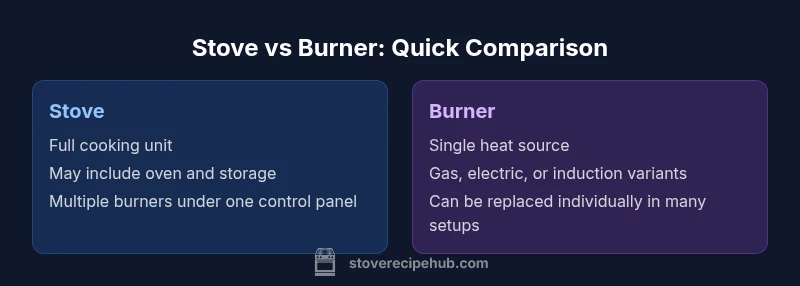
The difference between stove and burner is that a stove is the full cooking unit that includes one or more burners and controls, plus possibly an oven, while a burner is the individual heat source used to heat pots. In practice, terminology varies by region, but understanding the distinction helps with maintenance, cooking technique, and purchasing decisions. This guide clarifies their roles, maintenance, and how to choose.
What is the difference between stove and burner?
At its core, the difference between stove and burner is that a stove is the full cooking appliance that houses burners, controls, and often an oven, while a burner is the single heat source that heats cookware. This distinction matters for maintenance, sizing, and choosing replacements. In many kitchens, terms are used interchangeably in casual speech, but precision helps with shopping, installation, and safety.
According to Stove Recipe Hub, terminology around 'stove' and 'burner' can cause confusion among home cooks. A stove typically comprises the cooktop, the oven (if present), knobs, and the surrounding body, while a burner is one of the discrete heat sources on the cooktop. Recognizing this separation can improve troubleshooting, parts selection, and even how you plan recipes that rely on specific heat settings.
While this article focuses on the common household range, the same logic applies to portable single-burner units and separate standalone cooktops. The difference is most obvious when you need to replace a failing component: replacing a burner is usually cheaper and easier than swapping an entire stove, unless the oven or controls are also defective.
Distinct roles: appliance vs component
A stove is the complete unit you use to cook—it's a system that manages heat, timing, and sometimes energy usage. A burner is the heat-producing element within that system; it can be gas, electric coil, or induction-based. Because a stove encompasses several burners, their performance is intertwined: a single burner’s flame strength, ignition reliability, or pan support can affect all cooking tasks across the top. Understanding this helps when diagnosing problems; if one burner malfunctions, you may not need to replace the entire stove. For most home cooks, thinking in terms of “appliance” vs “component” makes maintenance decisions clearer and safer.
Regional language and terminology variations
Terminology shifts by region and market. In some places, people refer to the top surface as a “hob,” while others say “stove top” or simply “burners.” This variance can complicate shopping if you’re comparing brands or parts across countries. The practical takeaway is to map the term to its function: is the item you’re evaluating a complete cooking appliance or a single heat source? Remember that a burner can be part of a stove or a standalone unit in some setups, such as portable burners or countertop induction trays.
How stoves are built: main components
A modern stove typically consists of a cooktop with multiple burners, a control panel (knobs or digital interface), a body that encloses the mechanism, and often an oven beneath the cooktop. Some models include storage drawers or warming features. The cooktop itself varies: gas stoves rely on gas ports and flame rings; electric stoves use coils or radiant elements. The design aims to balance heat output, burner alignment, and stability for pots and pans. When you purchase a stove, you’re choosing a complete cooking environment, not just a single heat source.
How burners vary by fuel: gas, electric, induction
Burners come in several fuel or heat-source types, each with unique characteristics. Gas burners deliver instant heat and flame control but require a gas line and regular maintenance like cleaning ports. Electric coil burners heat gradually and are easy to clean but can take longer to respond to changes. Induction burners use magnetic fields to heat the pan directly and demand compatible cookware. Each burner type influences boil times, simmer accuracy, and energy efficiency, so the right choice depends on your cooking habits and cookware.
Heat generation and control: why it matters
Control precision matters for recipes, especially when a simmer, sauté, or sear is required. Gas lets you adjust flame intensity in small increments; electric coils may have faster response times on newer models but can still lag during rapid temperature changes. Induction offers the most responsive control with very precise heat, but it requires compatible cookware. Understanding how heat is generated on your burner helps you select the appropriate pan size, shape, and material to maximize performance.
Maintenance and safety implications
Maintenance for stoves and burners overlaps but isn’t identical. Burners require regular cleaning of burner ports, flame rings, or coil surfaces to prevent uneven heating or ignition problems. Stoves demand broader upkeep: oven seals, door hinges, drip trays, and the cooktop surface all benefit from periodic cleaning and inspection. Safety concerns include gas leaks, loose connections, and burner clogs, which deserve attention immediately. Following manufacturer guidelines and routine inspection helps prevent common failures and extends life.
Shopping and replacement considerations
When shopping, distinguish whether you need an entire stove or a single burner replacement. For many households, purchasing a stove is a long-term investment that covers multiple cooking tasks, while replacing a burner can be a cost-effective fix for a single faulty heat source. Read product specs carefully: look for fuel type, ignition method, recommended cookware, and required clearances. If upgrading, consider whether you want additional burners, integrated ovens, or modular design to match your kitchen layout and future needs.
Common myths and misconceptions
A frequent myth is that burners and stoves are interchangeable because they serve heat to cookware. In truth, a burner is only part of the system, while a stove is the full appliance. Another misconception is that all gas stoves require identical ignition systems; in reality, different brands may use pilot-less electronic ignition or glow-ignition systems, affecting reliability and maintenance needs. Finally, some cooks assume electric burners are always slower to heat—modern radiant coils and induction can offer surprisingly fast responses depending on design and cookware.
Cooking implications: pan size, heat settings, and recipes
Pan size and weight interact with burner type to influence cooking results. A small pan on a large burner can lead to heat loss and uneven cooking, while a large pan on a small burner may not heat evenly. Induction burners demand flat-bottomed, ferromagnetic cookware to maximize performance, whereas gas burners tolerate a broader range of pans. When following recipes, adjust heat settings based on your burner type and pan size to achieve the intended browning, simmering, and reduction.
Upgrades and modularity: upgrading to burners or stoves
If your kitchen layout favors flexibility, modular options can simplify future upgrades. A standalone induction hob paired with compatible cookware offers performance gains without replacing an entire stove. Conversely, a full appliance with multiple burners and oven capabilities provides a more cohesive cooking center and can improve resale value. Consider your cooking frequency, space, and budget when deciding between upgrading burners, upgrading a single stove, or replacing the whole unit.
Comparison
| Feature | Stove | Burner |
|---|---|---|
| Definition | Full cooking appliance with integrated controls and often oven | Single heat source element used to heat cookware |
| Scope | Encompasses multiple burners and often additional functions | Single heat source or component within a stove or range |
| Heat control method | Knobs or digital interface control all burners and oven from one panel | Independent control for the specific burner (gas, electric, or induction) |
| Typical location | Integrated into a range or standalone unit with oven on the body | Built into a stove/range as one module or portable standalone burner |
| Maintenance focus | Whole appliance maintenance including oven, drip pans, and knobs | Burner-specific tasks like cleaning ports, flame rings, and surfaces |
| Best use case | Cooks needing multiple simultaneous tasks and an oven | When replacement or upgrading a single heat source is desired |
Upsides
- All-in-one cooking solution with integrated oven options
- Centralized controls simplify daily use
- Multiple burners support simultaneous cooking
- Potential space-saving design for compact kitchens
- Easier to sell as a single unit
Downsides
- Higher upfront cost and larger footprint
- Repairs may involve replacing the entire unit
- Upgrading heat sources can require professional installation
Stove is generally the better all-around choice for most homes; burners offer modular flexibility.
Choose a stove for a complete cooking center with oven and storage. Opt for a standalone burner when you need targeted upgrades, lower upfront costs, or flexible deployment in small spaces.
Common Questions
What is the difference between stove and burner?
The stove is the full cooking unit that includes burners, controls, and often an oven. A burner is the individual heat source on the cooktop. The terms describe different parts of the cooking setup, and knowing this helps with maintenance and shopping.
A stove is the whole cooking unit, and a burner is just one heat source. Knowing this helps you pick the right part when repairing or upgrading.
Are burners interchangeable on a stove?
Not always. Some stoves use standardized burner sizes, but compatibility depends on the model and fuel type. Replacing a burner may be possible, while a non-standard burner could require a full assembly replacement.
Not always. Check your model's specifications before swapping in a different burner.
Do burners affect heat control?
Yes. Burner design and fuel type determine how quickly heat responds and how evenly it distributes heat to the pan. Gas offers quick adjustments; induction provides precise control with compatible cookware.
Burner type matters for how precisely you can control heat.
How should I clean a burner safely?
Disconnect power or gas, let components cool, and remove grates. Soak and scrub ports or coils as recommended by the manufacturer, and dry completely before reassembly to prevent corrosion or ignition issues.
Always unplug or shut off gas, then clean, and dry thoroughly before using again.
Is a burner the same as a hob?
A burner is a single heat source; a hob is the cooking surface that may hold multiple burners. The terms overlap in some regions, but the distinction is functional: heat source vs cooking surface.
Burner is the heat source; hob is the cooking surface that holds burners.
What maintenance is needed for burners?
Regularly inspect and clean burner ports, flame rings, and ignition systems. Ensure gas lines and electrical connections are intact and free from damage. Schedule professional checks if you notice irregular flames or ignition failure.
Keep ports clean and check ignition; call a pro if flames look uneven.
Can I replace a burner without replacing the stove?
In many cases, you can replace a burner without replacing the entire stove, especially if the model supports modular burners. Confirm compatibility with your specific appliance before purchasing.
Often you can replace a single burner, but check compatibility first.
What is the cost difference between stove and burners?
Stoves are a larger investment and include multiple features, while burners or components are typically cheaper. Costs vary by brand, fuel type, and features, so plan within your budget range and consider installation expenses.
Stoves cost more overall; burners are usually cheaper, but installation can add to the bill.
Top Takeaways
- Clarify whether you need an appliance or a component
- Assess heat control needs and fuel compatibility
- Consider maintenance scope and safety considerations
- Match your purchase to kitchen space and budget
- Plan for future upgrades or modular options