How Big Is a Stove? A Practical Guide to Dimensions
Explore typical stove sizes, width, depth, and height, and how to measure your space. Learn how to compare models and plan kitchen layouts with confidence.


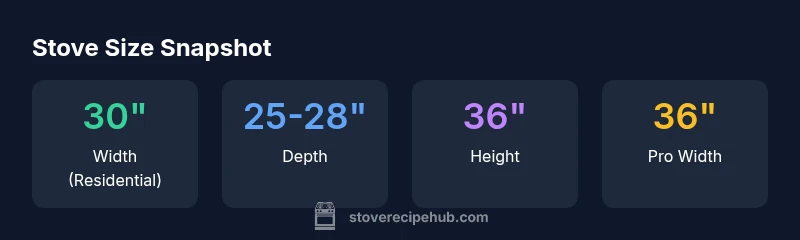
Most residential stoves are about 30 inches wide, 25-28 inches deep, and 36 inches tall. Island-range configurations and professional models often come in 36 inches wide, with depth varying by layout. In compact kitchens, you may find stoves as narrow as 24 inches. Always measure your space and confirm exact outer dimensions before buying.
What does size mean for stove performance and space planning
When we ask how big a stove is, we are really evaluating three key dimensions: width (left to right), depth (front to back), and height (top to bottom). Each measurement influences how the appliance sits in your kitchen, how comfortably you can move around it, and how much oven capacity you have underneath the cooktop. According to Stove Recipe Hub, the most common residential size is a 30-inch-wide range. That width balances counter space, provides a practical oven cavity, and allows a standard set of burners to be arranged in a way that supports typical home cooking. However, the exact size you choose should reflect your cooking style, kitchen layout, and whether you prioritize a larger oven, more burners, or a flush, built-in look. In this section we’ll unpack what each dimension means in real terms and how to translate room measurements into an accurate spec for shopping.
Standard sizes for residential stoves
Residential stoves most commonly come in 24", 30", and 36" widths. The 30" model is by far the most popular, because it fits neatly between standard kitchen cabinetry and leaves space for adjacent counters, storage drawers, and ventilation clearance. Depths typically run about 25-28 inches, while height is usually around 36 inches, designed to align with standard countertops and toe-kick heights. If your kitchen has a custom or premium look, you may encounter 27" or 28" deep units or island configurations with varied oven depths. Widths beyond 36" are available for pro-style ranges and commercial settings, though they require more space and a different kitchen plan. When shopping, always verify the exact outer dimensions and the required cutout or cabinet dimensions in the manufacturer’s specification sheets. This ensures the new stove will physically fit and align with your cabinets, ventilation, and electrical or gas connections.
Wide vs. compact: comparing 24", 30", 36" and beyond
Size choices come down to space, function, and budget. A compact 24-inch stove is ideal for apartments, micro-kitchens, or kitchens with limited floor area; it typically offers narrower oven capacity and fewer burners, but it makes efficient use of tight footprints. A standard 30-inch stove is the most versatile compromise for typical homes, offering a full-width cooktop and a practical oven cavity. A 36-inch model expands burner options, adds oven capacity, and often accommodates heavier cooking loads, making it popular among serious home cooks and small households that host frequent gatherings. Larger pro-style ranges (42 inches and up) are designed for professional kitchens or dedicated cooking spaces and require more power and venting. The takeaway: start with your available width, then consider depth and height, and finally assess whether you need extra oven capacity or more burners for your cooking routine.
How size affects kitchen layout and workflow
Stove size drives layout decisions from the get-go. A wider range creates a broader cooking zone and may push adjacent counters outward, affecting traffic flow in the work triangle. Depth interacts with counter depth and open cabinet storage; deeper units can encroach on pantry shelves or overhangs, while shallower models leave more room for drawers and backsplash. Height alignment matters too: if your stove sits too low or too high relative to the countertop, it can disrupt chopping and plating. When planning, map the entire work area: where will you prep, boil, and plate? Consider the door swings of adjacent cabinets or ovens, the height of upper cabinets, and the path to the range hood or venting system. In general, choose a size that keeps work zones comfortable and allows safe, unobstructed movement around the stove.
Depth, height, and clearance: what to measure
Start by measuring the width between cabinets or walls intended to frame the stove. Then measure the stove’s depth from the back wall to the front edge of the handles, including any knobs, protruding controls, or side panels. Height matters for under-counter cabinets and for aligning with the countertop edge. Most homeowners also check the space behind the stove to accommodate ventilation ducting or gas lines, and the space on the sides to ensure drawers or cabinet doors can open fully. Create a simple diagram of your kitchen space with labeled dimensions, and bring it to the store or a contractor. Use a flexible tape measure and, if you’re replacing an old unit, measure the existing opening before removing it to prevent surprise fit issues. Finally, compare your measured dimensions with the manufacturer’s stated cutout and outer dimensions to confirm a match.
Installation considerations: venting, gas vs electric, and island mounting
Choosing a stove size isn’t only about the external dimensions. You must also plan for the installation environment. Gas ranges require a proper gas line connection and ventilation, while electric or induction models depend on dedicated electrical circuits and outlet placement. If you are mounting a stove in an island, you’ll need to consider under-counter clearance for ventilation and a hood or chimney above. If the unit will be flush with adjacent countertops, verify the trim and panel configurations to avoid gaps or misalignment. Always consult the installation manual and local codes, and hire a qualified technician if you are changing gas lines or moving vent ducts. Proper installation ensures safety, performance, and that your size choice remains valid over the appliance’s lifetime.
How to compare models: specs to look for
Create a simple spec sheet for each model: overall width, depth, height; cutout dimensions; oven capacity in cubic feet; number and arrangement of burners; access to the oven door and rack positions; and the door swing direction. Also check the finish and trim, because a slightly larger unit may give a cleaner built-in look if it shares a line with your cabinetry. For electric models, look at the cooktop style (coil, radiant, or induction) and the recovery time after a boil. For gas models, confirm burner BTU ratings and simmer performance. Finally, review installation requirements and warranty terms. A well-structured comparison helps you avoid buying a stove that looks right but doesn’t fit your space or cooking needs.
Special cases: apartment stoves, compact units, and retrofit options
Urban living often calls for apartment-grade stoves in 20-24 inch ranges. These compact units trade some oven capacity and burner count for space efficiency, but they let you retain a functional cooking setup in small kitchens. If you are renovating an older home, keep in mind that cabinets, countertops, and floor space may constrain your options. In retrofit scenarios, you may be able to adjust the kitchen layout to accommodate a larger or smaller stove by shifting cabinetry or selecting a different handle or front panel. When in doubt, consult a professional to verify clearances and ensure safe gas or electrical connections while preserving your overall kitchen design.
Quick practical tips for measuring your space and choosing the right size
Walk through a concise checklist before buying: measure width, depth, height; note door swings and ventilation clearance; compare with manufacturer cutouts; account for clearance around the range hood and sides; check that the price and delivery include necessary venting accessories. Bring a floor plan or photo of your kitchen when you visit showrooms. Finally, remember that the best size is the one that fits your space, supports your cooking routine, and aligns with your installation plan.
Sizes and configurations by model type
| Model Type | Width | Depth | Height | Notes |
|---|---|---|---|---|
| Standard residential | 30 inches | 25-28 inches | 36 inches | Common between cabinetry; versatile for most homes |
| Pro/Commercial-style | 36 inches | 25-29 inches | 36 inches | Greater burner count and oven capacity |
| Apartment/compact | 24-25 inches | 20-24 inches | 32-34 inches | Fits tight spaces; smaller oven, fewer burners |
| Island/Slide-in | 30-36 inches | 25-28 inches | 36 inches | Flush with counters for built-in look |
Common Questions
What is the standard width of a residential stove?
Most residential stoves are 30 inches wide, but 24 and 36 inch options exist. Always check the product specifications for exact width.
Most stoves are about 30 inches wide, with some compact or pro models at 24 or 36 inches. Always verify before purchasing.
Can a stove fit in a tight kitchen or under a countertop?
Yes, compact 24-inch models exist for tight spaces, but they offer smaller ovens and fewer burners. Measure carefully and compare specs.
Yes, there are compact options, but check the oven size and burner count before buying.
How do I measure for a new stove?
Measure width, depth, and height of the space, plus any door swings and ventilation clearances. Compare with the appliance's outer dimensions and cutout requirements.
Measure width, depth, height, and clearance; compare against the stove specs.
Are slide-in ranges different in size from freestanding ranges?
Slide-in ranges often share the same width as freestanding models but are designed to sit flush with counters. Check actual dimensions for each model.
Slide-ins usually align with counters; confirm exact width and trim before buying.
What about apartment-size options?
Yes—compact 20-24 inch stoves exist for apartments and small kitchens. Verify building restrictions and installation requirements.
Yes, compact models exist; check building rules and installation needs.
“Size is not just about fit; it directly shapes oven capacity, burner arrangement, and heat management. Getting the dimensions right upfront saves space and prevents costly reconfigurations.”
Top Takeaways
- Measure all three dimensions before shopping
- Know standard widths you’ll see in stores
- Account for required clearance and ventilation
- Plan the layout around cooktop and door swings
- Consult the appliance manual and installer for precise requirements