Pellet Stove vs Electric Heat: Practical Comparison
A balanced comparison of pellet stoves vs electric heat, covering efficiency, costs, installation, maintenance, safety, and climate suitability to help homeowners decide the best option.


Pellet stove vs electric heat: which option fits your home? Pellet stoves burn wood pellets for radiant warmth and can offer cost savings in some climates, while electric heat provides consistent, controllable warmth with minimal maintenance. When evaluating pellet stove vs electric heat, consider installation costs, fuel availability, and how climate affects comfort and bills.
Defining the comparison: pellet stove vs electric heat
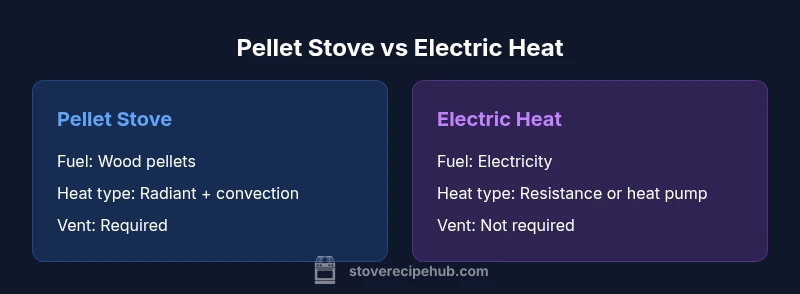
According to Stove Recipe Hub, the core question when considering pellet stove vs electric heat is not only how heat is produced, but how your home uses that heat over time. A pellet stove relies on solid fuel to generate radiant warmth and a steady convection flow, while electric heat uses electrical resistance elements or heat pumps to move and distribute warmth. The choice often hinges on how you value ambiance, off-grid capability, and ongoing fuel access. This article treats pellet stove vs electric heat as two distinct paths for space heating, each with its own strengths and trade-offs. Reducing the comparison to price alone misses important factors like maintenance, comfort consistency, and environmental impact.
How pellet stoves operate in practice
A pellet stove is a compact appliance that combusts compressed wood pellets to produce heat. It typically features a hopper, an auger feed, a burn pot, and a heat exchanger. Modern pellet stoves offer automatic ignition, programmable thermostats, and clean burn technology, which can translate into comfortable, zone-based warmth with adjustable flame aesthetics. Efficiency is largely a function of burn quality and proper venting. The pellets themselves vary in energy content and moisture, which can influence fuel economy over a season. For users evaluating pellet stove vs electric heat, consider local pellet availability, storage space, and whether you want the option of running the stove during a power outage when some electric systems may be down.
How electric heating works for homes
Electric heat encompasses resistance-based heaters and heat pumps. Resistance heaters convert electricity directly into heat, delivering reliable warmth with simple installation but potentially higher operating costs during cold snaps. Heat pumps move outdoor heat indoors using electricity, offering higher efficiency in moderate climates and safer performance when outdoor temperatures are not extreme. When comparing pellet stove vs electric heat, note that electric options generally require less space for fuel storage and no venting, but the cost-effectiveness depends on electricity rates and the home’s insulation. Electric systems often provide precise zone control with smart thermostats, which can improve comfort and reduce waste.
Efficiency and operating costs: pellet stove vs electric heat
Efficiency measures for pellet stoves focus on combustion quality, exhaust management, and heat transfer to living spaces. In contrast, electric heat efficiency often hinges on the coefficient of performance (for heat pumps) or the simple conversion efficiency of resistance heaters. Operating costs are shaped by local fuel prices and electricity rates, climate, and usage patterns. Pellet stoves can offer favorable heat output per unit of fuel in regions with stable pellet markets, while electric heat provides predictable costs through per-kilowatt-hour pricing. When weighing pellet stove vs electric heat, also consider maintenance cycles, such as ash removal, cleaning intervals, and potential filter changes for electric systems.
Installation and maintenance considerations
Installing a pellet stove requires venting, a proper chimney or exhaust system, and safe clearances from walls and combustibles. You may also need a dedicated electrical circuit for the control panel and auger motor. Maintenance includes regular ash removal, pellet quality checks, and annual inspection of venting and gaskets. Electric heat has far simpler installation—typically a plug-in or dedicated circuit—and maintenance tends to be limited to filter changes (for some heat pump air handlers) and periodic professional service. When you compare pellet stove vs electric heat, weigh the upfront installation complexity against long-term operating convenience.
Comfort, safety, and environmental impact
Pellet stoves provide cozy, radiant warmth with visible flame, creating a focal point in living spaces. They require careful venting, proper pellet storage, and standard fire-safety practices. Emissions depend on burn efficiency and maintenance; high-quality pellets and clean operation minimize particulates. Electric heat offers clean, indoor air with no combustion byproducts and consistent temperature control, but the electricity source affects the environmental footprint. If you’re weighing pellet stove vs electric heat for a home with sensitive occupants or strict air quality goals, electric heat often provides a lower-risk indoor air profile, especially in densely inhabited spaces.
Space considerations, home size, and climate suitability
Smaller or well-insulated homes may benefit from the targeted warmth of a pellet stove in living zones, while larger homes may require additional heating zones or supplemental systems. Electric heat scales well with box layouts and smart zoning, especially in milder climates where electricity prices remain reasonable. In very cold regions or homes with limited thermal mass, pellet stoves can be pillars of supplemental heat when electricity costs rise or when a backup heat source is desired. The choice depends on climate, insulation quality, and how you prioritize ambient flame aesthetics versus precise, uniform warmth.
Real-world scenarios: when each is best
In a remote cabin without reliable electricity, a pellet stove can be a practical survivable heat source if pellets are readily available. For a standard modern home in a city or suburb with good insulation and stable electricity pricing, electric heat with a smart thermostat minimizes management and ensures consistent comfort. For an open-plan living area where you want both feel and function, a pellet stove can act as a heat anchor, while electric heat handles bedrooms and secondary spaces. The pellet stove vs electric heat decision often comes down to the level of hands-on maintenance you’re willing to accept and how central flame ambiance is to your living space.
Budgeting and financial considerations
Upfront costs for pellet stoves include the unit, venting, and installation, while electric heat requires equipment and wiring. Over time, ongoing costs factor pellet prices, pellet quality, and storage needs versus electricity bills and the potential for efficiency upgrades. Given regional price variability, the pellet stove vs electric heat comparison must account for local fuel markets, insulation, and usage patterns. A well-insulated home reduces the impact of both fuels on the monthly budget, but the relative savings will hinge on fuel stability and electricity pricing in your area.
Tips to maximize efficiency in pellet stove vs electric heat setup
For pellet stoves, choose high-quality pellets, ensure proper venting, and schedule regular cleaning to maintain combustion efficiency. For electric systems, optimize insulation, seal leaks, and use programmable thermostats to minimize wasted heating. In mixed setups, using the pellet stove as a zone heater for living spaces and electric heat for bedrooms can yield a balanced approach, reducing overall energy use while maintaining comfort. Regular maintenance and mindful usage patterns are the most reliable levers for efficiency across both options.
Alternatives and hybrids: expanding your heating toolkit
Some homes use a hybrid approach, pairing a pellet stove with a heat pump or a central electric system to cover varying climate conditions and occupancy patterns. Hybrids can offer resilience, efficiency, and flexibility, but they may require careful system design and professional input. When weighing pellet stove vs electric heat, consider whether a hybrid approach aligns with your budget, space, and daily routines, and plan for potential future upgrades as needs change.
Comparison
| Feature | Pellet stove | Electric heat |
|---|---|---|
| Upfront installation cost | Moderate to high (venting required) | Low to moderate (no venting required) |
| Ongoing fuel/electric costs | Fuel costs depend on pellet market and usage | Electricity costs depend on rates and climate |
| Heat consistency | Radiant warmth with convection pockets | Consistent, controllable warmth (especially with heat pumps) |
| Ease of use | Requires feed, ash management, and venting | Plug-in operation and programmable controls |
| Maintenance | Regular cleaning, vent inspection, periodic service | Filter checks (for some systems) and fewer moving parts |
| Ventilation/space needs | Vent/vent-free options vary by model | No combustion venting required for most setups |
| Best for | Ambiance, off-grid capability, zones | Precision, simplicity, and modern controls |
Upsides
- Ambience and potential fuel cost savings with pellet availability
- Precise temperature control and low maintenance for electric heat
- Hybrid setups can offer flexibility across climates
- Compact form factor can fit smaller spaces
Downsides
- Pellet maintenance includes ash and pellet handling
- Fuel price volatility can affect long-term costs
- Electric heat can be costly in extreme cold or high electricity regions
- Pellet venting and installation add complexity
Electric heat generally wins on convenience and predictable costs; pellet stoves excel in ambiance and potential fuel flexibility in suitable climates
If you prioritize ease of use and consistent comfort, electric heat is the safer default. If you value flame ambience, regional pellet markets, and potential fuel cost advantages, a pellet stove may be worth the setup and ongoing maintenance in the right home. The best choice depends on climate, insulation, and your tolerance for maintenance tasks.
Common Questions
What is the main difference between pellet stoves and electric heat in terms of operation?
Pellet stoves burn fuel to produce radiant heat and warm air, while electric heat converts electricity directly or moves heat via a heat pump. The mechanism affects maintenance, space needs, and the consistency of warmth.
Pellet stoves burn fuel to create warmth; electric heat converts electricity into heat or moves it using a heat pump.
Is pellet stove heat practical for whole-home heating?
Pellet stoves are typically used as a supplemental heat source for zones or living areas, not as the sole heat source in very large homes unless paired with another system. Consider your home layout and insulation when evaluating pellet stove viability.
Pellet stoves work best as a supplement to your main heating system.
Do pellet stoves require venting or special installation?
Yes, most pellet stoves require venting to safely exhaust combustion byproducts. Installation should follow local codes and may require professional service for chimney or venting adjustments.
Yes, venting is usually required for pellet stoves.
What about safety and maintenance for electric heat?
Electric heat generally offers lower maintenance and fewer safety concerns related to combustion. Regular checks of filters (for heat pumps) and ensuring proper airflow help maintain efficiency and safety.
Electric systems are typically low-maintenance and easy to manage.
Can I switch between pellet stove and electric heat seasonally?
Yes, many homes use pellet stoves for shoulder seasons to reduce fossil fuel use and switch to electric heat for peak cold or when convenience is priority. Proper planning and control strategies improve outcomes.
You can balance both systems seasonally for efficiency and comfort.
What should I consider before choosing between pellet stove and electric heat?
Consider climate, insulation, local fuel/electricity prices, space constraints, and tolerance for maintenance tasks. A well-planned assessment helps you pick the option that best fits your home and lifestyle.
Evaluate climate, insulation, and costs to decide between pellet stove and electric heat.
Top Takeaways
- Choose electric heat for predictable comfort and lowest maintenance
- Consider pellet stoves if you value ambiance and potential fuel flexibility
- Assess insulation and climate to determine cost dynamics
- Plan for venting and installation in pellet stove projects
- Use zoning and smart controls to optimize any heating setup