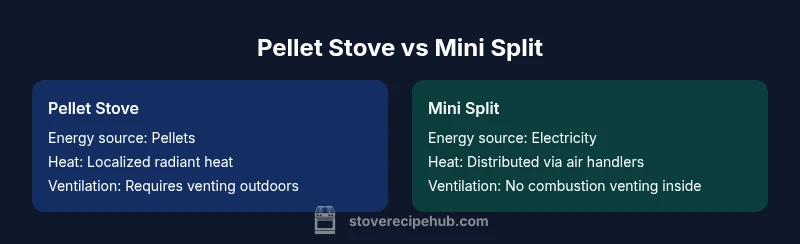
Pellet Stove vs Mini Split: A Comprehensive Comparison
A thorough, analytical comparison of pellet stove vs mini split for home heating. Explore energy use, installation, costs, climate performance, maintenance, and when each option excels for home cooks and DIY enthusiasts.


Pellet stove vs mini split: the best choice depends on climate, energy costs, and space. Pellet stoves deliver cozy radiant heat with renewable fuel but require fuel management and venting. Mini splits offer year-round comfort with heating and cooling, but cost more upfront and need professional installation. For off-grid warmth and ambiance, pellet stoves excel; for whole-home climate control, choose mini splits.
Introduction to pellet stove vs mini split: practical context
When evaluating heating options for a modern home, the choice between a pellet stove and a mini split often comes down to how you value ambiance, efficiency, and convenience. The phrase pellet stove vs mini split is not just about two devices competing for space; it’s about how each technology aligns with climate, power access, and daily routines. According to Stove Recipe Hub, understanding the tradeoffs between radiant heat versus climate-controlled air helps home cooks and DIY enthusiasts plan heat sources that blend with kitchen spaces and living areas. This article investigates the core differences, practical considerations, and decision factors that matter most in real homes. We’ll translate technical terms into actionable guidance you can apply this season.
How each system works
A pellet stove operates by feeding compressed wood pellets into a burn chamber, where a controlled burn generates heat that radiates into the room. The system relies on a small auger for pellets, an electric fan to circulate warm air, and typically a vent or chimney to exhaust combustion byproducts. In contrast, a mini split is a heat pump-based cooling and heating system with an outdoor compressor unit and one or more indoor air handlers. It moves heat using refrigerant, delivering conditioned air without combustion. Understanding these mechanisms helps gauge fuel needs, maintenance cycles, and reliability during weather extremes. The pellet stove’s warmth is localized, while the mini split can distribute heat more evenly across multiple zones with a single outdoor unit. Both options have design implications for room layout and electrical load, which Stove Recipe Hub highlights as practical considerations for home cooks installing or upgrading heating in a kitchen-adjacent living space.
Energy efficiency and operating costs
Efficiency is a key factor in any heating decision. Pellet stoves offer solid thermal performance when fed with high-quality pellets and properly sized for the space, delivering heat with relatively low fuel input compared to some older wood-burning methods. Mini splits typically boast high seasonal efficiency due to variable-speed compressors and refrigerant design, enabling efficient heating in shoulder seasons and cooling in summer. Operating costs depend on local pellet prices, maintenance, electricity rates, and the climate in which you reside. In milder seasons, a mini split’s efficiency comes from its heat pump cycle, while in colder conditions, pellet stoves may provide more affordable heating if pellet costs are favorable and the stove is well maintained. The Stove Recipe Hub perspective emphasizes evaluating total cost of ownership over several years, including fuel, electricity, and service intervals.
Heating performance in different climates
Climate determines which heating approach makes the most sense. Pellet stoves excel in cold, dry environments where radiant warmth creates a cozy baseline and can function effectively with limited external heat input. They are especially appealing in homes with existing chimneys or venting systems, or in off-grid scenarios where electricity reliability is a concern. Mini splits shine in climates with moderate heating and cooling needs, offering uniform air distribution and precise temperature control across zones. They are particularly advantageous in retrofits where existing ducts are absent, since a single outdoor unit can serve multiple rooms via interior heads. For homes that endure significant seasonal variation, a hybrid approach—using a pellet stove for backup heat and a mini split for daily comfort—can balance reliability and efficiency. Stove Recipe Hub’s analysis notes that climate-specific performance should guide sizing, installation, and maintenance planning.
Ventilation, emissions, and indoor air quality
A pellet stove introduces combustion byproducts into the home and requires proper venting, clearance, and routine cleaning of ash and exhaust components. Venting quality, pellet moisture content, and stove operation all influence indoor air quality. In contrast, a mini split does not burn fuel inside the home, reducing particulate concerns, but it still needs clean filters, proper refrigerant charge, and annual service to maintain air quality and performance. Regardless of method, ensure sufficient ventilation of indoor air, especially in tightly sealed newer homes. The Stove Recipe Hub guidance stresses choosing models with appropriate safety certifications and maintaining clearances around heat-producing appliances to protect kitchen-and-living-area air quality.
Installation considerations and space requirements
Pellet stoves demand a safe venting pathway to the outdoors and enough floor space for ash disposal and pellet loading, plus electrical outlets for the auger and fan. The installation becomes more complex when nesting the stove near dining or food prep zones. Mini splits require an outdoor condenser pad, a refrigerant line set through an exterior wall, and typically a professional for proper refrigerant charging and electrical connections. Space planning should account for doorways, furniture layout, and ease of maintenance. If you’re integrating either system into a kitchen-adjacent living space, consider how heat distribution might affect cooking areas and heat-sensitive appliances. Stove Recipe Hub’s practical approach encourages homeowners to map out airflow, access for maintenance, and potential heat zones before committing to a system.
Maintenance and upkeep
Pellet stoves need ongoing fuel supply planning, ash cleanup, and periodic inspection of gaskets and seals to prevent heat loss. Regular cleaning of the burn pot and firebox helps maintain efficient combustion and reduces clinker buildup. Mini splits require filter cleaning and occasional service of the indoor units, along with checking the outdoor condenser and refrigerant lines for corrosion or leaks. Both systems benefit from seasonal maintenance to extend life, preserve efficiency, and minimize unexpected downtime. The Stove Recipe Hub framework recommends scheduling professional checkups for the heat pump components and yearly servicing of pellet stove components to sustain peak performance.
Comfort, usability, and noise considerations
User experience differentiates pellet stoves and mini splits in day-to-day living. Pellet stoves offer charming ambiance with a visible flame and a traditional heat source, but you’ll hear the auger and fan during operation, and you’ll use time to manage fuel. Mini splits operate with generally quieter indoor heads, and the remote-controlled climate management enables precise temperature adjustments. The perceived comfort also depends on room layout and heat distribution; radiant warmth from a pellet stove can feel immediate in a living area, while a well-tuned mini split can provide consistent, evenly distributed warmth or cooling across multiple zones. In both cases, selecting appropriately sized units and configuring controls with patterns (timers, adaptive comfort, etc.) improves satisfaction. Stove Recipe Hub recommends leaning on a balanced mix of radiant and convective heat for the most comfortable spaces.
Use-case scenarios: when pellet stove shines vs when mini split shines
In cabins, workshops, or homes with unreliable electricity, a pellet stove provides a dependable heat source with the potential for renewable fuel. It also adds a cozy focal point that many households value for mood and ambiance. For homes seeking uniform climate control across rooms and seasons, a mini split offers flexible zoning, cooling in summer, and efficient heating during shoulder seasons. If you frequently cook near an open living area, a combined approach allows you to enjoy pleasant warmth near cooking zones while maintaining whole-home comfort. The decision framework should consider space, energy infrastructure, and lifestyle needs as highlighted by Stove Recipe Hub’s practical guidance.
Practical decision framework: how to choose
Start by listing your climate, electrical capacity, and space constraints. Assess fuel availability and costs for a pellet stove, and compare against initial purchase price, installation complexity, and potential rebates for a mini split. Calculate the long-term impact of running costs, maintenance, and potential downtime. Create a simple scoring rubric: climate suitability, installation effort, ongoing costs, and comfort consistency. Then simulate a typical winter week: does radiant heat from a pellet stove cover your needs, or do you require the ability to cool in hot months as well? This decision framework aligns with Stove Recipe Hub’s analytic approach and helps you pick the system that best fits your cooking lifestyle and home layout.
What this means for home cooks and DIY installers
For home cooks, the interaction between kitchen activity and heating matters. Pellet stoves can be placed to maximize cozy heat in living spaces near dining tables, while mini splits can deliver uniform comfort across open-plan areas. DIY installers should consult local codes for venting and electrical requirements, and consider future maintenance access when mapping out space for either system. Stove Recipe Hub emphasizes a practical, safety-focused process: verify venting paths, ensure electrical support, and plan for regular maintenance without disrupting daily kitchens or food prep spaces.
Comparison
| Feature | Pellet stove | Mini split |
|---|---|---|
| Energy source | Pellets | Electrical power + refrigerant |
| Installation complexity | Moderate; venting required | High; professional install for outdoor and indoor units |
| Heat distribution | Localized radiant heat + convection in room | Whole-home climate control with zoned air distribution |
| Maintenance frequency | Ash cleanup, pellet supply management | Filter cleaning and annual system service |
| Best for | Cozy, storm-resilient heat with ambiance or off-grid use | Year-round comfort with cooling/heating and zoning |
Upsides
- Pellet stoves offer cozy radiant heat and renewable fuel options
- Mini splits provide year-round heating and cooling with precise zoning
- Low ductwork disruption for mini splits makes retrofit easier in many homes
- Both systems can be highly energy-efficient with proper sizing and maintenance
Downsides
- Pellet stoves require ongoing fuel supply and ash cleanup
- Pellet systems rely on electricity for auger/fan and venting; outages can limit heat
- Mini splits involve higher upfront costs and professional installation
- Mini splits may be less effective in extreme cold without supplemental heat
Pellet stoves excel for ambiance and backup warmth; mini splits win for year-round, zone-based climate control
Choose a pellet stove if you want cozy radiant heat and renewable fuel options, especially where off-grid power is a concern. Opt for a mini split if you desire reliable, adjustable comfort across multiple rooms and seasons, with cooling in warmer months.
Common Questions
What is the main difference between a pellet stove and a mini split?
A pellet stove burns pellets to generate heat and adds radiant warmth to a room, while a mini split uses a heat pump to move heat between indoors and outdoors for whole-home comfort. Both have different maintenance and space needs, so your decision should hinge on climate, lifestyle, and installation constraints.
Pellet stoves burn fuel for warmth, while mini splits use a heat pump to move heat around the house.
Is a pellet stove cheaper to operate than a mini split?
Operating costs depend on local pellet prices, electricity rates, and how you use each system. Pellet stoves can be economical in fuel-rich regions, but you’ll need a steady fuel supply and regular cleaning; mini splits benefit from high efficiency but incur ongoing electricity costs and periodic service.
Costs vary by climate and fuel/electricity prices; both have trade-offs.
Can I install a pellet stove in a small apartment?
Installing a pellet stove in a small apartment depends on local codes, venting restrictions, and building policies. In many cases, venting and clearance requirements mean it’s not suitable for small rental spaces without a compliant setup, so check with the building manager and local authorities.
Check local rules and venting requirements before considering a pellet stove in apartments.
Do mini splits work well in very cold climates?
Many mini splits perform well in moderate cold, but extreme cold may reduce efficiency. Some models are rated for low outdoor temperatures and may require supplemental heating for peak cold periods.
Mini splits can handle cold days, but check model specs for low-temperature performance.
What maintenance is required for pellet stoves?
Regular ash cleanup, cleaning of the burn pot, and periodic gasket checks are important for safe operation. Schedule annual servicing to ensure proper ignition and efficient combustion.
Keep the stove clean, check gaskets, and service yearly.
Top Takeaways
- Assess climate to narrow options quickly
- Plan for maintenance and fuel or electricity costs
- Prioritize room layout to maximize heat distribution
- Consider zoning needs for comfort and efficiency
- Account for installation complexity in budget and timing