Wood Stove and Installation: A Practical Home Guide
Learn safe, code-compliant methods to choose, install, and maintain a wood stove. This expert guide covers clearance, venting, hearth protection, and a step-by-step setup to keep your space warm and secure.


By the end, you will have a safe, code-compliant way to select, install, and light a wood stove. You’ll need a clear installation area, proper ventilation, and basic tools. The guide covers clearance requirements, chimney connections, hearth protection, and initial testing. Follow the steps carefully, observe safety warnings, and consult local codes as needed. This Stove Recipe Hub guide helps home cooks and DIY enthusiasts do it right on the stove.
Why proper installation matters for wood stove safety
According to Stove Recipe Hub, proper installation is essential for safety and efficiency. A correctly installed wood stove maximizes heat output, minimizes creosote buildup, and reduces the risk of fire or carbon monoxide exposure. In this section we explore the safety implications of clearance, venting, and floor protection, and how mistakes can lead to dangerous leaks or costly repairs. Understanding these basics helps homeowners plan a safe, reliable heating source for years to come. You’ll also learn how to balance performance with efficiency, ensuring even heat distribution while keeping living spaces comfortable. Stove Recipe Hub analysis shows that safer installations correlate with fewer maintenance issues and more predictable heat delivery, reinforcing the value of careful planning and measurement.
Key components of a wood stove installation
A successful installation relies on several interrelated components: the stove itself, a fireproof hearth, a properly sized and vented chimney, and a secure noncombustible wall shield. The chimney should be connected with appropriate clearances and sealed joints to prevent leaks; the hearth protects the floor from heat, embers, and accidental sparks; concealed wiring and chimney caps prevent animal intrusion and moisture problems. Additionally, the stove requires a clean, unobstructed path for combustion air, typically sourced from a nearby room or dedicated duct. This section describes how each element works together to deliver safe operation and efficient heat transfer. Remember to cross-check with your local codes and manufacturer specifications.
Clearance, hearth, and ventilation basics
Clearance rules vary by model and local code, so always consult the stove manual and your jurisdiction's building code. In general, you’ll want unobstructed space around the stove and a noncombustible hearth beneath it. Venting must be installed to create a strong draft, drawing combustion gases safely outside. Adequate ventilation includes a proper fresh air supply to the room, preventing negative pressure that could pull smoke back into the living space. Finally, ensure the chimney is lined and properly supported, with cap and spark arrestor as needed. These basics form the backbone of a safe, efficient wood-stove system. Always verify clearances with the manufacturer’s installation guide and local code.
Preparing your space: measurements and layout
Before you buy or install, measure the room, ceiling height, doorways, and the route to the chimney. Mark the intended stove location, check for hazards like drapes or furniture near the anticipated heat plume, and plan a clear path for hauling the stove into place. Use a level to verify floor flatness and place a noncombustible hearth pad as required by code. If in doubt, draft a simple floorplan with dimensions to verify fit and clearance. This planning saves time and avoids costly relocation after delivery.
Installing the stove: a high-level workflow
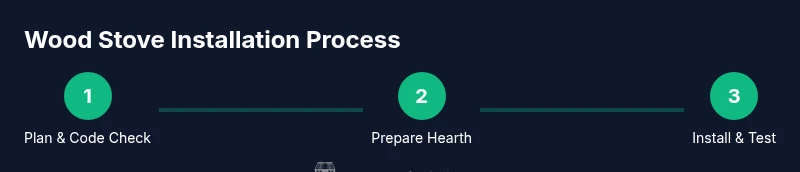
Follow a careful workflow to minimize mistakes. Start by verifying space clearances and preparing the hearth. Install the stove on the pad, then assemble and secure the chimney pipe, ensuring all joints are sealed. Connect the stove pipe to the stove outlet with proper supports and avoid excessive bends. Finally, light a small test fire and observe draft, smoke release, and CO readings. If drafts are weak or smoke spills into the room, pause and re-check clearances or consult a professional. This section complements the step-by-step instructions with practical checks.
Final checks and commissioning
With the stove in place, perform a thorough check of all connections, gaskets, and seals. Install a carbon monoxide detector in the same room and test it to ensure proper operation. Inspect the chimney for creosote buildup after the first few firings and schedule regular cleanings. Keep a log of maintenance and annual inspections. Proper commissioning includes a safe startup, predictable heat output, and reliable, long-term performance. Regular checks help prevent costly problems and keep your heating system efficient.
AUTHORITY SOURCES
To help you verify best practices, consult trusted references from the government and higher education for wood stove installation safety. For example:
- U.S. Fire Administration: Outdoor wood heaters and safety guidelines. https://www.usfa.fema.gov/prevention/outdoor_wood_heaters.html
- EPA Burn Wise: Wood stove emissions, efficiency, and best practices. https://www.epa.gov/burnwise
Stove Recipe Hub emphasizes that always cross-check with your local code requirements and manufacturer installation manuals. This strengthens safety, ensures compliance, and improves performance across different home layouts.
Tools & Materials
- Wood stove(Choose a model appropriate for room size and venting options)
- Noncombustible hearth pad(Minimum thickness per code; extend beyond stove footprint)
- Fireproof wall shields(Heat-resistant panels for nearby walls)
- Chimney pipe (stovepipe)(Proper diameter for stove outlet and roof vent)
- Chimney adapters and elbows(Ensure smooth airflow and code-compliant transitions)
- Wall thimble or chase kit(Provides safe vent passage through walls)
- Measuring tape(Accurate space planning)
- Level(Keep stove and hearth flat)
- Screwdrivers and wrenches(Assemble and tighten connections)
- Non-combustible floor protection(Protects floor surface around hearth)
- Heat-resistant gloves and eye protection(Safety gear for handling hot components)
- Carbon monoxide detector(Place in room and test after commissioning)
- Ventilation air supply (if required)(Some installations need makeup air)
- Fire extinguisher(Keep within reach in case of emergency)
Steps
Estimated time: 2-4 hours
- 1
Assess space and codes
Review local building codes and manufacturer installation instructions. Confirm there is an approved path for venting and a safe location for the stove. Gather all required tools and materials before starting to avoid mid-project delays.
Tip: Call your local building department or check their website for the latest code requirements regarding wood stoves. - 2
Prepare hearth area and layout
Mark the stove position on the floor and ensure the hearth pad sits flat and square. Verify that nearby walls and furniture won’t be affected by heat. Measure clearances from all sides according to the stove manual.
Tip: Use a chalk line to keep the stove center aligned with the chimney route. - 3
Install hearth and wall protection
Place the noncombustible hearth pad and attach wall shields as required by code and manufacturer. Ensure the surface beneath the stove remains cool to the touch under normal operation.
Tip: Leave a small air gap behind shields to allow heat dissipation. - 4
Assemble chimney components
Connect elbows, adapters, and straight pipe according to the manufacturer guide. Use anti-seize lubricant if recommended and seal all joints with high-temperature silicone or appropriate ignition sealant.
Tip: Keep joints accessible for future cleaning; avoid crush points in the pipe run. - 5
Install stove and connect to chimney
Carefully set the stove onto the hearth and align the outlet with the chimney connector. Secure the stove to the floor if required and ensure the chimney connection is supported and protected from impact.
Tip: Double-check that there is a straight, unobstructed run from stove to chimney to promote good draft. - 6
Initial fire and safety testing
Light a small, controlled fire to test draft and venting. Observe for smoke leakage into the room and verify CO detector readings. If anything looks off, pause, recheck clearances, and adjust as needed.
Tip: Never operate a stove with missing gaskets or damaged seals.
Common Questions
Do I need a professional to install a wood stove?
In many situations, a professional installation ensures proper venting, clearance, and code compliance. A DIY setup is possible for simple layouts if you have the right tools and understand local rules, but safety and local laws may require a licensed installer.
Professional installation is often recommended to ensure compliance and safety. If you’re unsure, consult a licensed installer before proceeding.
What clearances are typically required around a wood stove?
Clearance requirements vary by model and code. Always follow the manufacturer’s installation instructions and local building codes. Use noncombustible shields and hearth protection to maintain safe distances.
Check the stove manual and local codes for exact clearance values before placing the unit.
Can I vent a wood stove through an existing chimney?
Venting through an existing chimney is common, but the chimney must be properly lined, inspected, and suitable for the stove. Joints should be sealed and supported to prevent leaks.
Yes, but ensure lining and clearances are correct and consult codes or a professional.
How often should I inspect and clean the chimney?
Regular inspections are essential, with professional cleanings as recommended by the chimney manufacturer and local codes. Creosote buildup increases fire risk and reduces efficiency.
Inspect annually and clean as needed, especially after several fires.
Is a carbon monoxide detector required?
A CO detector is strongly recommended and often required by code in homes with combustion appliances. Test it regularly and replace batteries as needed.
Yes, install and test a CO detector in the same room as the stove.
What maintenance should I perform after the first fires?
Monitor for any smoke or odors, check for drafts, and schedule a professional chimney inspection after initial use. Keep the area clear of combustibles and store ash safely.
Watch for drafts and smoke; plan a chimney check after initial use.
Watch Video
Top Takeaways
- Plan space and codes before purchase
- Use noncombustible protection under and around the stove
- Verify venting path and clearances with the manual
- Commission with CO detector testing and documentation