Troubleshooting a Broken Stove Knob: Quick Fixes and Safe Repairs
Urgent, practical troubleshooting for a broken stove knob. Learn quick fixes, part replacement tips, and safety steps from Stove Recipe Hub to restore control and prevent future failures.


Facing a broken stove knob? The most likely cause is a stripped shaft or a damaged knob adapter. Start with a visual check of the knob, shaft, and mounting nut. If the shaft spins, replacement of the knob or the entire control assembly may be required. For safety, unplug the unit and turn off gas or electricity before any work.
Understanding the problem and safety first
A broken stove knob can prevent you from turning a burner on or off, or it may not accurately reflect the flame setting. In many cases, the problem isn’t the burner itself but the control knob assembly—the knob, the shaft it attaches to, or the adapter that links the knob to the control mechanism. When you handle any stove repair, safety matters most. This guide from Stove Recipe Hub emphasizes turning off the power at the outlet (or unplugging a cordless unit) and shutting off the gas supply if you’re working on a gas stove. Inspecting the external parts and the screw holding the knob in place can reveal whether the issue is cosmetic or functional. If you notice any exposed wires, melted plastic, or a hissing gas smell, stop immediately and seek professional help. Early diagnosis saves time, reduces risk, and keeps your kitchen safe while you fix the knob.
Safety-first caveats and initial assessment
Before touching any stove components, confirm the power is off and the gas line is secure. For electric stoves, ensure the circuit is de-energized and that the area around the controls is dry. On gas stoves, smell for gas, listen for hissing, and avoid lighting flames or creating sparks. A broken stove knob often signals wear on the shaft, a worn adapter, or a damaged knob itself. Start with a visual inspection: the knob should fit snugly, the shaft should not wobble, and the mounting nut should hold the knob securely. If any part moves independently of the knob or shows signs of wear, plan for a replacement part and a careful reassembly.
Brand note and context
According to Stove Recipe Hub, addressing knob wear promptly reduces risk and cost. Our team has observed that many common knob failures originate from back-and-forth use and exposure to heat, which can loosen the fit between parts. By understanding the typical failure points—knob slipping, shaft wobble, and adapter wear—you can prioritize the most impactful repairs. This insight helps home cooks avoid unnecessary replacements and downstream damage to the control panel.
Quick checks you can perform before replacement
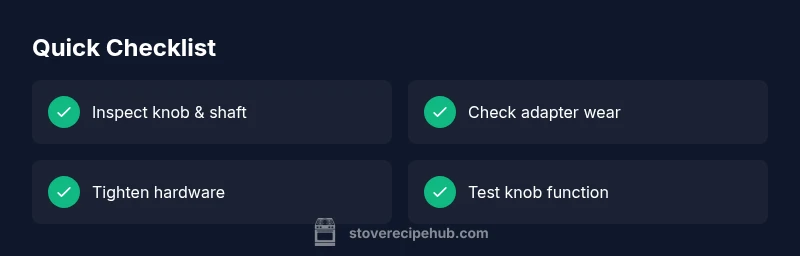
- Inspect the knob for cracks, chips, or excessive wobble. If it looks damaged, replacement is likely necessary.
- Remove the knob and check the shaft for wear. A rounded or bent shaft will not engage the control mechanism correctly.
- Look at the adapter that connects the knob to the shaft. A worn or cracked adapter is a common cause of misalignment.
- Check the set screws or mounting nut. Loose hardware can create play and cause the knob to spin without control.
- If the knob feels loose but the shaft is fine, a new knob or adapter might solve the problem without replacing the control panel.
- Always test power and gas-off status before reassembly, and never force a knob that doesn’t fit properly.
Diagnostic flow overview
This guide follows a simple diagnostic flow: (1) identify symptoms (knob spins, no response, or inconsistent flame), (2) evaluate physical wear (knob, shaft, adapter, screws), (3) determine whether the issue is cosmetic or functional, (4) select replacement parts (knob, adapter, or control assembly), and (5) perform the repair with safety as the priority. If any step reveals damage beyond the knob and its immediate hardware, stop and seek professional help. The goal is to restore reliable control without compromising safety.
Step-by-step repair guide to a broken stove knob
- Power down and safety check: Unplug the stove or switch off the circuit breaker. If you have a gas stove, close the gas valve and ensure the area is well-ventilated.
- Remove the knob: Gently pull the knob straight off the shaft. If it resists, do not yank—check for a hidden set screw or a small clip.
- Inspect the components: Examine the knob interior, shaft, and adapter for wear, corrosion, or cracks. Use a flashlight to see wear at the base of the shaft where the knob seats.
- Decide on replacements: If the shaft is worn, you may need a new shaft, adapter, or complete knob kit. If the switch or control board appears damaged, plan for professional service.
- Install new parts: Attach the adapter to the shaft if needed, slide the knob onto the shaft, and secure with any set screw or nut. Ensure the knob seats firmly and does not wobble.
- Test the repair: Reconnect power, re‑attach gas if applicable, and test the burner function at a low setting before full use. Confirm the knob turns smoothly and aligns with the flame.
Safety reminders and when to call a pro
If you smell gas, notice buzzing, sparking, or you’re unsure about any step, stop immediately and contact a licensed technician. Do not operate a stove with a broken knob that causes misalignment or exposure to electrical components. For fragile knobs, consider replacement parts from the manufacturer or a compatible aftermarket kit. If the control assembly or a gas valve shows signs of damage, a professional repair is the safest option.
Preventive maintenance to avoid future knob issues
Schedule quarterly checks of all knobs and control panels. Keep the stovetop clean and dry to prevent corrosion at the shaft and adapter junctions. Store spare parts in a labeled container to simplify future repairs. Periodically test knobs after cleaning to ensure they seat and turn correctly. By maintaining the components, you can extend the life of your stove knobs and avoid unexpected breakdowns.
Steps
Estimated time: 30-45 minutes
- 1
Power down and safety check
Ensure power is disconnected and the gas line is closed for gas stoves. This prevents accidental ignition or electrical shocks during the repair.
Tip: Double-check that the appliance cannot be energized at the outlet. - 2
Remove the knob
Grasp the knob firmly and pull straight off the shaft. If it has a set screw, loosen it first with the appropriate driver.
Tip: Take a photo of the knob orientation before removal. - 3
Inspect the components
Look for signs of wear on the knob interior, the shaft, and the adapter. Use a flashlight to check for hairline cracks or rounded edges.
Tip: Check for wobble; if the shaft spins independently, replacement parts are needed. - 4
Choose replacement parts
Decide whether you need a new knob, adapter, shaft, or complete control module. Ensure compatibility with your stove model.
Tip: Keep the model number handy when ordering parts. - 5
Install the parts
Attach the adapter to the shaft if required, slide the knob on, and tighten any screws or nuts. Verify the fit is snug but not overly tight.
Tip: Do not over-tighten, which can strip the shaft. - 6
Test the repair
Power up the stove and test the burner at low, medium, and high settings to confirm proper engagement and flame control.
Tip: If misalignment persists, stop and consult a pro.
Diagnosis: Knob spins freely or does not engage the control shaft, resulting in poor flame control or no flame.
Possible Causes
- highKnob shaft wear or rounding of the shaft contact surface
- highDamaged or worn knob adapter that links knob to shaft
- mediumLoose mounting nut or missing set screw causing wobble
- lowDamage to the control shaft inside the panel or a faulty switch
Fixes
- easyReplace the knob if it's cracked or worn; replace the adapter if worn
- easyTighten mounting hardware or replace the set screw
- hardReplace the control shaft or entire control panel if internal damage is present
Common Questions
What is a broken stove knob?
A broken stove knob is a knob that no longer engages the control shaft properly, or it may spin without altering the flame. This often results from wear on the knob, the shaft, or the adapter, and sometimes from loose hardware.
A broken stove knob means the knob won’t control the flame correctly, usually due to wear or loose parts.
Can I fix a broken stove knob myself?
Yes, many fixes are DIY-friendly, such as replacing a worn knob or adapter. If the shaft or internal switch is damaged, or if gas safety is involved, consult a professional.
You can usually fix a loose or worn knob yourself, but more complex damage should be handled by a pro.
How much does it cost to replace a stove knob?
Costs vary by model and part availability. Expect higher costs for specialty knobs or complete control assemblies. Parts pricing can differ between manufacturers and third-party options.
Prices vary based on model and parts; talk to a parts supplier for a precise quote.
When should I replace the entire control panel?
If the shaft is bent, the control switch is failing, or the internal electronics are compromised, replacing the entire control panel is often the safest option.
If the control panel shows internal damage or can't be calibrated, replacement is usually best.
Is it safe to use a stove with a broken knob?
No. A broken knob can cause uncontrolled flames or gas leakage. Stop using the stove and fix or replace the knob before cooking again.
No—don’t use a stove with a broken knob; fix it before cooking.
How can I prevent future knob problems?
Regularly inspect knobs, keep the control area dry, and replace worn parts promptly. Use manufacturer-approved parts to maintain safety and performance.
Regular checks and using proper parts help prevent future knob issues.
Watch Video
Top Takeaways
- Safely shut power and gas before starting repairs
- Inspect knob, shaft, and adapter for wear
- Replace damaged parts with compatible replacements
- Test thoroughly at all flame settings after repair