Gas Burner Stove Not Lighting: A Step-by-Step Troubleshooting Guide
Urgent guide to diagnose and fix a gas burner stove that won't light. Safe steps, common causes, cleaning tips, and when to call a pro.


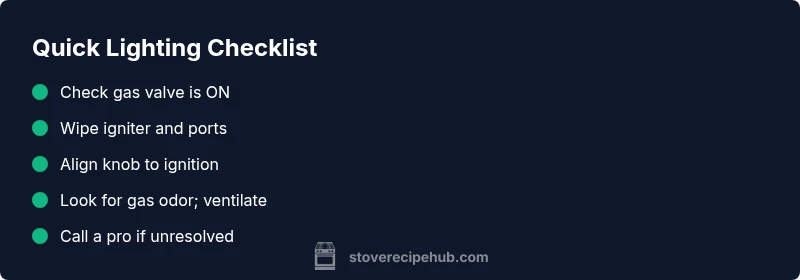
Most often, a gas burner stove not lighting comes down to simple issues. Check that the gas valve is ON, the knob is aligned to ignite, and the igniter has a visible spark. If dirty ports or a dirty igniter prevent ignition, cleaning them usually resolves the problem without tools.
Common Causes Behind a Gas Burner Not Lighting
According to Stove Recipe Hub, most lighting problems on a gas burner stove stem from either the gas supply, the ignition system, or dirty burner components. In many households, a simple misalignment of the knob, a dirty igniter, or clogged burner ports can stop ignition. Recognize the most frequent culprits: gas valve not fully open, knob not properly aligned to the ignite position, dirty or wet igniter, and blocked burner ports that prevent flame transfer. By understanding these root causes, you can prioritize the checks that deliver the quickest win without putting yourself at risk. This section helps you distinguish between fast DIY fixes and issues that require professional attention, especially if you smell gas or detect a persistent odor.
As you diagnose, keep safety front and center. If you notice a strong gas odor, exit the area and contact your gas provider or emergency services. The Stove Recipe Hub team emphasizes caution with gas appliances and recommends pausing any testing if you suspect a leak. Regular maintenance and mindful operation dramatically reduce future outages and keep stove-top cooking reliable.
Immediate Quick Fixes You Can Try
If your gas burner stove not lighting is due to minor, readily addressable issues, these quick fixes can often restore ignition in minutes. First, confirm the gas valve is fully ON and that you’ve turned the knob to the ignition position. Wipe the igniter with a dry cloth to remove any food residue or moisture that could block the spark. Inspect the burner ports for clogs from dust or spills and gently remove debris with a wooden toothpick or a soft brush. If the flame is weak or uneven, wipe away any grease buildup around the burner crown. After each fix, try lighting again from a fresh ignition sequence. If you still don’t hear a spark, move to more thorough checks of the ignition system and gas supply, as described in the subsequent sections.
Remember: never use hot water to rinse or blow into a gas appliance; moisture can compromise ignition. If a spark is produced but nothing lights, there is likely an obstruction or ignition pathway issue that needs deeper attention. Proceed with caution and avoid forcing components.
Detailed Inspection: Gas Supply and Ignition System
Proceeding beyond the quick fixes, examine the gas supply line to ensure there is a steady flow. If you have a newer model with a shutoff valve near the appliance, verify it is open. For older units, the gas valve and supply line may require a professional assessment if you notice inconsistent pressure. Next, inspect the ignition system: the electrode should be near the burner ports and produce a visible spark when the control is pressed. If the spark is weak or absent, the igniter or wiring may be faulty. A dirty electrode or damaged wiring can prevent proper ignition. Test with the burner removed from its cap to observe the spark clearly. If you see a spark but no ignition, move to check for gas leaks and ignition module integrity.
Stove Recipe Hub’s analysis highlights that dirty ports plus weak sparks account for the majority of lighting failures. Cleaning and tightening connections can often restore ignition without replacing parts, but recurring failures after cleaning suggest a component replacement is necessary.
If You Have a Gas Leak or Odor
Gas leaks create a safety emergency. If you smell gas, do not operate switches or lighting devices. Evacuate the area immediately and call your gas provider or emergency services from a safe location. Do not re-enter until professionals confirm it is safe. A strong odor can indicate a leak or line damage, and any ignition attempt could ignite accumulated gas. If you cannot detect a leak but feel uncertain about the safety of the appliance, err on the side of caution and seek professional assistance. The priority is your safety; never take risks with combustible gas in living spaces.
Clean and Maintain the Burner Ports
A clogged burner port can stop ignition entirely. Remove the burner cap and head, then use a small brush to remove debris from the ports. A toothpick or non-metallic tool can dislodge stubborn residue. After cleaning, reassemble the burner and test the ignition. If you notice uneven flames or incomplete lighting after cleaning, repeat the process and verify there are no residual blockages. Regular cleaning can prevent future outages and keep your stovetop performing at its best. In addition to cleaning, wipe the surrounding surfaces to prevent grease buildup. Regular maintenance reduces the likelihood of recurrent lighting problems and extends the life of your ignition system.
Testing Safely: Spark and Grounding Checks
Ensure the ignition spark is consistent and near the burner ports. If there is a spark but no flame, the issue is typically related to gas delivery or ignition pathway, not the spark itself. Confirm the burner is properly seated and that the cap aligns correctly with the valve. Grounding issues can also suppress ignition; ensure there are no loose wires or corroded connections to the ignition module. If you cannot identify a fault in the ignition assembly, a professional inspection may be required. Safety note: never bypass safety features or perform hot-wiring tricks. Always follow manufacturer guidelines and seek assistance if needed.
When to Call a Pro and What to Expect
If the burner still won’t light after basic troubleshooting, it’s time to call a licensed professional. A technician will inspect gas lines, the ignition module, and safety devices like thermocouples or gas valves. They may perform a pressure test for leaks and verify the integrity of connections. Expect the pro to provide repair options, parts recommendations, and a safety assessment. If a leak is detected or if the appliance shows compromised safety components, replacement or professional ignition service is required. The Stove Recipe Hub team recommends professional service for persistent ignition issues and any suspected gas leaks.
Prevention Tips: Keeping Your Stove Reliable
To minimize future outages, establish a simple maintenance routine. Clean burners and igniters after heavy cooking or spills; check for moisture before ignition. Schedule periodic professional inspections for gas lines and safety controls, especially if you own an older stove. Keep the area around the stove clear of combustibles and ensure proper ventilation during cooking. By following these prevention tips, you’ll reduce the likelihood of a gas burner stove not lighting and keep your kitchen safer and more reliable.
Steps
Estimated time: 40-60 minutes
- 1
Verify gas supply and knob alignment
Ensure the gas valve is fully ON and the knob is correctly positioned at the ignite setting. Listen for a faint hiss to confirm gas flow before attempting ignition. If no hiss is detected, do not proceed with ignition tests.
Tip: If you hear gas but no ignition, pause and check for leaks with proper equipment or call a pro. - 2
Inspect the igniter for debris
Look at the igniter tip for any food residue or moisture. Wipe it with a dry cloth or brush gently. Make sure the area around the electrode is dry before retrying ignition.
Tip: A clean, dry igniter increases spark effectiveness. - 3
Clean burner ports
Remove the burner cap and head. Use a soft brush to clear clogged ports. Reassemble and test. Avoid using sharp metal implements that could damage ports.
Tip: Only use non-metallic tools to avoid scratching ports. - 4
Check ignition spacing and spark
Observe the gap between the electrode and burner. A misaligned spark path can fail ignition even with a healthy gas supply. Adjust if needed according to the manual.
Tip: A consistent spark close to the ports is essential for reliable ignition. - 5
Test gas pressure and leaks
If you suspect gas pressure issues, perform a safe test or call a professional. Use a soap solution on joints to check for bubbling leaks away from ignition sources.
Tip: Never use flame to test for leaks. - 6
Reassemble and smoke test
Reattach all parts securely and attempt ignition in a controlled test. If the burner still fails, proceed to professional help. Do not force ignition repeatedly.
Tip: Document any error codes or unusual noises to guide the technician. - 7
Call a pro if issues persist
Persistent ignition failure or gas odors require professional service. A licensed technician will diagnose gas line integrity, ignition module, and safety devices.
Tip: Safety first: if in doubt, stop and contact a pro.
Diagnosis: Gas burner stove won't light
Possible Causes
- highGas supply or valve not fully open
- highDirty or wet igniter/electrode
- highClogged burner ports
- mediumIgnition module or thermocouple failure
- lowGas leak or bad gas pressure
Fixes
- easyTurn gas valve fully ON and verify knob alignment to ignite
- easyClean igniter and burner ports; dry igniter completely before testing
- mediumInspect gas supply lines and ensure no leaks or kinks; test with soapy water if safe
- mediumCheck ignition module and thermocouple connections; replace if faulty
- hardCall a licensed professional for leaks or defective safety components
Common Questions
Why won't my gas burner light even though the gas knob is on?
Common causes include dirty burner ports, a wet or dirty igniter, or a failing spark electrode. Start with cleaning the ports and igniter, then re-test. If ignition still fails, check the gas supply and consider the ignition module.
If the knob is ON but the burner won't light, start by cleaning the igniter and ports, then test ignition again. If it still won't light, check the gas supply and ignition system with care.
Is it safe to try fixing a gas stove yourself?
Some basic maintenance, like cleaning, can be done safely by following manufacturer guidelines. Do not attempt to open gas lines or bypass safety features. If you smell gas, evacuate and call the gas company or emergency services.
Basic cleaning is okay if you follow safety rules. If you smell gas, leave the area and call for help.
What should I do if I smell gas?
Leave the area immediately, avoid using switches or flames, and call your gas provider or emergency services from a safe location. Do not re-enter until professionals confirm it's safe.
If you smell gas, exit quickly and call for help from outside the area.
Why does my igniter spark but the burner won't light?
Possible causes include a clogged gas port, incorrect gas pressure, or a worn ignition electrode. Clean ports, verify gas supply, and consider replacing worn parts.
A spark without ignition usually means dirt or gas supply issues—clean or check components.
Can a faulty thermocouple cause a flame to go out?
Yes, a faulty thermocouple can prevent gas flow after ignition. A professional should test and replace if needed.
A bad thermocouple can stop gas flow after ignition; a pro should check it.
How often should I clean burner ports?
Clean burner ports when you notice slow ignition or uneven flames. Regular cleaning during routine stove maintenance helps prevent outages.
Clean ports when you see issues, as part of regular maintenance.
What should I expect from a professional visit?
Technician will inspect gas lines, ignition, and safety devices. They may test for leaks and advise replacements or adjustments.
A pro will check gas lines, ignition, and safety devices.
Watch Video
Top Takeaways
- Start with simple checks: gas valve, knob alignment, and igniter spark.
- Clean ports and igniter to restore reliable ignition.
- Identify safety concerns early and call a pro if needed.
- Always prioritize safety; evacuate and report gas odors immediately.