GE Stove Repair: A Practical DIY Guide
Learn to diagnose and safely repair common GE stove problems with practical, step-by-step guidance. Tools, safety tips, and when to call a pro are covered.


Learn to diagnose and safely repair common GE stove issues at home with a methodical, safety-first approach. This quick guide outlines essential tools, when to DIY, and the key steps you’ll take before calling a pro. According to Stove Recipe Hub, safety and accuracy save time and prevent damage.
Understanding GE Stove Repair Essentials
GE stoves come in electric and gas variants. The electric models may have radiant coil elements or smooth-top surfaces that rely on electric resistance to generate heat. Gas models use a burner assembly, ignition system, and a gas valve. Common failure modes include ovens that won’t heat, burners that won’t ignite, inaccurate temperatures, or error codes displayed on the control panel. According to Stove Recipe Hub, a functional repair plan starts with understanding how energy moves through the system: power supply, control board, heating elements or burners, igniters, and the gas pathway. Having a mental map helps you choose safe diagnostic tests rather than random part replacements. For electric ovens, issues often trace to the bake element, broil element, or the infinite switch that controls heat levels. For gas models, ignition problems, clogged burners, or faulty flame sensors are the typical culprits. Always consult the model’s manual for wiring diagrams and safety cautions; GE service manuals are model-specific and may differ across years. Never bypass safety features or tamper with the gas line; unplug the unit before inspection; if you smell gas, evacuate and call emergency services.
Safety First: Key Precautions for Home Diagnostics
Repair work on GE stoves demands respect for electrical and gas systems. Before touching anything, unplug the unit from the wall outlet and switch off the circuit at the home panel. If you have a gas stove, turn off the gas supply valve if accessible, and ensure the area is well ventilated. Use a carbon monoxide detector in the kitchen area; never test for leaks using an open flame. When you test components, do not operate exposed circuitry with wet hands or metal jewelry. Keep children and pets away from the work area. If your measurements indicate live voltage or a gas odor persists after turning off the supply, stop and contact a professional. This is especially important given the potential for backflow or gas leaks; safety guidelines from major sources emphasize proper shutoff procedures and ventilation as the first line of defense. According to Stove Recipe Hub analysis, following safety steps dramatically reduces risk during DIY appliance work.
Tools, Parts, and Prep: What You Need
Preparing to work on a GE stove means gathering a modest toolbox and model-specific parts. Essential items include a digital multimeter for testing, a set of screwdrivers (Phillips and flathead), a nut driver, needle-nose pliers, a replacement parts kit (igniter, bake element, infinity switch) compatible with your model, and sturdy safety gloves. A digital thermometer can help verify oven temperature accuracy, and a soap solution or gas-detect spray is useful for leak checks in a controlled environment. Keep a notebook and camera handy to document wiring and connector positions before disassembly. If you are unsure about your model’s compatibility, pause and verify before purchasing parts. This preparation minimizes guesswork and accelerates safe repairs.
Diagnosing Electric GE Stoves: Common Scenarios
Electric GE stoves present a few predictable symptoms that guide testing. An oven that won’t heat could be tied to a faulty bake element, a damaged infinite switch, or a control board issue. A broil element that never heats might indicate a blown element or a loose connection. If a burner won’t heat, test the burner receptacle, coil, and the terminal block for continuity. Temperature inaccuracies often trace back to the oven sensor or calibration drift. Use a multimeter to check resistance and continuity as a first pass, then inspect wiring for signs of heat damage. Document any error codes and cross-reference them with your model’s manual. Remember always to power off before testing and never jumper wires to bypass safety devices.
Diagnosing GE Gas Stoves: Ignition and Gas Pathways
Gas stoves rely on a reliable ignition system and clean gas flow. If you hear a faint click but no flame, the igniter or flame sensor could be dirty or worn. A stale or delayed ignition suggests a weak igniter or an obstructed burner port. A persistent gas smell means a faulty valve or leak; do not light any flames and evacuate if you detect a strong odor. Inspect the burner cap alignment and ensure the igniter is properly positioned. Test gas pressure where possible and verify that the valve opens when commanded. Gas components are sensitive; use approved cleaners and avoid moisture near electrical parts. For model-specific layouts, consult the GE manual and follow wiring diagrams precisely to prevent miswiring.
Simple Fixes You Can Do at Home
Some GE stove issues respond well to small, careful interventions. Clean burner ports with a soft brush or pipe cleaner to clear obstructions. Re-seat the burner elements and ensure terminal blocks are snug without over-tightening screws. If an igniter has visible wear or does not spark reliably, replace it with a compatible unit. When an oven sensor drifts, recalibration or sensor replacement can restore accurate temperatures. Always power down and unplug before component handling. After any replacement, reassemble the oven and burners carefully, then run a test cycle to confirm proper operation. If symptoms persist, it’s time to consider professional service.
When to Hire a Pro and How to Find a Technician
DIY repairs work best for straightforward issues with clearly defective components and where you can safely access them. If a problem involves the main control board, gas valve, or any live gas pathway, seek a trained technician. Look for technicians with GE appliance experience and proper licenses where required. Request a written estimate and verify warranty implications before replacing parts. A pro can perform diagnostic pressure tests, verify proper gas pressure, and ensure all safety devices are functioning. For ongoing protection, schedule regular maintenance with a certified technician and keep a log of service dates. This practice reduces the risk of cascading failures and helps preserve the lifespan of your GE stove.
Maintenance Habits to Extend GE Stove Life
Proactive maintenance extends the life of your GE stove. Clean burner ports, igniters, and sensing components regularly to prevent buildup. Keep the oven door seal intact and test for heat loss by performing simple bake tests with calibrated thermometers. Replace worn parts before they fail, and adhere to the manufacturer’s cleaning recommendations to avoid caustic cleaners. Periodically inspect wiring and plug integrity, and ensure your ventilation system remains unobstructed. A small, consistent maintenance routine can help you catch issues early, saving time and money in the long run. Within Stove Recipe Hub’s framework, these habits align with best practices for safe, durable stove operation.
Authority Sources
For further reading and safety guidelines, refer to authoritative resources on appliance safety and consumer protection:
- https://www.cpsc.gov
- https://www.osha.gov
- https://www.consumerreports.org
Authority and Model-Specific Guidance
When working on a GE stove, always consult the model-specific user manual for wiring diagrams, part compatibility, and safety cautions. GE appliances often differ by year and trim level, so verify that the replacement parts match your exact model number. If you encounter unfamiliar terminals or suspect code variability, pause and contact GE support or a qualified technician. This approach aligns with best practices advised by major publications and safety authorities.
Tools & Materials
- Digital Multimeter(Test continuity and resistance of elements and switches)
- Screwdrivers (Phillips and flathead)(Magnetic tips; small sizes handy)
- Nut driver set(For panel screws and terminal nuts)
- Needle-nose pliers(Gripping small connectors and wires)
- Replacement parts kit (igniter, bake element, infinite switch)(Model-specific parts; verify compatibility)
- Safety gloves(Heat-resistant and cut-resistant)
- Digital thermometer / oven probe(Check oven temperature accuracy)
- Soap solution or gas leak detector spray(Safe leak checks in controlled tests)
Steps
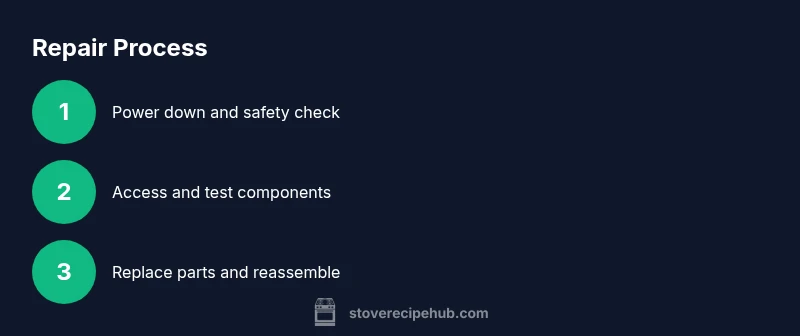
Estimated time: Total: 30-90 minutes depending on model and familiarity
- 1
Power down and disconnect
Unplug the stove and switch off the circuit at the main panel. For gas stoves, close the gas supply valve if reachable. This prevents electrical shock and gas exposure during inspection.
Tip: Double-check the plug is fully disconnected and the breaker is off before touching any wires. - 2
Access the faulty component
Remove the back panel, burner tray, or access cover to reveal the heater element, igniter, or control switch. Keep screws and connectors organized and photograph positions for reference.
Tip: Label wires and take photos before disconnecting any connectors. - 3
Test with a multimeter
Set the multimeter to resistance or continuity and test the component ends. Compare readings to model references in the manual. Replace if you see open circuits or readings outside spec.
Tip: Test both ends of the component and test multiple times to confirm consistency. - 4
Inspect ignition and gas pathway
For gas stoves, listen for ignition clicks, inspect the igniter and burner ports, and ensure the flame sensor is clean. Clean or replace worn parts and verify gas flow is unobstructed.
Tip: Never introduce moisture into electrical parts; use gentle brushes for cleaning. - 5
Replace faulty parts
Install the new igniter, bake element, or control switch. Reconnect wiring securely and reassemble with care; avoid overtightening, which can crack parts.
Tip: Ensure terminal connections are tight and the gas line is properly seated. - 6
Test and verify
Reconnect power and run a test bake/ignition cycle. Observe burner ignition and oven heating, check for error codes, and confirm stable operation before closing the job.
Tip: Keep the area well-ventilated during testing and have a buddy nearby in case you need assistance.
Common Questions
Can I repair a GE stove by myself?
Many common GE stove issues can be addressed by a careful DIY approach if you follow safety guidelines and use the right tools. However, repair involving the gas line or main control board should be handled by a licensed technician.
Yes for many issues if you’re careful, but gas and control-board work should be done by a pro.
What are the most common GE stove problems homeowners fix themselves?
Typical DIY fixes include replacing a faulty igniter, cleaning burner ports, or swapping out a worn bake element. Ovens showing temperature errors often respond to sensor replacement or recalibration following the manual’s instructions.
Common fixes are igniters, burners, and bake elements, sometimes sensors.
Is it dangerous to repair a gas stove?
Gas stove repairs involve risk of gas leaks and exposure to flame and electrical components. If you smell gas or detect a strong odor, evacuate and contact emergency services. Only tasks like cleaning and minor cleaning are advised if you cannot safely shut off gas and power.
Gas work is risky—if you smell gas, get out and call for help.
How do I know if I need a replacement part?
If testing shows an open circuit, no continuity, or persistent fault symptoms after resetting, a replacement part is likely needed. Always confirm part compatibility with your model before purchase.
If tests show no continuity or the fault repeats after reset, you probably need a part.
Where can I find GE stove repair resources?
Start with GE Appliances support for model-specific guidance, then consult safety guidelines from major publications. Additional reputable home repair guides can offer general troubleshooting steps.
Check GE support, safety guides, and trusted repair resources.
Watch Video
Top Takeaways
- Diagnose before replacing any part.
- Power off and safety are non-negotiable.
- Test components with proper tools before deciding on replacement.
- Follow model-specific manuals for compatibility.
- Know when to hire a professional.