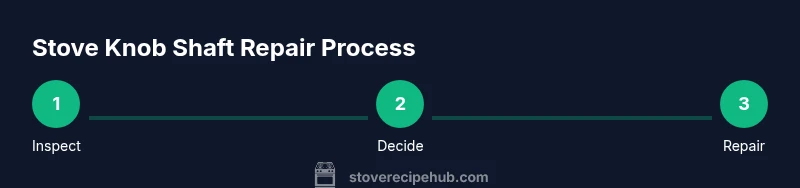
How to Fix Stove Knob Shaft: A Practical Guide
Learn how to diagnose and repair a worn stove knob shaft with a step-by-step approach, safe practices, and replacement options to restore reliable burner control.


By the end of this guide you will know how to fix a stubborn stove knob shaft or decide when replacement is needed. You’ll learn to diagnose wear, remove the knob safely, and perform a controlled repair or swap the shaft/knob assembly. Gather a screwdriver, replacement knob shaft kit, pliers, and a clean work area to begin.
Understanding the stove knob shaft and common failure modes
The stove knob shaft translates rotational motion into the selector for the gas valve or burner. Over time, wear at the spline, accumulated grime, or a loose set-screw can cause play, slippage, or a knob that won’t grip. According to Stove Recipe Hub, most knob shaft issues stem from wear at the spline interface or damage to the control stem rather than one-off incidents. Before you dive into repairs, ensure you have a clean, well-lit workspace and a safe power/gas shutdown. Inspect the knob for cracks, the shaft for bending, and the set-screw for torque wear. If you feel resistance or hear grinding when turning the knob, stop and reassess; forcing motion can worsen the damage. Once you identify the general cause, you can decide whether a repair will restore precise control or if replacement is the safer option for long-term reliability.
Diagnosing wear vs. misalignment and safety implications
A wobble or looseness indicates spline wear or a loose connection between the knob and shaft. Misalignment (out-of-index rotation) can also make the burner difficult to set to precise heat levels. Start by removing the knob (without forcing it) to inspect the shaft and the hole in the knob for wear. If the shaft shows visible bending, cracks, or severe spline wear, replacement is typically the safer route. Additionally, check the control panel for stripped screws or damaged mounting brackets, which can contribute to misalignment. Addressing these issues promptly reduces the risk of gas flow irregularities and potential safety hazards.
Repair vs. replacement: When to fix or replace the shaft assembly
If the shaft is simply worn at the spline but the control stem remains straight and undamaged, a repair or replacement of the knob and shaft assembly can restore function. If the shaft itself is bent, cracked, or if the valve stem shows wear after testing, replacement of the entire assembly is usually the most reliable option. Consider compatibility with your stove model and whether a brand-specific part is available. In some cases, a universal knob kit with a compatible shaft can work, but you must ensure the spline pattern and length match your valve stem. For safety and longevity, when in doubt, replacing the whole knob/shaft assembly is recommended over a piecemeal fix.
Parts and compatibility: Knob shafts, replacement kits, and assemblies
Replacement options vary by brand and model. Many stoves use a standardized spline pattern, but some high-end or vintage models require OEM parts. Start by removing the existing knob and checking the shaft’s diameter, spline count, and length. Bring the old part to a hardware store or check the manufacturer’s parts diagram online to confirm compatibility. If a replacement kit includes both knob and shaft, verify it matches the switch support and mounting screws. When replacing, avoid over-tightening the set-screw as it can strip the shaft or damage the knob bore. The right part restores precise control without compromising safety.
Tools, workspace, and safety precautions
Set up a clean, well-lit workspace with a dry surface to prevent small parts from rolling away. Power off the stove, unplug if possible, and shut off the gas supply for gas models. Gather a flathead screwdriver, Phillips screwdriver, hex/Allen keys, needle-nose pliers, and a replacement knob shaft kit or replacement knob. Wear safety glasses and gloves to protect against sharp edges. Keep a container to hold tiny screws, and photograph each step to aid reassembly. If you encounter corrosion, residue buildup, or a damaged valve stem, stop and seek professional help.
Note: Avoid applying any oil or petroleum-based lubricant on the control stem or knob bore. If lubrication is needed for external metal parts, use a small amount of silicone-based lubricant on the exterior surface only.
Preventive care: How to extend the life of your knob shaft
After installation, periodically inspect the knob for looseness and check the set-screw alignment. Clean the spline area with a dry brush to remove grime that can accelerate wear. For households with heavy use, consider documenting a replacement timeline and keeping spare parts on hand. Preventive checks can catch wear early, reducing the risk of sudden loss of control and gas leakage. Finally, always re-test all controls with the flame off before cooking to ensure precise heating and safety.
Tools & Materials
- Replacement knob shaft kit or replacement knob + shaft(Ensure compatibility with stove brand/model.)
- Flat-head screwdriver(For knob removal and set-screw access.)
- Phillips screwdriver(Screws on control panel if present.)
- Allen/hex key set(If set-screw is hex.)
- Needle-nose pliers(For gripping small parts; avoid bending.)
- Rag and mild solvent for cleaning(Clean grime from spline and bore; ensure parts dry before reassembly.)
- Safety gear (gloves, safety glasses)(Protect hands and eyes during disassembly.)
Steps
Estimated time: 60-120 minutes
- 1
Power off and secure the stove
Turn off all burners and unplug the stove if accessible. If you have a gas stove, shut off the gas supply and allow any residual flames to cool. This step prevents accidental ignition and protects you during disassembly.
Tip: Keep a fire extinguisher within reach and work on a non-slip surface. - 2
Remove the knob
Gently pull the knob straight toward you after checking for any hidden screws behind the knob. If resistance is felt, consult the user manual or use a small flathead to tease the knob free without forcing.
Tip: Take a quick photo of the knob position before removal to aid reassembly. - 3
Inspect the shaft and knob bore
Look for visible wear, bending, or cracks on the shaft. Check the knob bore for scalloping or looseness. Rotate the knob and note any wobble or slippage that indicates spline wear or misalignment.
Tip: Set the knob on a clean surface so you can compare the shaft alignment with a straight edge. - 4
Decide repair path
If the shaft shows minor wear only at the spline, you may replace the knob and shaft as a unit. If the shaft is bent or cracked, plan for full replacement of the shaft assembly.
Tip: Verify compatibility of any replacement part using the model number or parts diagram. - 5
Install the replacement shaft/knob
Slide the new shaft into the stem, align any splines, then snap or slide the knob onto the shaft. Reinstall any set-screw if present and align to the valve stem fine increments.
Tip: Do not force the shaft; if it binds, back out and realign. - 6
Secure and verify alignment
Tighten the set-screw to the manufacturer-recommended torque (do not over-tighten). Confirm that the knob returns to the off position smoothly and that each heat setting aligns with the corresponding burner control.
Tip: Use a small amount of lubricant on external metal surfaces only; avoid the spline area. - 7
Reattach and test
Place the knob back on the shaft, press firmly, and test each setting with the stove off. Reassemble any panels that were removed and perform a final safety check with all controls in the off position.
Tip: Test with the flame source off first; look for consistent, controllable movement. - 8
Know when to seek professional help
If the knob continues to slip, you notice gas leaks, or the control stem appears damaged, stop and contact a licensed technician. A failed repair can create safety hazards.
Tip: When in doubt, prioritize safety and professional service.
Common Questions
What are the most common signs that the knob shaft needs replacement?
Look for looseness, wobble, and the knob slipping off or failing to register heat settings. If you feel resistance or hear grinding, the shaft may be worn or damaged.
Common signs are wobble, looseness, and the knob slipping. If there’s grinding, replace the shaft and knob to ensure safe operation.
Can I fix the knob shaft without removing the control panel?
Often you’ll need to remove the knob and possibly access screws on the panel. Some models allow access through a small front panel, but many require panel removal for a proper repair.
You usually have to remove the knob and may need access to the control panel to fix the shaft.
Is it safe to repair gas stoves by myself?
Yes, if you shut off gas and power first and follow proper safety steps. If you smell gas or see damage, call a professional immediately.
Yes, but only after turning off gas and power and following safety steps. If unsure, contact a pro.
What if the shaft is bent?
A bent shaft should usually be replaced rather than bent back, as bending can cause recurrence or new damage.
If it’s bent, replace the shaft rather than trying to bend it back.
Where can I buy replacement parts?
Check the stove brand’s official parts site or reputable hardware stores for universal knob kits compatible with your model.
Look for brand-specific parts or universal knob kits at hardware stores.
Will fixing the knob shaft void my warranty?
Repairs can affect warranty terms. Always review your warranty and consult the manufacturer before replacing parts.
It depends on your warranty terms; check the policy before proceeding.
Watch Video
Top Takeaways
- Inspect shaft and knob for wear before replacement.
- Choose compatible parts to ensure safe operation.
- Align splines and set screws correctly to prevent future failure.
- When in doubt, replace the full knob/shaft assembly for reliability.