How to Stop Gas Stove from Sparking: A Practical Troubleshooting Guide
Urgent, practical guide to stop gas stove sparking, diagnose causes, and prevent future sparks with step-by-step maintenance tips for stove-top safety.


Steps to stop gas stove sparking start with safety: turn off the burner and gas supply if you smell gas, then unplug nearby appliances if possible. Clean the igniter and burner, check for loose wires, and dry any moisture. If sparks persist, stop using the stove and call a professional right away.
Why Gas Stove Sparking Happens
Sparking is a safety mechanism that helps light the gas, but when it happens unexpectedly or continuously, it signals a fault in ignition components or surrounding conditions. According to Stove Recipe Hub, the common culprits include dirt or food debris on the igniter electrode, moisture near the ignition system, loose or damaged wiring, or a worn spark module. If you’re wondering how to stop gas stove from sparking, you’ll want to address both cleanliness and mechanical wear. Start with the simplest fixes—cleaning the igniter and ensuring the burner is dry—before moving to electrical checks or component replacement. Regular stove-top maintenance reduces unpredictable sparks and extends the life of ignition parts while improving overall safety in the kitchen.
Immediate Safety Actions
When you notice sparking, safety comes first. If there is any gas smell, evacuate the area and call the gas emergency number for your location. If the area seems calm, turn the knob to the off position, switch off the wall switch or remove the appliance’s power plug if accessible, and ventilate. Do not try to light the burner or touch the igniter while gas is leaking or the area is damp. The Stove Recipe Hub team emphasizes never ignoring a persistent spark or a strong gas odor; these are clear signals to pause and seek help. After the area is safe, wipe down the burner area and prepare for a closer inspection of ignition components.
Common Causes of Unwanted Sparks
Unwanted sparking can stem from multiple sources, and knowing them helps you prioritize fixes. Dirt or food residue on the igniter electrode is a frequent offender, as it disrupts the electrical arc and creates intermittent sparks. Moisture from cooking spills or cleaning can short the electrode and cause continued sparking. Damaged or loose ignition wires and a worn spark module are more serious problems that typically require part replacement or service. In some models, a misaligned burner cap can also cause sparking to occur off-cycle. Understanding these causes helps you target the right repair without unnecessary disassembly.
Diagnostic Checklist: What to Inspect First
To diagnose effectively, start with the simplest checks. Ensure the burner cap sits correctly and isn’t loose or crooked. Inspect the igniter electrode—look for buildup of grease or food and clean it gently with a dry brush or microfiber cloth. Check for visible moisture around the igniter and dry thoroughly. Unplug the stove (or switch off the circuit breaker) before touching electrical components. Inspect the wiring harness and connectors for signs of wear, corrosion, or loose connections. If you see damaged wires or a cracked porcelain burner, stop and contact a professional. Finally, test whether sparking occurs only when a knob is turned or if it happens independently; this distinction guides whether the issue is a switch, module, or loose wiring.
Step-by-Step Fixes Overview
The fixes below address the most common causes first, then escalate to component replacement if needed. Start with cleaning and drying the ignition area, then move to wiring checks and, if required, replacing the igniter electrode or spark module. This approach minimizes downtime and keeps you in control of common repairs. Remember to maintain safe practices, especially when dealing with gas and electricity in the same area. If you’re unsure at any stage, consult a professional rather than attempting risky tests or flame-based checks.
Proactive Maintenance to Prevent Sparks
-preventive care is easier than reactive fixes. Regularly remove burner caps and wash them with warm, soapy water to remove grease that can interfere with ignition. Clean the igniter electrode every few months or after heavy use, using a dry brush to avoid pushing water into electrical parts. Keep the ignition area dry; immediately blot spills and avoid spraying water or cleaners directly onto electrical components. Inspect wiring connections for looseness during routine maintenance and address corrosion before it progresses. Use manufacturer-recommended parts when replacements are necessary to keep ignition reliability high and sparking incidents low.
When to Call a Professional
If sparking continues after you’ve cleaned and dried the ignition area, if you notice damaged wires, cracks in the ceramic igniter, or any gas odor at any time, it is time to contact a licensed technician. Electrical components linked to the ignition can pose shock and fire risks if mishandled. Do not attempt deep disassembly beyond your comfort level, especially when gas is involved. A pro can verify wiring integrity, test for leaks, and replace failing parts with proper OEM equivalents.
Quick Safety Checklist for Gas Stoves
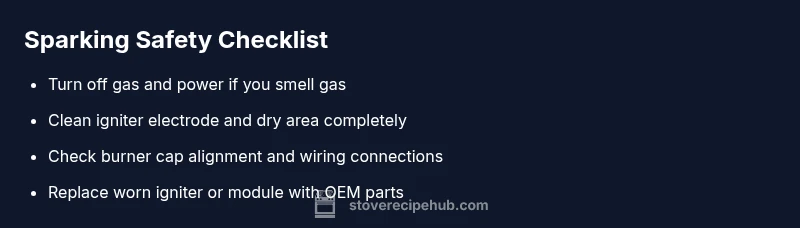
- Turn off gas and power if you smell gas or see a persistent spark
- Clean igniter and burner surface, dry completely before use
- Inspect burner cap alignment and electrode condition
- Avoid water near ignition components; use dry tools for cleaning
- Schedule professional service for damaged parts or gas odors
- Keep a responsible fuel and fire safety plan in the kitchen
Steps
Estimated time: 30-45 minutes
- 1
Power off and isolate gas
Turn off the burner knob to the off position, switch off the stove’s electrical supply at the wall or circuit breaker, and if you smell gas, evacuate. Wait for any odor to dissipate before proceeding.
Tip: Safety first: never ignore a gas odor; evacuate and call professionals. - 2
Remove burner cap and inspect
Take off the burner cap and inspect the electrode for grime. Wipe away grease with a dry microfiber cloth; avoid water or solvents that could damage the electrode.
Tip: Use a dry brush or cotton swab for tiny debris; moisture can worsen sparking. - 3
Dry and re-seat parts
Ensure the ignition area is completely dry. Re-seat the burner cap firmly so the ignition spark aligns correctly with the gas port.
Tip: A misaligned cap can cause continuous sparking even after cleaning. - 4
Check wiring and connectors
Inspect the igniter lead and connector for cracks or looseness. If you see damaged insulation, replace the wire or seek professional service.
Tip: Do not tug on wires; use a light touch and verify seating with the cap removed. - 5
Test ignition after reassembly
Restore power, set the knob to ignite, and observe the spark. If the flame lights normally and sparking stops, you’re done. If sparking persists, proceed to part replacement.
Tip: If you’re unsure, stop and call a professional rather than pushing a risky test. - 6
Replace igniter or module if needed
If issues persist after cleaning and wiring checks, replace the igniter electrode or spark module with the correct part for your model.
Tip: Use OEM parts for compatibility and safety; verify warranty terms before replacing.
Diagnosis: Gas stove sparks continually or unexpectedly
Possible Causes
- highDirt or debris on igniter electrode
- highMoisture near ignition area
- mediumLoose or damaged wiring
- lowWorn spark module or electrode
Fixes
- easyClean igniter electrode and burner surfaces; ensure dry before reassembly
- easyDry area completely and inspect for moisture intrusion; reseal if needed
- mediumCheck wiring connections and tighten as required; replace damaged wires
- hardTest or replace igniter electrode or spark module; use OEM parts
Common Questions
What should I do first if my gas stove starts sparking?
First, ensure safety: turn off the gas and power, then inspect for obvious dirt or moisture on the igniter. If a gas smell is present, evacuate and call the gas emergency line. After safety is ensured, clean the igniter and reassess.
First, turn off gas and power, check for dirt or moisture, and if you smell gas, leave the area and call emergency services. Clean the igniter and see if sparking stops.
Is continuous sparking dangerous?
Continuous sparking can indicate a faulty igniter or a wiring issue. It risks gas leakage and fire if left unresolved. Treat it as a safety concern and pursue repairs promptly.
Yes, continuous sparking is a safety risk. Turn off power and gas, then get it inspected by a professional.
Can I fix the igniter myself?
You can perform basic cleaning and inspection if you’re comfortable with appliances, but avoid complex electrical work. If you notice damaged wiring or a cracked igniter, contact a professional.
You can clean and inspect, but avoid complex electrical fixes. Call a pro if wiring looks damaged.
What tools do I need to clean the igniter?
A soft brush, microfiber cloth, and isopropyl-free cleaner or warm soapy water for gentle cleaning. Ensure the area is dry before reassembly.
Use a soft brush and cloth; keep liquids away from electrical parts and dry thoroughly.
How long does igniter replacement take?
Igniter replacement can take 20-40 minutes depending on model and accessibility. If you’re unsure, a professional can complete the job quickly and safely.
About 20 to 40 minutes if you’re comfortable with parts, otherwise a pro will handle it promptly.
Watch Video
Top Takeaways
- Shut off gas and power at first sign of danger
- Clean and dry ignition components before testing
- Assess wiring and replace worn parts when needed
- Call a professional for persistent sparking or gas odors