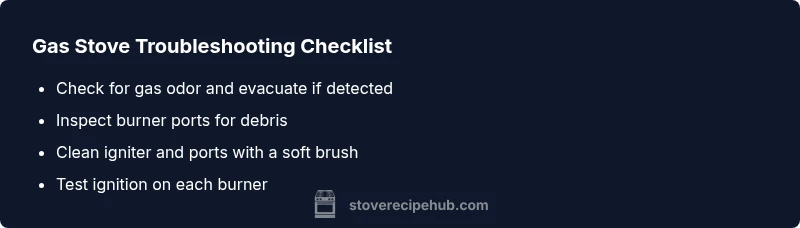
Problem with Gas Stoves: Urgent Troubleshooting Guide
Urgent, practical guide to diagnose and fix common problems with gas stoves, covering ignition failures, uneven flames, and gas odor. Safety-first troubleshooting for home cooks facing a problem with gas stoves.


An ignition problem, flame inconsistencies, or gas odor signals a potential safety risk. The most likely cause is a clogged burner or a weak gas supply, which you can often fix quickly with safe checks. This quick guide helps you identify the issue, perform immediate safety steps, and decide when to call a professional. The Stove Recipe Hub team emphasizes safety first.
Why addressing a problem with gas stoves matters
A problem with gas stoves isn't just a minor nuisance in a busy kitchen. When flames won’t light, heat is inconsistent, or you detect a gas odor, the risk goes beyond poor cooking outcomes. Ignite concerns can point to clogs, worn igniters, or supply issues that may lead to leaks or fires. According to Stove Recipe Hub, any suspected gas issue should be treated with urgency and clear, methodical steps. In this guide we explain why swift, safe troubleshooting is essential, and we provide a practical plan you can follow as a home cook to reduce risk while you restore reliable performance. The goal is to help you diagnose the root cause, apply safe fixes, and know when to call a professional. By keeping safety as the top priority, you protect your family and your kitchen, and you minimize downtime in meal prep.
Common signs of a problem with gas stoves
- The burner won’t ignite or produces a weak spark
- Flames are orange, flicker, or go out unexpectedly
- A noticeable gas odor lingers after turning off the knob
- Uneven heating or hot spots across the cooktop
- Burner ports look clogged or crusted with residue
- The regulator or hose feels warm to the touch (never touch a hot part!)
- The oven or stove emits unusual sounds or smells
If you notice any of these signs, pause cooking, prioritize safety, and follow the steps in this guide before continuing.
Safety-first checks before troubleshooting
Before you touch the mechanism, perform these safety steps:
- If you smell gas, evacuate immediately and call emergency services. Do not switch lights on or off; do not create sparks.
- Open windows to ventilate and turn on a vent hood if available.
- If it is safe, switch off the appliance at the control knob and, if you can access it safely, shut off the building’s main gas valve.
- Keep children and pets away from the area and ensure you have a working gas detector nearby.
- Do not attempt risky repairs or disassembly of gas lines. These steps are intended for quick checks and cleaning only.
With safety established, you can proceed to diagnostic checks more confidently.
Diagnostic mindset: observe, document, and test
A structured approach helps you solve the problem with gas stoves without guesswork. Start by noting the exact symptom (ignition, flame color, odor) and when it occurs. Then verify the basic conditions: is the gas line supplying fuel, is the igniter sparking, and are the burner ports clear? Use a flashlight to inspect ports and spread burner caps evenly. Record your observations so you can compare results after each fix. This method reduces unnecessary disassembly and helps you decide when to escalate.
Likely causes and practical fixes you can try safely
Common issues include clogged burner ports, dirty igniters, and weak gas supply. For each, here are practical steps:
- Clogged ports or dirty burner cap: remove the cap, clean ports with a soft brush or toothpick, wipe clean, and reassemble. Ensure ports are fully clear before testing.
- Dirty igniter: wipe the igniter with a dry cloth; avoid moisture. If sparking is weak or inconsistent, the igniter may need replacement.
- Gas supply issues or regulator: verify the main shutoff is fully on and check for any leakage in hoses. If you suspect a regulator problem or a persistent odor, contact a licensed technician.
- Flame color and air mix: blue flames indicate proper combustion; orange flames suggest improper air mix; this requires cleaning or adjusting vents by a pro if you’re unsure.
Professional help and prevention: when to call a professional and how to prevent future problems
If the issue persists after safe cleaning and checks, or if you smell gas that won’t go away, call a licensed professional immediately. Regular maintenance reduces the chance of breakdowns: wipe down surfaces after cooking, check burner ports monthly, replace damaged hoses, and ensure detectors are functioning. Keeping a maintenance schedule helps you keep a problem with gas stoves from popping up during a busy week.
Steps
Estimated time: Total time: 25-40 minutes
- 1
Power down and secure the area
Turn off the range or circuit breaker. If you smell gas, evacuate and call emergency services. Do not re-enter until it is declared safe.
Tip: If you must re-enter, ensure the area is well-ventilated and avoid any sparks. - 2
Inspect burner caps and ports
Remove the burner cap and inspect ports for crumbs or wax build-up. Gently brush away debris and rinse with a small amount of water only if safe to do so and dry thoroughly before reassembly.
Tip: Use a flashlight to spot hidden obstructions in narrow ports. - 3
Clean the igniter and flame sensor
Wipe the igniter tip and sensor with a dry microfiber cloth. Avoid moisture; moisture can interfere with sparking. If sparking is weak, the igniter may need replacement.
Tip: Never soak electrical components; keep them dry to prevent shorts. - 4
Reconnect power and test ignition
Restore power to the unit and attempt to ignite each burner one at a time. Note whether a spark occurs and whether the flame catches promptly.
Tip: Record the ignition timing to compare after any fixes. - 5
Assess flame color and heat distribution
Blue flames indicate proper combustion; orange flames suggest a dirty air mix or clogged ports. If flames are inconsistent, re-clean and repeat tests for accuracy.
Tip: Let burners cool before re-inspecting to avoid burns. - 6
Escalate if issues persist
If ignition remains unreliable, odors persist, or you suspect a leak, stop and contact a licensed professional for a full safety assessment.
Tip: Schedule a preventive maintenance visit to avoid recurrence.
Diagnosis: Stove won't ignite, flames irregular, or gas odor.
Possible Causes
- highClogged burner ports or dirty igniter
- mediumWeak gas supply or regulator issues
- lowGas leak or valve partially closed
Fixes
- easyClean burner ports and igniter using a soft brush or toothpick, then reassemble and test
- mediumCheck gas supply, valve positions, and regulator health; call a pro if unsure
- easyIf you smell gas or detect a leak, evacuate and contact emergency services immediately
Common Questions
What should I do if my gas stove won’t ignite?
First check for gas odor and ensure the igniter sparks. Clean the burner ports and reattempt ignition. If it still won’t light, avoid using the stove and contact a professional.
If your stove won’t ignite, clean the burner and try again, but stop and call a pro if it still won’t light.
Is it safe to use a gas stove if I smell gas?
No. Evacuate immediately, avoid switches or flames, and call the gas company or emergency services. Do not attempt to locate or fix a leak yourself.
Do not use the stove if you smell gas; leave the area and call for help.
Why are flames orange or yellow on my stove?
Orange or yellow flames usually indicate a dirty air mix or clogged ports. Clean the burner and ports or seek professional service to adjust the air supply.
Blue flames mean good combustion; orange flames mean something needs cleaning or adjustment.
Can a dirty burner cause ignition failure?
Yes. Debris can block gas flow or interfere with the spark. Cleaning the ports and caps often resolves ignition problems.
Yes, a dirty burner can stop ignition. Clean the ports and try again.
When should I replace the igniter?
If cleaning doesn’t restore reliable sparking after multiple attempts, consult the manufacturer guidelines and consider replacement by a professional.
If it won’t spark after cleaning, you may need a replacement.
What maintenance helps prevent problems?
Regular cleaning, inspecting hoses, and testing detectors reduce risk. Schedule an annual professional inspection for deeper checks.
Keep it clean, check parts, and have it serviced regularly.
Watch Video
Top Takeaways
- Safety first: evacuate if you smell gas.
- Clean and inspect burners regularly to prevent problems.
- Blue flames indicate healthy combustion; yellow/orange needs attention.
- Call a professional for leaks or regulator concerns.