Stove Not Working Gas? A Practical Troubleshooting Guide
Learn gas stove troubleshooting for stove not working gas. Follow a safety-first diagnostic flow, step-by-step fixes, and prevention tips from Stove Recipe Hub.


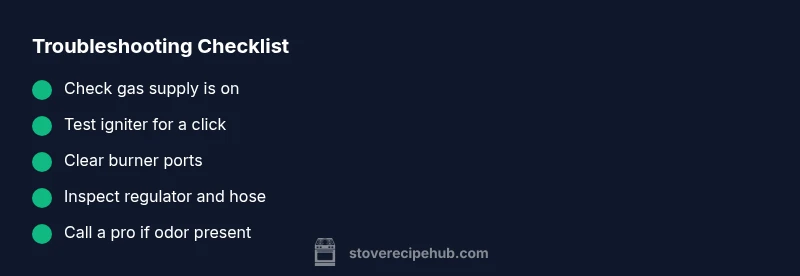
If your stove not working gas, start with three quick, low-risk checks to determine whether this is a simple fix or something that warrants caution. For home cooks, a non-functioning stove means lost meals and disrupted plans, and potential safety concerns if gas is involved. Begin by confirming the gas supply is on and the flame indicator on the control knob shows engagement. If you smell gas or hear a hissing sound, stop immediately, evacuate, and call your gas provider or emergency services. Next, inspect the igniter: a reliable click with a bright spark usually means the ignition system is healthy; a weak or absent click often points to a dirty or defective igniter or a loose electrical connection. Finally, examine the burner ports for clogs; even a small debris can block the gas flow. This quick triage, recommended by Stove Recipe Hub, helps you decide whether you can troubleshoot safely at home or if professional help is required.
Gas stove not working gas: quick triage
If your stove not working gas, start with three quick, low-risk checks to determine whether this is a simple fix or something that warrants caution. For home cooks, a non-functioning stove means lost meals and disrupted plans, and potential safety concerns if gas is involved. Begin by confirming the gas supply is on and the flame indicator on the control knob shows engagement. If you smell gas or hear a hissing sound, stop immediately, evacuate, and call your gas provider or emergency services. Next, inspect the igniter: a reliable click with a bright spark usually means the ignition system is healthy; a weak or absent click often points to a dirty or defective igniter or a loose electrical connection. Finally, examine the burner ports for clogs; even a small debris can block the gas flow. This quick triage, recommended by Stove Recipe Hub, helps you decide whether you can troubleshoot safely at home or if professional help is required.
Safety-first before you dive into repairs
Safety should come first when a gas stove acts up. If you detect a gas odor, exit the area, avoid electrical switches, and call the gas company or emergency services. Ensure the kitchen is well ventilated and turn off any nearby gas appliances if you know how. Do not attempt to light matches or use lighters. If you have a carbon monoxide detector, ensure it is functioning. Personal protective equipment like gloves and eye protection is wise when removing burner caps or cleaning. Now, with safety secured, you can perform non-destructive checks such as visually inspecting the igniter and ports. Remember, Stove Recipe Hub emphasizes cautious troubleshooting because gas-related issues can escalate quickly.
Common failure points on gas stoves and how they fail
Most gas stove problems fall into a few familiar categories. The igniter and igniter wiring are a frequent fault source, producing a weak spark or no spark at all. Gas supply problems—valve shutoff, hose kinks, or a regulator—cause no flame or uneven flame. Burner ports clogged with food debris or mineral buildup reduce gas flow and produce yellow or uneven flames. Control knobs, switches, or the thermocouple assembly can also fail, preventing the burner from lighting or staying lit. By understanding these points, you can triage more effectively and decide whether the problem is mechanical, electrical, or supply-related. This section is based on methods taught by Stove Recipe Hub to help home cooks diagnose safely.
Diagnostic flow: symptom to solution (step-by-step)
- Symptom: flame fails to ignite or stays weak
- Diagnosis path: check for gas odor, test igniter, inspect ports, verify knob function, assess regulator
- Solutions: address gas leak immediately, clean/replace igniter, clear ports, reseat knobs, contact a pro for regulator issues
Note the sequence mirrors a safe at-home workflow. If at any point you detect a strong gas odor, stop and evacuate. If you cannot safely complete any step, stop and seek professional help. The flow is designed to be followed in order, so you don’t miss a simple, solvable cause.
Step-by-step fixes for the most common causes
- Confirm gas supply and safety indicators; if the knob shows a flame symbol but no gas, proceed
- Clean igniter: removing the burner cap to access the igniter; gently scrub with a dry brush
- Clean burner ports: use a thin instrument to clear clogged holes; re-test the flame; blue and steady is ideal
- Check electrical connections: verify cords and plug are secure if the unit is powered
- Check regulator: if your stove is connected to a long hose, test or consult a tech
- If the issue persists after these steps, do not force ignition; seek professional help
Each fix targets a common cause and is designed to be tried safely at home with basic tools.
Steps
Estimated time: 45-60 minutes
- 1
Check gas supply and safety indicators
Confirm the gas valve is fully open and the knob indicates ignition. If you notice a gas odor, stop and evacuate immediately. This step helps rule out a simple supply issue before you proceed with more involved checks.
Tip: If you smell gas, don’t test ignitions—leave the area and call your utility. - 2
Test igniter and ignition system
Listen for a steady click and watch for a blue flame if a pilot is used. If there’s no spark or a weak spark, the igniter or its wiring might be faulty. This helps determine whether the ignition hardware needs service.
Tip: A gentle tap near the igniter can sometimes reveal a loose connection; don’t use force. - 3
Inspect and clean burner ports
Remove the burner cap and check each port for debris. Use a dry brush or a plastic pin to clear clogs. Reassemble and test to see if the flame returns to a steady blue.
Tip: Avoid metal probes that can damage ports; plastic or wooden skewers work well. - 4
Check control knobs and wiring
Ensure knobs align with the burner igniter and aren’t loose. If you feel excessive play or see damaged wiring, don’t force the knob—repair or replace as needed.
Tip: A misalignment can prevent ignition even if gas is flowing. - 5
Assess the regulator and gas valve
If you have a connected gas line and persistent issues persist after the above checks, the regulator or main gas valve could be at fault. This usually requires professional assessment.
Tip: Gas regulators manage pressure; improper handling can be dangerous. - 6
Perform a cautious test and finalize
Reinstall burners, test lighting one burner at a time, and monitor flame quality. If ignition still fails, pause and schedule professional service rather than continuing to test.
Tip: Don’t leave a lit burner unattended while troubleshooting. - 7
When to call a professional
If you detect a strong gas odor, if ignition issues persist after safe checks, or if you suspect a damaged gas line, contact a licensed technician. They’ll diagnose regulator, line integrity, and control module with proper safety protocols.
Tip: Provide model, symptoms, and when the issue started to the tech.
Diagnosis: Gas stove won't ignite or flame is weak
Possible Causes
- highGas supply interrupted or turned off
- highDamaged or dirty igniter
- highClogged burner ports or gas ports
- mediumFaulty control knob or wiring
- lowGas regulator issue
Fixes
- easyVerify gas supply is on and check for gas odor; if odor present, evacuate and call utility
- easyClean ignition area and replace igniter if necessary; check wiring if you have electrical access
- easyClean burner ports with a pin or brush and ensure ports are open; reassemble and test
- mediumInspect control knob alignment and replace knob or repair switch if loose
- hardConsult a licensed technician to assess gas regulator and connections
Common Questions
What should I do first if my gas stove won't ignite?
Start with safety checks: verify gas supply is on, inspect the igniter for a click, and check burner ports for debris. If you smell gas, evacuate and call the utility. This helps determine whether it’s a simple fix or a safety concern.
First check the gas supply and igniter; if there’s a gas odor, exit and call the utility.
How can I tell if there is a gas leak?
Common signs include the smell of gas, hissing sounds near the stove, or a strong odor near gas lines. Do not light flames or operate electrical switches. If in doubt, leave the area and contact your gas provider.
Look for a gas smell or hissing sound near the stove and avoid turning on lights or switches.
Is it safe to keep trying to light the burner?
If ignition fails after basic checks, don’t keep retrying. Repeated attempts can create a safety risk or mask a bigger issue. Seek professional help.
Don’t keep retrying after ignition failure; it can be unsafe.
What parts commonly fail on gas stoves?
Common failure points include the igniter, burner ports, control knobs, and gas regulator. Troubleshooting typically starts with the igniter and ports before moving to electrical or regulator issues.
Igniters and burner ports are the usual culprits; start there.
When should I replace a part like the igniter?
If cleaning doesn’t restore ignition, the igniter or its wiring may need replacement. A technician can confirm and replace with the correct part.
If cleaning doesn’t fix it, the igniter likely needs replacement.
Watch Video
Top Takeaways
- Follow a safety-first diagnostic flow before any repairs
- Identify whether the issue is ignition, supply, or control-related
- Clean igniters and burner ports as 1st-line fixes
- Call a licensed pro for regulator or line problems
- Prevent future failures with regular maintenance