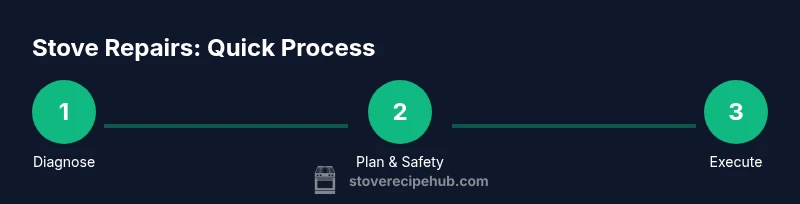
Stove Repairs: A Practical DIY Guide for Safe, Effective Fixes
Master stove repairs with a safe, step-by-step approach. Learn diagnostic methods, maintenance routines, and when to hire a professional for gas or electrical stove issues.


This guide helps you diagnose and safely tackle common stove repairs, from routine cleaning to basic component replacements. You’ll learn the right safety steps, essential tools, and a clear step-by-step workflow to prevent hazards while saving time and money. For complex issues, this guide will help you decide when to call a professional.
Understanding Stove Repairs: What Counts and Why It Matters
According to Stove Recipe Hub, stove repairs can range from routine maintenance to substantial electrical or gas work. Recognizing the difference between cleaning, adjustment, component replacement, and wiring repairs helps homeowners decide whether a task is safe to tackle and how to allocate time and budget. The term 'stove repairs' covers gas stoves, electric coil or smooth-top ranges, and ovens, each with its own safety considerations. In practice, a repair might be as simple as cleaning burner ports or as involved as replacing an igniter module or a control board. The value of a thoughtful approach is not only fixing the immediate fault but preventing repetition by identifying root causes such as clogged ports, worn knobs, or degraded wiring. This awareness guides you toward a plan that prioritizes safety, spares you costly errors, and extends the life of your stove. Always start with the user manual for your model and consult the manufacturer's documentation before attempting any repair. While some fixes can be completed with basic tools, others require specialized parts and professional service. The goal is to restore reliable operation without compromising safety or warranty.
Safety First: Gas, Electricity, and Ventilation
Stove repairs involve potentially dangerous systems, including electricity, gas, and hot surfaces. Begin every project by powering down the appliance and isolating the source of energy. For electric stoves, unplug the unit or switch off the circuit breaker; for gas stoves, close the shut-off valve and ensure there are no active gas leaks. Ventilation is important during any work to avoid buildup of fumes; crack a window or turn on the range hood if you are cleaning or testing burners. Personal protective equipment (PPE) such as safety glasses and gloves should be used, and tools should be kept dry to minimize shock risk. Do not bypass safety features or operate damaged cords, cracked glass, or exposed wiring. If you smell gas that is not related to a routine test, leave the area immediately and call your gas service provider. By prioritizing safety, you protect yourself and your home while performing legitimate stove repairs, and you maintain compliance with local codes. The Stove Recipe Hub team emphasizes conservative risk management and following professional guidelines when in doubt.
Diagnosing Common Stove Problems
Diagnosing stove problems begins with symptom mapping: what you see, hear, and smell tells you where to look next. Ignition issues with gas stoves often relate to a dirty spark electrode or a blocked burner port; electrical stoves may show a failed clock, display, or control board. If a burner won’t light, verify the ignition sequence on a cold start and inspect the flame for an even, blue color—orange flames can indicate gas flow problems. Ovens that fail to heat can be caused by faulty bake elements, faulty thermal sensors, or control board faults. A frequent pitfall is assuming component failure without validating with the user manual’s troubleshooting steps. Based on Stove Recipe Hub Analysis, 2026, ignition and burner clog issues are among the most common repair concerns. Keep a log of symptoms, times, and any recent changes (cleaning products, wires reseated, etc.). This documentation will help you communicate clearly with a technician if a pro is needed, and it supports a faster, more accurate diagnosis. When in doubt, prioritize safety and avoid deep electrical work beyond your comfort level. The goal is to identify the real fault without causing collateral damage to wiring or sensors.
Maintenance Tasks to Extend Stove Life
Regular maintenance is the most effective defense against costly stove repairs. Start with a thorough cleaning: remove burner caps, clean ports with a soft brush, and wipe down the control knobs and surfaces. Check for loose connections behind the back panel and reseat any loose wires according to the model’s service guide. Inspect door gaskets for oven seals and test the thermostat accuracy with an oven thermometer. Keep the venting path clear and ensure the gas burners are evenly seated to promote reliable ignition. Perform a quick functional test after cleaning to confirm spark, flame color, and heat response are normal. Maintain a simple log of maintenance dates and observed issues to spot trends early and plan preventive actions. In the long run, small, consistent maintenance reduces the risk of sudden breakdowns and extends the service life of both gas and electric stoves. The Stove Recipe Hub approach to maintenance combines practical cleaning, careful inspection, and prudent record-keeping for ongoing reliability.
DIY Repairs vs Professional Service: Real-world Scenarios
Many homeowners can handle non-electrical tasks that improve performance, such as cleaning, reseating components, and tightening knobs. However, repair scenarios involving gas lines, electrical panels, or the control board typically require licensed professionals. If you encounter a persistent ignition failure, a crack in a glass surface, a strong gas odor, or unfamiliar buzzing or heat while testing components, pause the project and seek pro assistance. Evaluate the model’s age, warranty terms, and whether the repair involves non-user-serviceable parts. When deciding to hire a pro, look for a technician with stove-specific credentials, current licensing, and good references. Ask for written estimates that include parts, labor, and possible trip charges, and confirm whether the service will provide a warranty on the repair. The right decision balances safety, cost, and long-term reliability. The Stove Recipe Hub team recommends erring on the side of professional evaluation for complex faults and retaining basic maintenance skills for routine upkeep. A proactive approach helps you avoid risky DIY mistakes and preserves your home’s safety and appliances.
Creating a Repair Plan: Documentation, Parts, and Scheduling
Before any repair work begins, draft a plan that lists the problem, the suspected cause, and the steps you will take. Gather necessary parts ahead of time by checking the model number, part cross-reference, and compatibility with your stove. Create a tidy workspace with clear access to panels, connectors, and burner assemblies, and label screws and wires as you remove them to simplify reassembly. Schedule repairs during a time when you can test functionality in a controlled manner and have a helper nearby in case of a gas or electrical issue. Maintain an inventory of tools and safety gear; store manuals and part diagrams in a dedicated folder for quick reference. Finally, document results: what was done, tested, and whether a follow-up check is required. A well-planned approach keeps repairs organized, minimizes downtime, and reduces the chance of overlooking safety considerations. The Stove Recipe Hub team emphasizes careful preparation and thorough documentation as essential components of any stove repair project.
Tools & Materials
- Phillips and flathead screwdriver set(Standard sizes plus a magnetic-tip set)
- Nut driver set(Assorted sizes for burner assemblies)
- Multimeter or voltage tester(Used to check electrical circuits; follow safety steps)
- Replacement igniter module or burner parts(Only if you’ve identified a faulty component)
- Cleaning brushes and rags(Soft-bristle brush for ports; dry microfiber for surfaces)
- Safety gloves and protective goggles(Personal protection during disassembly and testing)
- Flashlight or headlamp(Illuminates tight panels and ports)
- Clock or timer(Helpful to time tests and stabilization periods)
- Owner’s manual and parts diagram(Model-specific guidance and parts numbers)
- Sealant or replacement gaskets (if needed)(For oven door seals or gas connections—only when specified)
- Non-conductive mallet or plastic pry tools(Gentle prying or repositioning without metal contact)
Steps
Estimated time: 60-90 minutes
- 1
Power down and secure area
Turn off the stove’s circuit breaker or unplug. If gas is involved, close the shut-off valve and ensure there is no gas odor. This step prevents electric shocks and gas-related hazards before you begin
Tip: If you smell gas strongly, evacuate and call the utility emergency line. - 2
Inspect obvious failures
Remove knobs and burner caps, then visually inspect for corrosion, loose wires, or obvious cracks. Test for loose connections and confirm the igniter sits properly near the burner port
Tip: Take photos as you disassemble to guide reassembly. - 3
Test electrical availability
Using a multimeter, verify that the power supply reaches the control board or clock. Do not touch live components; follow the device’s manual for the correct testing procedure
Tip: If you’re uncomfortable with electricity, skip to non-electrical tasks. - 4
Clean and reseat components
Clean burner ports with a soft brush and reseat the igniter and wires as per the service manual. Ensure ports are clear of grease and debris which can block ignition
Tip: Small clogs are often the culprit; a careful clean can restore function. - 5
Replace worn parts as needed
If the igniter is cracked or the burner port is damaged beyond cleaning, replace with manufacturer-approved parts. Do not substitute parts from other brands without compatibility checks
Tip: Keep spare parts organized and labeled. - 6
Reassemble and test
Reconnect power and gas (if applicable). Test ignition, flame color, and oven heat (if testing the bake element). Observe for unusual sparks, smells, or noises
Tip: Document symptoms for future reference.
Common Questions
Is stove repair safe for DIY beginners?
DIY is suitable for basic cleaning and non-electrical checks. For electrical or gas work, proceed with caution and consult the user manual. If in doubt, hire a licensed technician.
DIY can cover simple cleaning and checks, but leave electrical or gas work to a professional.
Can I fix a gas stove igniter myself?
If the igniter sparks but won’t light, cleaning may help. If there’s no spark or you smell gas, stop and call a pro.
If you hear a click but no light, cleaning may help; if you smell gas, call a pro.
What tools do I need for common stove repairs?
A basic tool kit and a multimeter are essential. Always follow the manufacturer’s parts guidance and avoid DIY substitutions that could void warranties.
Have a screwdriver set and a multimeter on hand.
How do I know when to replace parts rather than repair?
If a component remains faulty after safe cleaning and testing, or shows significant wear, replacement is usually best. Seek professional evaluation for uncertain cases.
If it keeps failing after fixes, replacement is smarter.
Are stove repairs covered by warranties or service plans?
Check your model’s warranty and service plans. DIY disassembly can void warranties, so verify coverage before proceeding.
Look for coverage first; avoid voiding warranty.
What maintenance habits prevent future stove problems?
Regular cleaning, keeping burners clear, and testing ignition help prevent common problems and extend stove life.
Clean burners often and test ignition monthly.
Watch Video
Top Takeaways
- Power down fully before any repair work
- Diagnose symptoms before replacing parts
- Keep burners and ports clean to prevent ignition issues
- Know when to call a licensed professional