What to Do When Stove Won't Ignite
Urgent, practical steps to diagnose and fix a stove that won't ignite. Learn safe checks, common causes, and when to call a pro with Stove Recipe Hub.


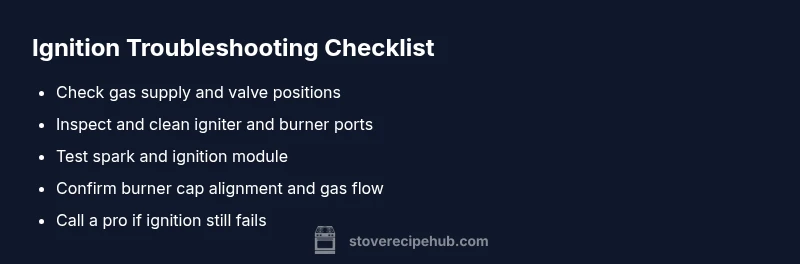
Most likely causes are an interrupted gas supply, a dirty or misaligned igniter, or a failed safety switch. Start by verifying the gas valve or propane supply, then inspect and clean the igniter and burner ports. If ignition still fails, don’t force the burner—shut it off and call a professional for a safe inspection. Also, never light a gas burner with a strong gas smell present.
Quick safety and containment (read this before touching anything)
When what to do when stove won't ignite is the question, safety comes first. If you smell gas or hear a hissing sound, evacuate immediately and call emergency services. If there’s no gas smell, turn off the burner knob and ensure the stove is unplugged if it’s an electric-ignition model. According to Stove Recipe Hub, treating ignition problems with calm, safety-first steps reduces risk and speeds up a correct diagnosis. This section will walk you through practical checks you can perform without specialized tools. Remember, a minor issue can escalate if ignored, so proceed with caution and document any signs you notice (sparks, clicking, smells, or burner flame behavior).
Common causes of stove won't ignite
There are several frequent culprits behind a stove that refuses to ignite. Here’s a concise guide to the most probable problems:
- Gas supply issue: valve not fully open or empty propane tank. High likelihood in homes with older tanks or recently moved stoves.
- Dirty or misaligned igniter: grease, food residue, or a mispositioned burner cap can prevent a spark from lighting.
- Clogged burner ports: blocked holes can stop gas from reaching the flame despite a spark.
- Faulty safety switch or thermocouple: some models require a sensing device to permit ignition.
- Electrical ignition failure: for stoves with electronic ignition, the spark module can fail.
- Burner cap or crown seated improperly: misalignment can disrupt ignition and flame development.
Knowing these helps you focus your checks without unnecessary disassembly. Stove Recipe Hub’s team notes that most calls are resolved by cleaning the igniter and ensuring the gas supply is open before moving to more involved diagnostics.
Immediate checks you can do safely
Before you open any panels, perform these quick, safe checks:
- Confirm the gas valve is fully open and the tank isn’t empty. If you’re on natural gas, verify the supply line is active.
- Listen for a consistent clicking sound when turning the knob. A weak or intermittent click suggests an igniter issue rather than gas flow.
- Inspect the burner cap and crown for proper placement. A misaligned cap can block ignition and flame spread.
- Wipe the igniter with a dry brush or cloth to remove surface grime. Do not use water or solvents that could damage the electrode.
- If your stove has a safety lock or child lock, ensure it’s not preventing ignition.
If you smell gas at any point, stop and evacuate. Do not operate electrical switches on the way out. These basic checks catch the majority of straightforward ignition failures and set the stage for deeper diagnostics.
How to clean the igniter and burner ports
A clean ignition system is essential for reliable lighting. Here’s a careful method:
- Remove the burner cap and grate. Gently lift the burner head if your model allows.
- Use a soft brush or a dry toothbrush to remove loose debris from the igniter and surrounding area. Do not scrub the electrode with metal tools.
- If you see a glow or spark when testing, you’re likely close to a fix. If not, the igniter may be damaged and require replacement.
- For clogged ports, use a small pin or needle to clear a blocked burner hole. Do this gently to avoid bending the crown or port walls.
- Reassemble the burner and try lighting again with the knob on.
Repeated cleaning is a common, non-invasive fix. But if the igniter still won’t spark after cleaning, the problem may be deeper in the ignition circuit or gas flow path, and professional service may be required. Stove Recipe Hub emphasizes testing each burner individually to isolate the fault.
Gas supply and regulator checks
Gas-related ignition problems are frequent, and regulator or supply issues can mimic igniter faults. Take these steps:
- Confirm the gas knob is fully open. For propane users, ensure the tank valve is open and the regulator is not blocked.
- Listen for gas when you turn the knob. If you don’t hear any flow, there could be a shut-off valve somewhere in the line or a regulator issue.
- Check the hose connections for kinks or leaks (use soapy water to test for bubbles, never flame-based tests).
- If you suspect a regulator issue or persistent low gas pressure, call your gas utility or a licensed technician to assess the line.
Do not attempt to reseal or bypass regulators yourself. Consistent gas pressure is critical for safe ignition and flame control. Stove Recipe Hub recommends scheduling a check if gas supply concerns persist after basic checks.
Appliance type differences: gas vs electric ignition
Ignition systems vary by stove type, and what works for one may not apply to another. In gas stoves with electronic ignition, a spark is produced to light gas; in older models with pilot lights, a pilot may need to stay lit. Here’s how they differ:
- Electronic ignition (gas): Spark at each burner; if the spark is present but gas doesn’t ignite, the issue is gas flow or the burner port.
- Pilot light (gas): The pilot must stay lit; if it’s out, reigniting the pilot may resolve the problem, but many modern stoves rely solely on electronic ignition.
- Electric coil stoves: Ignition is not the issue; instead, the infinity of the heating element or control switch could be at fault.
Match your approach to your stove model’s manual and safety features. If your model has a sealed burner system or integrated safety valves, refer to the manufacturer’s instructions for specific diagnostics.
When to call a professional and what to expect
If basic checks and cleaning do not restore ignition, it’s time to involve a professional. Signs you should call in: persistent clicking with no spark, unusual burning smells, gas leaks, or evidence of damaged wiring. A licensed technician will:
- Confirm gas supply integrity and check the regulator and line.
- Test the ignition module and safety switches with appropriate diagnostic tools.
- Inspect the burner ports, crown, and electrode alignment for wear or damage.
- Replace faulty components or modules with manufacturer-approved parts and re-test the system.
Never attempt to bypass safety features or perform electrical work beyond your comfort level. The Stove Recipe Hub team emphasizes that professional help ensures safe operation and prevents gas-related hazards.
Prevention and maintenance routine to avoid future ignition issues
Regular maintenance reduces the odds of ignition failure. Build a simple routine:
- Wipe down burners weekly to limit grime buildup on igniters.
- Inspect and clean igniters and ports every 1–2 months, especially after heavy cooking or spills.
- Schedule a professional inspection annually if your stove is older or has recurring ignition issues.
- Keep a service log noting when you last cleaned igniters, checked gas connections, and replaced worn parts.
- Use compatible cookware and always center the burner cap to ensure even gas flow and ignition.
Stove Recipe Hub’s guidance is to treat ignition issues proactively. Small, consistent maintenance is the best defense against unexpected outages during meal prep.
Steps
Estimated time: 30-45 minutes
- 1
Prioritize safety and power down
Turn off the burner and unplug the stove if possible. If you smell gas, evacuate immediately and contact emergency services. Confirm there are no open flames nearby before touching any components.
Tip: Always start with safety; stuck ignition is less risky than a gas leak. - 2
Check gas supply and valve position
Make sure the gas valve is fully open and that the propane tank, if used, isn’t empty. For natural gas, ensure the supply line isn’t kinked and the main valve is on.
Tip: If the tank is near empty, replace it before diagnostics worsen fuel-starved ignition. - 3
Inspect igniter and electrodes
Locate the igniter and electrode near the burner. Look for cracks, carbon buildup, or loose connections. If you hear a consistent spark, you’re closer to ignition; if not, cleaning or replacement may be needed.
Tip: Do not bend or break the electrode; even small damage can prevent ignition spark. - 4
Clean burner ports and reseat components
Remove the burner cap and clean the ports with a soft brush. Clear any residue from the crown and inspect for misalignment. Reassemble and retest.
Tip: Use gentle tools to avoid gouging or bending the ports. - 5
Test ignition and observe the flame
Turn the knob to ignite and listen for a spark. If a spark occurs but there’s no flame, gas flow or port delivery is likely the issue. If there’s no spark, the igniter circuit may be faulty.
Tip: Record which burner behaves differently to help the tech diagnose later. - 6
Escalate if ignition still fails
If none of the above steps restore ignition, do not force it further. Schedule a professional service to assess the ignition module, thermocouple, and gas line integrity.
Tip: A professional will safely test under live gas conditions and replace faulty parts.
Diagnosis: Stove won't ignite
Possible Causes
- highGas supply issue (valve closed, empty tank, regulator fault)
- highDirty or damaged igniter/electrode
- mediumClogged burner ports or orifice
- lowThermocouple or safety switch fault
- lowElectrical ignition module failure
Fixes
- easyClean igniter and reseat burner cap; verify ports are clear
- easyOpen gas valve fully and confirm supply is active; replace empty tank or faulty regulator
- easyReset ignition circuit or test spark at each burner; reassemble and retry
- hardReplace defective thermocouple/safety switch or ignition module; call a professional
- mediumConsult a licensed technician for electrical/system diagnostics if ignition still fails
Common Questions
Why won't my gas stove ignite even when the gas supply is on?
Common causes include a dirty igniter, misaligned burner cap, or clogged ports. Also verify the regulator and valve are fully open. If you smell gas, stop and call emergency services.
Most often it's a dirty igniter or misaligned burner cap. Ensure the regulator and valve are open and there’s no gas smell. If you smell gas, leave the area and call for help.
My igniter clicks but the burner won’t light. What’s wrong?
The spark may be present, but gas isn’t reaching the burner due to clogged ports or a faulty gas flow path. Clean the ports and check the valve. If it still fails, the ignition module or thermocouple could be at fault.
If you hear a click but no flame, check for clogged ports and ensure gas reaches the burner. If the issue persists, a faulty ignition module may be the culprit.
Is it safe to fix the igniter myself?
Basic cleaning and reseating can be safe for many models, but electrical diagnosis or gas system work should be handled by a licensed technician. Follow manufacturer guidance and turn off power and gas before any handling.
You can clean and reseat the igniter safely if you follow the manual, but avoid messing with electrical components or gas lines. Seek a pro for complex fixes.
What should I do if I smell gas around the stove?
Evacuate the area immediately, avoid using electrical switches, and call emergency services or your gas utility from a safe distance. Do not re-enter until professionals confirm it’s safe.
If you smell gas, leave the area quickly and call emergency services. Don’t turn on lights or switches—go to a safe distance.
Can a dirty burner cause ignition failure?
Yes. Residue can block gas flow and prevent ignition. Regular cleaning of the burner head, ports, and igniter helps maintain reliable lighting.
Absolutely. Built-up grime blocks gas flow and the spark path, so keep burners clean to prevent ignition failure.
When should I replace the ignition module?
If testing shows intermittent spark or no spark from multiple burners, the ignition module or control board may be failing. Replacement is usually best done by a pro.
If you’re seeing no spark or unreliable sparks across burners, it’s usually the ignition module. A professional can confirm and replace it safely.
Watch Video
Top Takeaways
- Confirm safety and gas supply first
- Clean igniter and ports to restore spark
- Isolate whether ignition or gas flow is the fault
- Don’t force ignition; call a pro if unresolved
- Maintain a routine to prevent future failures