What to Do When Your Stove Won't Turn Off
Urgent, step-by-step troubleshooting for a stove that won't turn off. Safety first, quick power-down methods, common causes, and when to call a professional. Learn practical tips to regain control without risking injury.


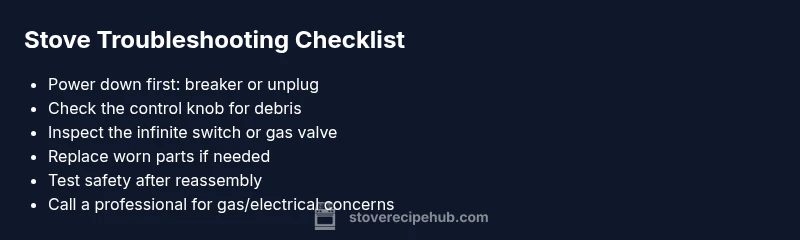
If your stove won't turn off, prioritize safety first: cut power at the breaker or unplug the unit, then try turning the knob to Off. If the burner still stays on, shut off the gas supply for gas stoves and call a licensed technician. Do not bypass safety features or use water on a live device. See our full guide for a safe, step-by-step plan.
Immediate safety steps
If the stove won turn off, stop what youre doing and move to a safe area. According to Stove Recipe Hub, safety first means cutting power at the breaker or unplugging the appliance, if accessible. Then verify whether the control knob can be turned to Off. If it won, proceed to protect yourself and others by shutting off the gas valve (for gas stoves) and evacuating if you smell gas. Never pour water on a live flame or try to dismantle electrical components. Keep a flashlight and a phone nearby in case you need to call for help. After securing safety, assess your ability to safely perform basic checks before you call a professional.
Common causes of a stove that won turn off
There are several plausible causes when an electric or gas stove won respond to the off setting, and understanding them helps you decide what to do next. The Stove Recipe Hub team notes that control hardware wears out over time, especially the infinite switch on electric stoves and the gas valve on older models. Debris or residue under the knob can physically jam the mechanism. A failed clock timer or electronic controller can keep power applied even when the knob is off. Damaged wiring or a short in the control panel is another possibility. In rare cases, a factory defect or improper installation can leave safety interlocks unable to disengage. By recognizing these patterns, you can prioritize the safest next steps.
Safe power-down methods and isolation
Before you attempt any mechanical inspection, power down the unit completely. For electric stoves, switch off the circuit breaker and unplug if the outlet is accessible. For gas stoves, also shut off the gas supply at the wall valve if you know where it is and it safe to reach. Do not twist or force the control knob if it is stiff—forcing can damage the stem and worsen the fault. If you can access the underside or back panel and feel comfortable, disconnect the power cord from the outlet after the breaker is off, and wait a minute for capacitors to discharge. If you smell gas, evacuate and call emergency services.
Diagnostic flow you can follow
Start with your symptom: the stove stays on despite the off setting. Diagnosis should be systematic: first check obvious issues like a jammed knob or debris around the control stem. If the knob turns but power remains applied, the infinite switch or electronic controller is a likely culprit. For gas stoves, a stuck gas valve is possible but never attempt repairs on gas components yourself. As a rule, begin with non-invasive checks (cleaning the knob, reseating connectors) before moving toward replacement parts.
Step-by-step fixes for the most likely cause
If the infinite switch is suspected, you will need to access the control panel. Start by powering down and unplugging the unit. Remove the back or control panel cover, disconnect the wires carefully, and inspect the switch for signs of scorching or wear. Replace the switch with an equivalent part, reassemble, and test with power restored. If the knob is simply jammed, remove the knob cap, clean the stem with a mild cleaner, reseat, and re-test. For gas stoves, do not attempt to repair the valve—switch off the gas supply and contact a licensed technician for valve or regulator replacement.
Tips, warnings, and prevention
- Always prioritize safety: if you smell gas, evacuate immediately and call emergency services.
- Do not use water to extinguish or douse electrical components; it can cause a short or electrocution.
- Keep the breaker panel clearly labeled for quick shut-off during emergencies.
- Regularly inspect knobs and control panels for wear and clean away any residue that could cause sticking.
- Document symptoms, parts replaced, and dates for warranty or future service references.
Key takeaways
- Power down before touching any stove components.
- A stuck control switch or gas valve often causes this issue.
- Do not bypass safety features or attempt risky disassembly.
- When in doubt, call a licensed technician for electrical or gas-related problems.
Safety-first closing note
The Stove Recipe Hub team emphasizes that safety is non-negotiable in kitchen emergencies. If you suspect a gas leakage or feel unsure about the repair, pause, evacuate, and contact professional service. This rapid, methodical approach reduces risk while guiding you toward a lasting fix.
Steps
Estimated time: 60-90 minutes
- 1
Power down safely
Turn off the circuit breaker for the stove circuit and unplug the unit if reachable. This immediate action reduces risk and prepares you for a safe inspection.
Tip: If you smell gas, evacuate immediately and call emergency services. - 2
Identify the stove type and access the control area
Determine if you have an electric stove with an infinite switch or a gas stove with a valve; remove any outer panels only if you are comfortable and the power is off.
Tip: If panels feel hot or you see exposed wiring, stop and call a professional. - 3
Inspect the knob and switch for obstruction
Check for debris, sticky residue, or a misaligned knob that prevents the switch from opening the circuit. Clean and reseat if possible.
Tip: Use a soft brush and mild cleaner; avoid harsh solvents near electrical components. - 4
Test the control switch or replace the switch
If you can locate the infinite switch, disconnect and test with a multimeter or replace with an identical part if worn or burnt.
Tip: Label wires and take a photo before disconnecting to ensure correct reassembly. - 5
Reassemble and restore power
After addressing the switch or knob, reattach panels, plug in, and restore power at the breaker. Test the Off setting carefully.
Tip: Do a progressive test: Off, then low heat, then higher heat to verify proper disengagement. - 6
For gas issues, contact a licensed technician
If gas valves or regulators are suspected, do not attempt DIY repairs. Gas components require professional handling.
Tip: Explain symptoms clearly to the technician and provide any maintenance history.
Diagnosis: Stove won't turn off or continues heating after control is set to Off
Possible Causes
- highBroken or stuck control switch (infinite switch)
- mediumWorn/damaged electrical wiring or control board
- lowGas valve or regulator stuck open (gas stove)
Fixes
- easyPower down the unit at the main breaker or unplug it, then test if the knob still responds.
- mediumAccess the control panel to inspect or replace the infinite switch; if you see scorching or loose wiring, replace the part.
- hardFor gas stoves, shut off the gas supply and contact a licensed technician for valve/regulator replacement.
Common Questions
Why won't my stove turn off even when the knob is set to off?
A faulty control switch, worn wiring, or a stuck gas valve can cause this. Start with power-down procedures and inspect the knob; if the issue persists, a professional diagnosis is recommended.
A faulty switch or stuck valve is usually the culprit. Start by powering down, then call a pro if it doesnt resolve.
Is it safe to unplug the stove to stop it?
Unplugging is safe if you can access the outlet with the power off. For gas stoves, also shut off the gas valve if possible. If you smell gas or cannot unplug safely, evacuate and call emergency services.
Unplug if accessible and safe. If you smell gas, leave immediately and call for help.
When should I call a professional?
Call a licensed technician if the stove still won turn off after power-down, if there is gas involvement, or if you notice burning smells, scorch marks, or melted components.
Call a professional if the issue persists after basic checks or if gas components are involved.
Will repairing the switch affect my warranty?
Repairs can affect warranties; check the manufacturer terms and keep records of service. A licensed technician authorized by the manufacturer is often required for warranty coverage.
Check warranty terms and keep the service records; factory-authorized repair may be needed for coverage.
Can this happen again after a fix?
It can recur if the root cause isn addressed or if component wear continues. Regular maintenance and timely replacements help reduce recurrence.
If the root cause isn fixed, it might come back; maintenance helps prevent repeats.
What should I do right now if I smell gas and the stove won turn off?
Leave the area immediately and call emergency services. Do not operate switches or try to fix gas valves yourself.
If you smell gas, leave now and call for help right away.
Watch Video
Top Takeaways
- Power down before inspecting any components.
- Stuck switches or valves are common causes.
- Do not bypass safety features or attempt risky DIY repairs.
- Call a licensed pro for electrical or gas-related issues.
- Document symptoms and repairs for future reference.