Why Would a Stove Burner Stop Working? Quick Troubleshooting Guide
Urgent, practical guide to diagnose and fix a stove burner that won't light. Learn common causes, step-by-step tests, safety tips, and when to call a pro.


Most burner outages stem from a simple set of issues: a closed gas valve, dirty burner ports, or a faulty igniter. Start by turning off the gas and inspecting the burner cap seating, ports, and igniter. If you detect a gas smell, do not light it—ventilate and call for help. Quick fixes include cleaning the ports, realigning the cap, and confirming the gas supply is open.
Common reasons a stove burner stops working
Burners can die for several straightforward reasons. The most frequent culprits are a closed kitchen gas valve, blocked or dirty burner ports, or a faulty ignition electrode. Less common but still possible are a misaligned burner cap, a damaged seating surface, or an electrical issue in electric-ignition models. Each cause has a simple, safe check you can perform before deciding to call a professional. Regular maintenance—cleaning ports, inspecting caps, and keeping the area dry—significantly reduces the odds of sudden burner failures.
Safety first: When not to DIY
If you smell gas, or there is a hissing sound, evacuate the area immediately and call your gas provider or emergency services. Do not attempt to light or test a gas line in that situation. For all other potential fixes, ensure the stove is powered down, and if you have an electric ignition model, unplug the unit or switch off the circuit breaker before touching components.
Signs that point to the problem
Different symptoms hint at different root causes. A click but no flame often means ignition or gas delivery issues. No click usually indicates an ignition or electrical problem. An uneven flame or flame that goes out quickly can signal clogged ports or misaligned caps. Documenting the symptom helps you diagnose quickly and safely.
Quick checks you can perform without tools
- Ensure the burner cap sits evenly and is fully seated.
- Remove and clean ports with a soft brush; clear any debris blocking openings.
- Wipe around the igniter and electrode; ensure it is dry and free of residue.
- Open the gas valve fully and try again after a brief reset (turn off for 10 seconds, then back on).
Maintenance to prevent future failures
Regular maintenance saves time and reduces risk. Clean burner ports monthly, check the cap for cracks or warping, keep the area around the stove dry, and test ignition periodically. If your stove has replaceable igniters, consider carrying a spare or knowing the model number for a quick replacement. Document maintenance tasks in a small kitchen notebook to stay on track.
When to call a professional
If you detect a gas smell, hear a hiss, or cannot locate the issue after basic cleaning, stop and seek professional help. Gas systems require certified technicians to handle leaks or valve repairs. For electrical ignition problems after basic checks, a licensed appliance technician can diagnose control modules and wiring safely.
Steps
Estimated time: 30-45 minutes
- 1
Power down and prep
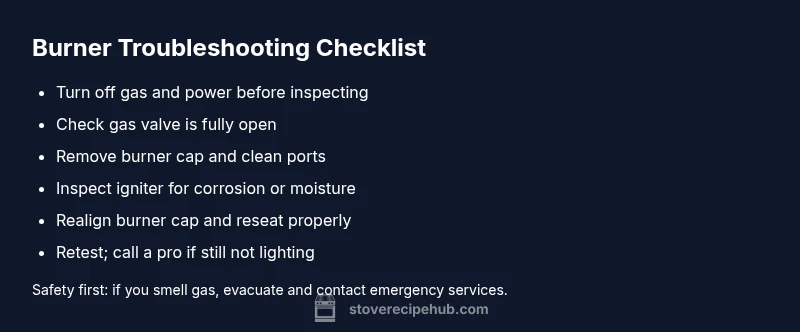
Turn off the gas supply at the knob and unplug the stove or switch the circuit breaker if it’s electric. Gather cleaning supplies and a soft brush. Wear eye protection and keep children away during inspection.
Tip: Always start with safety; a quick trip to power down prevents accidental ignition. - 2
Check gas valve and open valve
Make sure the main gas valve is fully open and the knob is not partially turned. If you smell gas, do not test—leave the area and call the utility or emergency services.
Tip: If you’re unsure about the valve position, contact your gas provider before further testing. - 3
Inspect and clean burner ports
Remove the burner cap and use a soft brush to clear debris from ports. Reinstall the cap to ensure even seating. Wipe away grease that might block the igniter area.
Tip: Do not use metal objects to poke holes; you can scratch or bend ports, causing more problems. - 4
Test the igniter and electrode
Look for a visible spark when turning the burner on. If there’s no spark, the electrode or module may be faulty or dirty. Clean gently and let dry before retesting.
Tip: A wet or dirty igniter often stops sparking; ensure all parts are dry before testing. - 5
Realign and reseat the burner
Place the burner cap back on and align the notch with the base. Ensure a snug fit so the flame paths aren’t obstructed.
Tip: A misaligned cap is a common culprit for irregular flames. - 6
Retest and decide on next steps
Turn on the burner and observe. If it lights, observe for stability. If not, proceed with diagnosis flow or contact a professional.
Tip: Document symptoms and steps taken to help the technician diagnose faster.
Diagnosis: Burner won't light or stays off after ignition
Possible Causes
- highInsufficient gas supply or closed valve
- highClogged burner ports or dirty burner cap
- mediumFaulty ignition electrode or spark module
- lowDamaged burner cap seating or misalignment
- mediumElectrical issue or blown fuse (for electric igniters)
Fixes
- easyCheck gas valve and ensure the knob is fully open; verify gas supply to the appliance
- easyRemove burner cap and clean ports with a soft brush; reattach cap evenly
- mediumInspect igniter area; dry any moisture, deburr residue, and replace if visibly damaged
- easyRealign or replace the burner cap for proper seating and flamework
- hardIf ignition circuitry or wiring seems faulty, consult a licensed technician or appliance service
Common Questions
What is the most common reason a stove burner stops working?
The most common causes are a closed gas valve, dirty burner ports, or a faulty igniter. These issues are typically straightforward to diagnose and fix for most homeowners.
The most common causes are a closed gas valve, dirty ports, or a faulty igniter.
How can I tell if the issue is gas supply or electrical ignition?
If you hear a click but no flame, ignition or gas delivery may be the problem. No click often indicates an ignition or electrical issue. Check the valve and listen for a spark while testing.
If you hear a click but no flame, ignition or gas delivery may be the issue. If there’s no click, it could be ignition or electrical.
Is it safe to fix a stove burner myself?
Yes for simple tasks like cleaning ports and reseating the cap, but do not tamper with gas lines or if you detect a gas smell. In those cases, call a professional immediately.
Yes for simple cleaning, but never mess with gas lines or smells—seek a professional.
What should I do if I smell gas?
Leave the area immediately, avoid any sparks or flames, and contact your gas utility or emergency services from a safe location.
If you smell gas, leave now and call for help.
When should I replace a burner?
If the igniter is visibly damaged, warping occurs, or ports are severely corroded, replacement is recommended.
If the igniter is damaged or ports are corroded, replacement is best.
What maintenance helps prevent burner failure?
Regular cleaning of ports, keeping the area dry, and periodic ignition checks reduce the risk of sudden burner failure.
Regular cleaning and checks help keep burners reliable.
Can a clogged burner cause an uneven flame?
Yes. Clogged ports can cause uneven lighting or flames that go out during operation. Clearing the ports typically resolves this.
Yes, clogged ports can cause uneven flames.
Watch Video
Top Takeaways
- Check the gas supply and valve position first.
- Clean ports and reseat the burner cap for proper flame paths.
- Test the igniter—if no spark, suspect an electrical issue.
- Call a professional for gas leaks or complex ignition problems.
- Regular maintenance prevents future burner failures.