Electric Stove vs Induction: A Practical Comparison for Home Cooks
Explore the differences between electric stoves and induction cooktops, focusing on performance, cookware needs, energy use, safety, and cost. A thorough guide from Stove Recipe Hub helps home cooks choose the right stove technology.


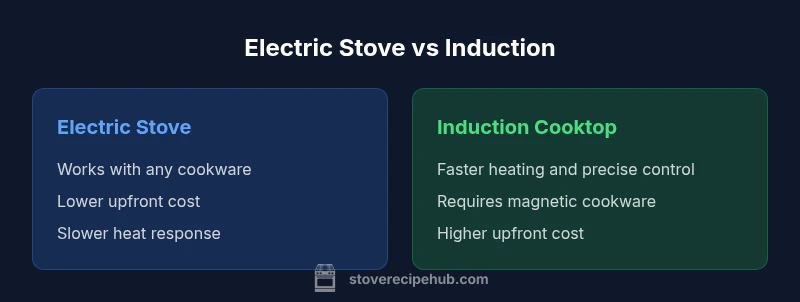
According to Stove Recipe Hub, the electric stove vs induction decision centers on speed, control, and cookware. Induction heats faster, offers precise temperature control, and is generally more energy-efficient—but requires magnetic cookware and compatible power setup. Electric stoves are cheaper upfront and work with any cookware, yet heat more slowly and can be less energy-efficient.
Overview: electric stove vs induction in everyday cooking
For many home cooks, choosing between an electric stove and an induction cooktop comes down to how you cook most often. Induction relies on electromagnetic energy to heat pots directly, leading to rapid temperature changes and precise control. Electric stoves, whether coil or radiant glass, heat cookware indirectly through a heating element beneath the surface. This fundamental difference shapes every other consideration, from cookware compatibility to cleanup routines. According to Stove Recipe Hub, the decision should reflect your typical recipes, your willingness to adapt cookware, and your budget for installation and upgrades. The result is not just a price comparison but a holistic view of how each system aligns with your kitchen workflow and goals.
How induction works vs electric coils and radiant elements
Induction cooking uses a coil embedded in the cooking surface to generate an oscillating electromagnetic field. When you place a compatible pan on the glass surface, the magnetic field induces electrical currents in the pan, turning energy into heat with near-instant response. There is essentially no heat transfer from the cooktop to the pan until metal makes contact, which means the surface itself stays relatively cooler. Electric stoves heat cookware through a resistance element or radiant coil beneath the cooktop, converting electrical energy into heat that then travels to the pan. This chain of heat transfer is slower and less responsive than induction, but it does not demand specialized cookware beyond a flat-bottom pan.
Performance and control: speed, simmering, and precision
Speed and control are the most noticeable differences. Induction delivers quick heat-up, rapid temperature adjustments, and excellent simmering control, which is especially valuable for delicate sauces or precise caramelization. Electric stoves lag behind in response time, and maintaining a steady simmer often requires more attention to pulse heating and heat retention. For searing and browning, induction can reach high temperatures quickly, but some cooks still favor electric stoves for certain textures where a longer, gentler heat is desired. The key is to align the tool with your cooking style and preferred recipes.
Cookware compatibility and maintenance considerations
Induction requires magnetic cookware. You can test pots and pans with a magnet; if it sticks to the bottom, it will heat efficiently on an induction surface. Non-magnetic materials like copper, aluminum, or glass cookware typically won’t heat well on induction unless they have a magnetic steel base. Electric stoves do not have this constraint and are compatible with virtually any cookware, including aluminum and copper, as long as they fit on the burner. Maintenance-wise, induction surfaces are very easy to clean due to the flat glass top, and they resist residue buildup when rules about cookware and release mechanisms are followed. Electric stoves, while easier to wipe, may show heat marks or discoloration over time after heavy use.
Energy efficiency and long-term costs: what to expect
Induction is generally more energy-efficient because energy is transferred directly to the pan with minimal energy lost to the environment. Electric stoves lose more heat to the surrounding air and surface during operation, which can translate to higher energy usage for the same cooking task. The upfront cost of induction can be higher, though operating costs may decrease with frequent cooking. The availability of compatible cookware and the need for a strong electrical circuit are important factors that influence overall cost of ownership and kitchen layout decisions.
Safety, installation, and practical setup tips
Induction surfaces stay cooler to the touch except for the pan area, reducing burn risk during normal use. They also include precise controls, child locks, and automatic shutoff features that enhance safety. Electric stoves present burn risks from the heating element and may require more time for cool-down between tasks. Installation considerations for induction include ensuring adequate circuit capacity and proper ventilation in some configurations. If you’re upgrading, plan for new cookware purchases and verify power availability before committing to a full switch.
Real-world cooking scenarios: when induction shines and when electric is fine
For rapid weekday meals, induction shines with quick sautés, boiling water, and precise simmering. It’s a natural fit for recipes that demand fast temperature changes. For bakers or cooks who routinely use non-magnetic cookware or prefer traditional setups, an electric stove may feel more familiar. In multi-dish weeknight cooking or batch browning, the choice depends on how often you’ll leverage fast heating, how much you value cleanup simplicity, and whether you’re willing to update your cookware collection to unlock induction’s full potential.
Cleaning, longevity, and ease of use over time
Induction tops exhibit simple maintenance: wipe away spills immediately while the surface is still warm, and avoid using abrasive cleaners. The glass-ceramic surface resists scratches when pans with smooth bottoms are used. Electric stoves require more intensive cleaning to manage melted spills or scorched residue around coils or radiant elements. Over the long term, dependable maintenance and careful use can extend the life of either system, but keeping an induction surface clean and free from particulates is essential for consistent performance.
Comparison
| Feature | Electric stove | Induction cooktop |
|---|---|---|
| Heat source and mechanism | Resistance-based heating element under the surface | Electromagnetic heating directly in the pan |
| Heating speed | Slower heat-up and warm-up times | Very fast heat-up and quick adjustments |
| Temperature control | Analog or digital controls with discrete steps | Highly precise digital control with rapid response |
| Cookware compatibility | Works with any cookware (flat-bottom preferred) | Requires magnetic cookware or induction-ready pots |
| Energy efficiency | Lower efficiency due to heat loss | Higher efficiency with direct pan heating |
| Maintenance and cleanup | Surface may show heat marks; cleaning can be straightforward but challenging around coils | Flat glass surface, easy wipe-down; minimal heat diffusion to surroundings |
| Safety considerations | Surface can stay hot after cooking; exposed coils burn risk | Cool-to-touch surface with automatic shutoffs; child lock options |
Upsides
- Faster cooking and precise control with induction
- Works with a wide range of cookware (electric) and saves energy on induction
- Lower long-term operating costs for high-usage kitchens
- Easier cleanup on induction due to flat surface
Downsides
- Induction requires compatible cookware and possibly new pots/pans
- Higher upfront cost for induction setup and power requirements
- Electrical upgrades may be needed for some homes
- Electric stoves lack the fast heat-up and may be less energy-efficient in frequent-use scenarios
Induction generally offers faster heating and better control, but electric stoves remain a budget-friendly, universally compatible option.
Choose induction if you value speed and energy efficiency and are willing to invest in compatible cookware and possibly electrical upgrades. Choose electric stove if upfront cost, universal cookware compatibility, and straightforward installation are your priorities.
Common Questions
What is the main difference between electric stove and induction cooking?
The main difference is heat generation: induction uses electromagnetic energy to heat the pan directly, while electric stoves heat the cookware via a heated surface. Induction offers faster response and better control, but requires compatible cookware.
Induction heats pots directly with magnets, while electric stoves heat the pan through a surface. Induction is faster and more precise, but you’ll need compatible cookware.
Do I need to replace all my cookware to switch to induction?
You don’t have to replace everything. Test your existing pans with a magnet; if they attract, they will likely work on induction. You may still want to add a few induction-friendly pieces for uniform heating.
Test your pans with a magnet first. If it sticks, you’re probably good to go on induction for those pieces.
Is induction safer or easier to clean than electric stoves?
Induction surfaces stay cooler to the touch, reducing burn risk, and are typically easier to clean due to the flat glass surface. Electric stoves can be hotter to touch and may show heat marks more readily.
Induction stays cooler to touch and cleans quickly, while electric stoves heat the surface more and can leave marks.
Can induction be used for high-heat searing?
Yes, many induction models reach high heat quickly and support searing, though some cheaper units may have temporary heat limits. Using well-rated pans helps maximize performance.
Induction can sear effectively with the right pan and a good unit.
What about cost and energy use over time?
Induction typically costs more upfront but can reduce energy waste due to efficient heat transfer. Over time, frequent use may offset the initial price through energy savings, depending on your cooking habits.
Induction saves energy per task, but you’ll pay more upfront; usage matters for cost.
Top Takeaways
- Assess your cooking style and need for quick heat changes.
- Test cookware compatibility before buying induction.
- Plan electrical upgrades if adopting induction.
- Weigh upfront costs against potential long-term savings.
- Consider cleaning and maintenance preferences in daily use